
A banknote sorter is not "just a faster counter." Where a bill counter tells you how many notes you hold, a sorter tells you what those notes are — by denomination, by series, by condition, and by whether they are fit to go back into circulation at all. For banks, currency chests, cash-in-transit companies and cash centers, that distinction is now written into central-bank regulation, not just operational preference. This guide walks distributors and end users through the decisions that actually matter when specifying a currency sorter in 2026.
1. Pocket Architecture: How Many Bins Do You Actually Need?
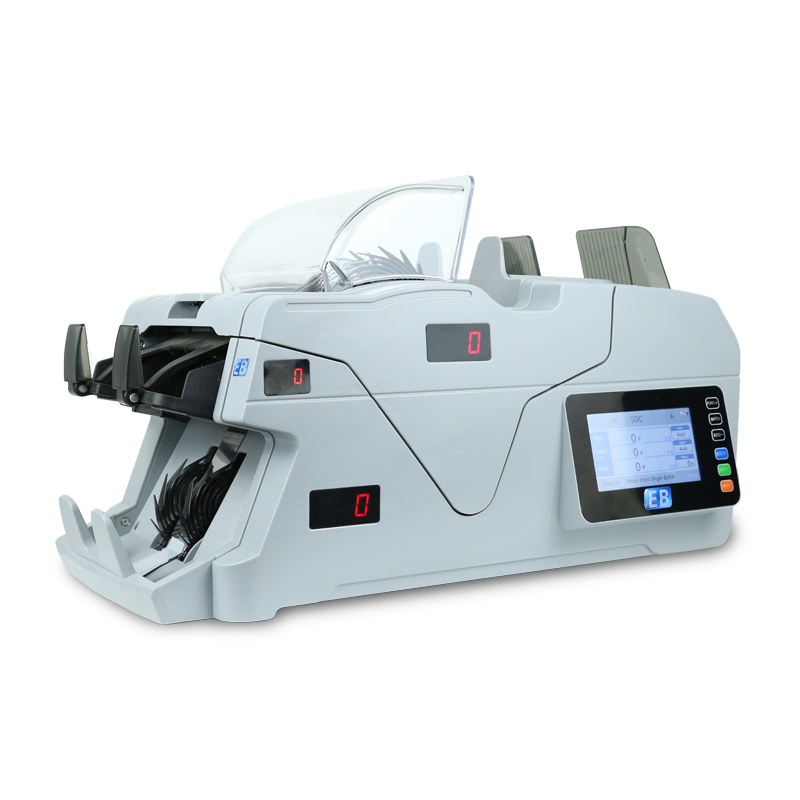
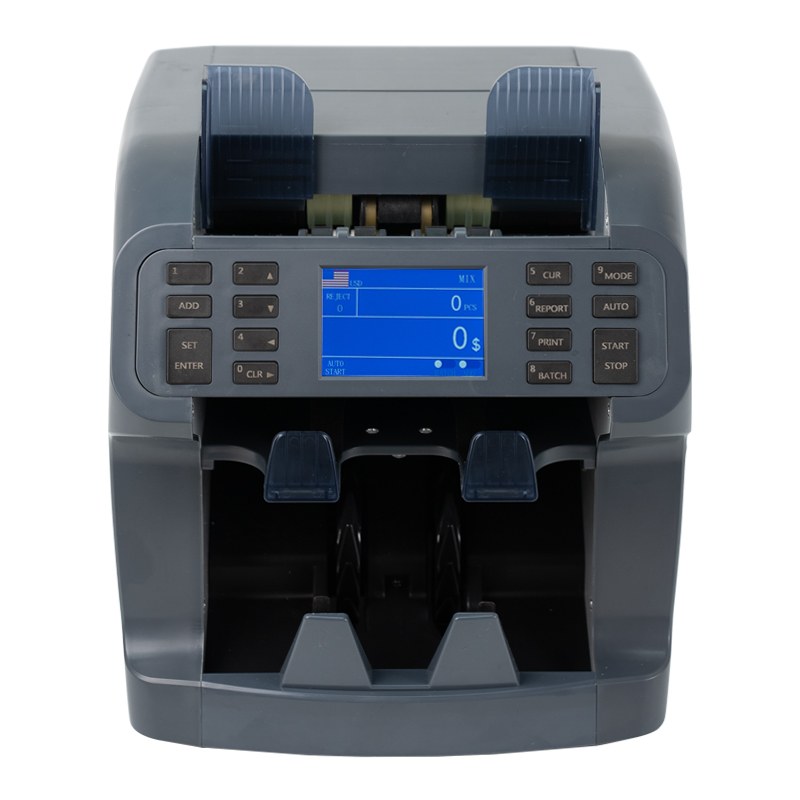
Sorter "pockets" (stackers) define the machine's job. A 2+1 entry machine — two output pockets plus one reject pocket — handles mixed-value counting with denomination and orientation sorting. The Easy-Banker BS-8900 sits in this class: 800/1000/1200 notes per minute, one 100-note stacker (extendable to 200), UV/IR/MG/RGB/white-light and IR-image detection, and — unusually for this size — a VER mode that automatically separates paper notes from polymer notes when both run through the same batch. Retail chains, exchange bureaus and small branches usually start here.
A 3+1 or 4+1 fitness sorter adds the ability to split genuine-fit from genuine-unfit notes in a single pass — the machine grades condition while it counts and values. The BS-631 four-pocket machine processes up to 1,000 notes in the hopper at 1,000/800 notes per minute, sorting value, authenticity and fitness (FIT/UNFIT) simultaneously, and captures serial numbers for audit trails. Currency chests and CIT operators processing recycled cash need this tier or above.
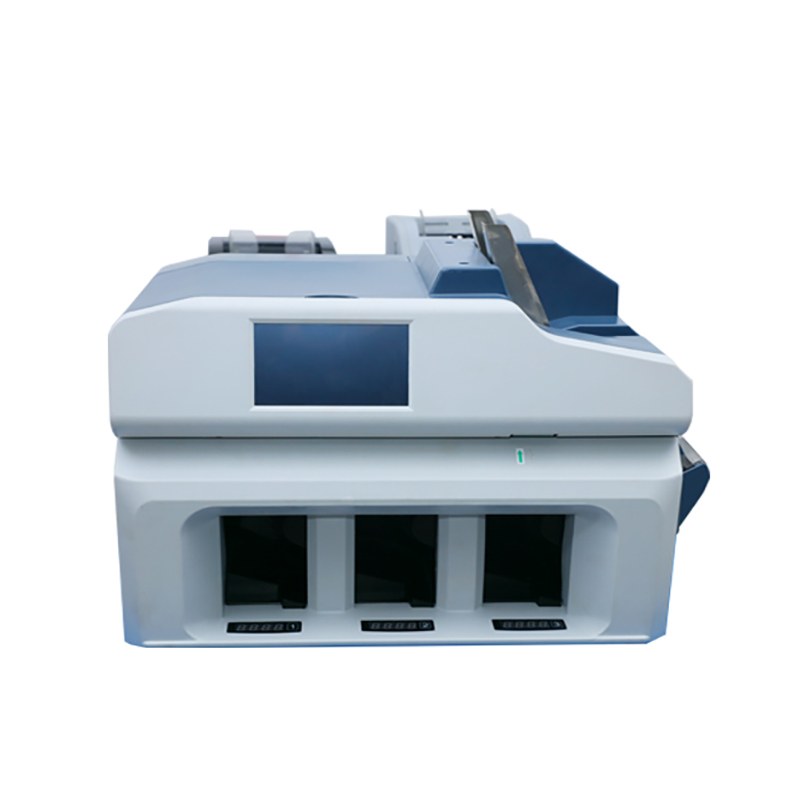
High-pocket machines (11–12 pockets) such as the 12-pocket BS-6800 or the 11-pocket BS-2090 sort by denomination and series, enabling per-series bundling for central-bank deposit. National cash centers and large commercial banks deploy these.
2. Fitness Sorting Parameters: What "Unfit" Legally Means
Do not buy a "fitness sorter" that only guesses. Regulators publish measurable thresholds, and a compliant machine must grade notes against them note-by-note. India's Reserve Bank, in its Note Authentication and Fitness Sorting Parameters guidelines (circular DCM(NPD) No. S488/18.00.14/2022-23 of July 1, 2022, and successors), specifies ten defect classes with hard numbers — a note must individually pass all of them to be reissued:
- Soiling — loss of reflectance across the note surface, checked on both sides
- Limpness — structural loss of paper stiffness
- Dog-ears — corner folds over 100 mm² with an edge over 5 mm sort as unfit
- Tears and holes — holes exceeding 8 mm² are unfit; edge tears beyond graded limits likewise
- Stains / graffiti — a single stain over 200 mm², or total staining over 500 mm², condemns the note
- Crumples, decolouration and repairs — folds reducing length or width by more than 5 mm, washed notes, and tape-repaired notes all sort out
In the euro area, ECB Decision ECB/2010/14 (as amended) requires that euro banknotes be checked for authenticity and fitness — by an NCB-tested banknote handling machine or trained manual procedure — before recirculation through ATMs and customer machines, and classifies every note into categories: suspect-counterfeit (cat 2/3, which must never re-enter circulation) versus genuine-unfit (cat 4a/4b, physically separated). A Eurosystem test is passed only if zero counterfeits are accepted as genuine, at least 90% of fit notes are classified correctly, and no more than 5% of unfit notes slip through as recyclable. When you evaluate any sorter — ours or anyone's — ask for its performance against these numbers.
3. Sensor Suite: The Difference Between Counting and Grading
Fitness grading is a sensor problem. Serious machines combine: 200-dpi CIS contact image sensors scanning both sides in reflected and transmitted visible + IR light (as on the BS-631, which grades soiling, stains, graffiti and decolouration from the image itself); strong and weak magnetic channels reading magnetic serial-number ink and metal threads; UV channels that expose washed or chemically bleached notes; and full-width mechanical thickness checking that catches doubled notes, glued tears and tape repairs optically impossible to see. Serial-number capture with SD-card storage and optional thermal printers turns the machine into an auditable cash register — increasingly a tender requirement in public tenders.
4. Compliance Timelines Are Forcing Refreshes Right Now
Two regulatory facts are moving procurement in 2026. First, the Bureau of Indian Standards published IS 18663:2024, the NSM standard developed with the RBI (Gazette of India, March 19, 2024); RBI circulars DCM (NPD) No. S2193 (Oct 30, 2024) and S287 (Apr 24, 2025) made certification mandatory, banks may now only procure BIS-certified note sorting machines, and every deployed model discontinued by its manufacturer must be phased out before June 30, 2027 — with penalties under the RBI's Master Direction on currency-distribution incentives and penalties. Recent public tenders (e.g., Bank of Baroda's all-India GeM RFP for heavy-duty 3+1 and 4+1 pocket NSMs, and J&K Bank's 2026 e-RFP) pre-qualify bidders against BIS certification and RBI fitness parameters as a hard gate.
Second, in the euro area the ECB's list of successfully-tested machine types is refreshed annually — a type disappears from the list if it is not retested within 12 months, so buyers should always confirm a model's current listing status with the testing NCB's published page before specifying.
5. Speed, Currencies and Total Cost of Ownership
Rate machines on throughput per operator-hour, not headline speed. A 1,000 NPM four-pocket sorter running mixed circulation-condition cash will reject more often than a 1,200 NPM compact counter running clean teller bands — sensor stability and reject handling matter more than raw rate. Verify currency coverage against your market: Easy-Banker sorters cover USD, EUR, GBP, CNY, JPY, KRW, RUB, INR, IDR, TWD and 140+ other currencies with software updates for new series. Ask any manufacturer for quarterly recalibration requirements — RBI rules make quarterly accuracy testing a bank-record obligation — and check whether the machine disassembles for maintenance (the BS-8900's frame was designed for exactly that). Distributors should insist on OEM/ODM terms: branding, firmware feature sets and voltage customization.
Quick Selection Table
| Operation | Recommended class | Example model |
|---|---|---|
| Retail / exchange bureau / small branch | 2+1 pocket, 800–1200 NPM, polymer-aware | BS-8900, BS-2090 |
| Bank branch back-office / cash-in-transit | 3+1 / 4+1 fitness sorter, SN capture | BS-631, BS-621 |
| Currency chest / national cash center | 11–12 pocket series sorter | BS-6800, BS-2080B |
Ready to spec a sorter against your central bank's parameters? Contact Easy-Banker — a China-based manufacturer of banknote counters, currency sorters and cash-handling equipment with factory-direct OEM/ODM programs for distributors worldwide.