Cash Still Matters: The October 2026 Central Bank Signals for Cash Equipment Buyers
Central Banks Are Talking About Cash Again — and This Time the Message Is Loud
October 2026 was a busy month for anyone who earns a living handling physical money. The Bank of England published the design direction for its next banknote series, the Federal Reserve confirmed demand for US notes is still growing, and central banks from Asia to Europe tightened machine-verification rules for the notes they recycle. For cash-equipment distributors these are not isolated news items — they are one signal: cash is staying in the system, and the machines around it have to keep up.
The Bank's own words capture it: the consultation response, said Chief Cashier Victoria Cleland, shows "that cash still matters" (Bank of England announcement, early October 2026).
A Record Public Vote Sets the UK's Next Series
Here are the numbers, all published by the Bank itself: the animal-imagery consultation ran from 3 June to 3 July 2026 and drew 478,531 responses — the most ever for a banknote imagery consultation — with 2,549,003 selections across an 18-species shortlist developed with a panel of UK wildlife experts.
The four animals confirmed as central images for the next £5, £10, £20 and £50 notes are the Atlantic puffin, barn owl, buff-tailed bumblebee and European hedgehog, the bumblebee the clear category leader with 360,399 votes. This follows a 2025 theme consultation of over 44,000 responses, confirmed as "nature" in March 2026.
For equipment buyers, the transition plan is the practical detail. The monarch's portrait stays on the reverse, and press reporting on the announcement (BIRA, October 2026) notes the series will keep existing sizes and overall colour schemes — a deliberate choice that limits how much retail and bank equipment has to change. The Bank is equally clear on timing: designing, testing and printing takes years, and the first denomination launches only "over the next few years" under incoming Chief Cashier Rhys Phillips. UK-facing distributors therefore have a long runway — but note-recognition software, counter firmware and detector parameters will all need a version bump when each note arrives. Updated detection profiles, not different machines, are the order of the day.
US Data: Print Volumes Dip, Circulation Keeps Climbing
Across the Atlantic, the Federal Reserve's numbers tell a similar story. The Board's calendar-2026 print order, submitted to the Bureau of Engraving and Printing on 15 July 2025, ranges from 3.8 billion to 5.1 billion notes, valued at $108.9 billion to $139.6 billion; the lower bound sits about 8.2 percent under the previous year's, with the Board attributing the trim to capacity reallocation inside the US Currency Program rather than collapsing demand.
Demand itself grew: currency in circulation rose by 0.8 billion notes, or $43.1 billion, between June 2024 and June 2025, versus 0.2 billion notes ($7.1 billion) the previous year. The latest weekly H.4.1 figures (as tracked by YCharts) show $2.485 trillion in circulation for the week of 21 October 2026, up 2.72 percent year on year. And as much as half the value of US notes circulates abroad — which is why USD-capable machines remain the most requested specification among our dealers in Africa, the Middle East and Latin America.
More notes living longer in the system means each banknote passes through more banks, more cash-in-transit companies and more retail back offices before it is destroyed. That is where throughput and trust become purchasing criteria.
The Rest of 2026: Deadlines, Not Suggestions
The UK and US are not moving alone. As we verified earlier this month, the ECB will settle the design direction of its next euro series by year-end, keeping the €5–€200 denominations and expected to change sizes and dominant colours as little as possible to contain machine-retooling costs. India's Reserve Bank master direction 2026 compels replacement of non-compliant sorting machines by 30 June 2027, and the Bank of Thailand's machine-verification requirement for returned banknotes took effect this October. Different continents, one theme: central banks are professionalising the physical cash chain, not winding it down.
What a Multi-Currency Fleet Should Actually Look Like
If your customers run banks, casinos, supermarkets or CIT networks, the sensible 2026–2027 playbook is a two-layer fleet: a front-line counting layer any till operator can use, and a back-office grading layer that produces evidence.
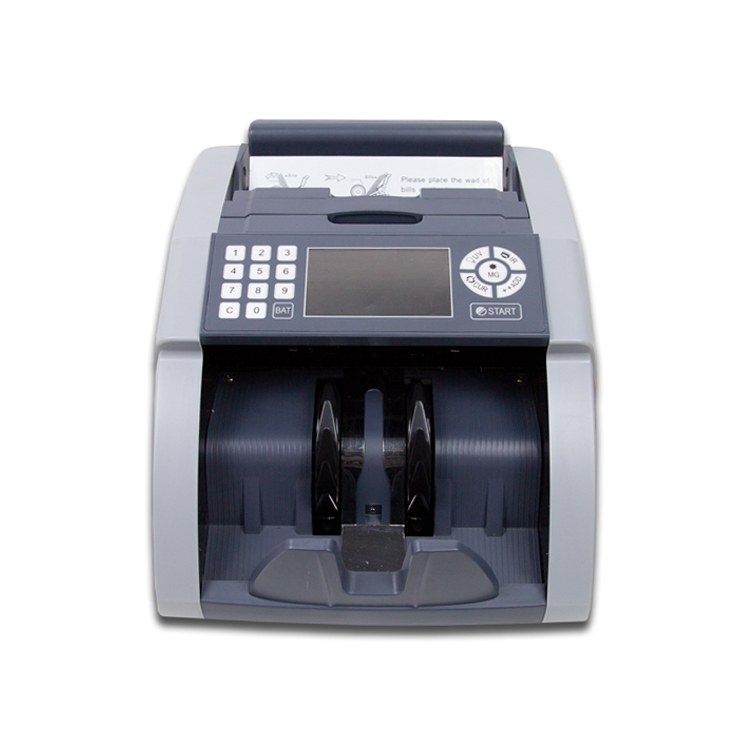
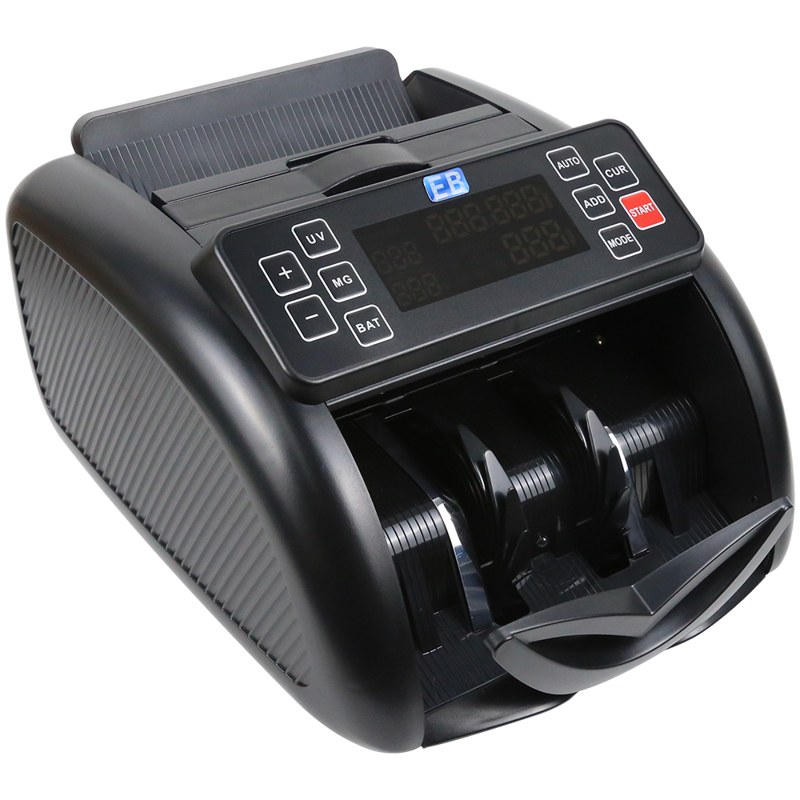
On the front line, our LD-2110 counts at 900 notes per minute with a 130-note stacker and combines UV and MG sensing with DD width detection: the first note of a pile becomes the reference width, and a "Width Different" message stops mixed or wrong-version piles before they ship. It rejects half-notes, chained and double notes automatically, counts in batch or additive mode up to 999, and shows results on 4-digit and 3-digit TFT displays. Notes from 50×110 mm to 90×180 mm, 0.075–0.15 mm thick, run at under 60 dB from a ≤80 W supply; the body is 341×284×207 mm and weighs 4.75 kg.
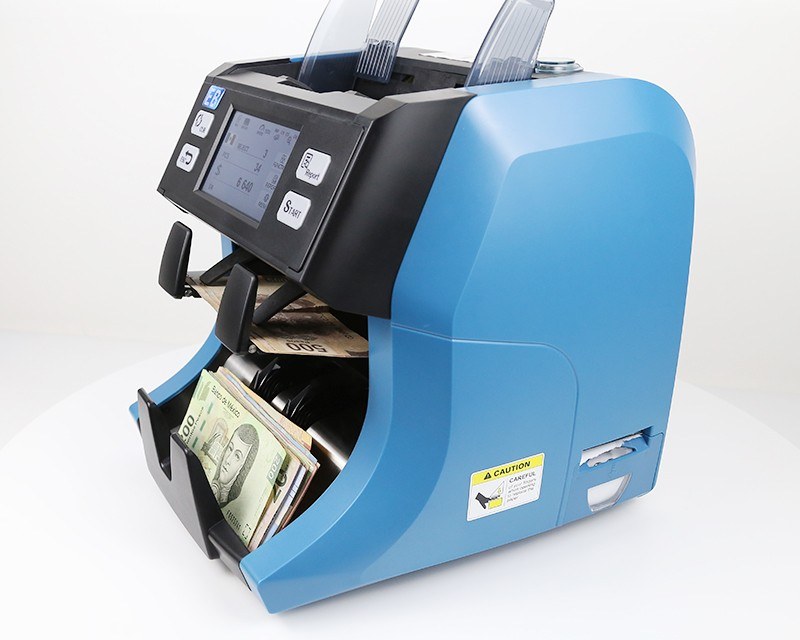
In the back office, fitness grading is the capability central-bank compliance frameworks reward. The BS-2090 reads each note with two 200 dpi CIS sensors analysing both sides by reflection and by transmission in visible and infrared light, backed by UV sensing and mechanical thickness checking, and grades every note FIT or UNFIT — including tear, adhesive-tape and double detection, plus a specific check for washed notes that fool cheaper sensors. It runs at selectable 800, 1,000 or 1,200 notes per minute, handles USD, EUR, GBP, CNY, JPY, KRW, RUB, INR, IDR, TWD, HKD and more, and reports over LAN, RS232 or USB with an optional built-in printer for audit trails.
Between the two sits the office workhorse: the LD-1000, a 900-notes-per-minute back-feeding counter with the same UV + MG + DD detection stack, an auxiliary bracket for long shifts, dual-voltage AC 220 V/110 V supply for global dealers, and a 280×225×160 mm, 5 kg body that lives happily under a supermarket counter.
Plan the Version Bumps, Not a Panic Buy
Nothing in this month's central-bank news requires anyone to throw away working machines — the BoE series is years away, the ECB parameters are still being settled, and the Fed is printing billions regardless. What it does require is a purchasing habit: buy detection platforms that receive updated note profiles, ask suppliers which currencies and versions a machine has actually been tested against, and align equipment plans with the 2027 deadlines already in force. Distributors who frame sales around that calendar — instead of discounts — are the ones central-bank years will reward.
Easy-Banker supplies cash-counting, detection and sorting equipment to distributors, banks and cash centres across the Americas, Europe, Africa, the Middle East and Asia, with OEM and multi-currency software customization available from the factory. Talk to our team about building a 2027-ready cash-handling lineup for your market.