
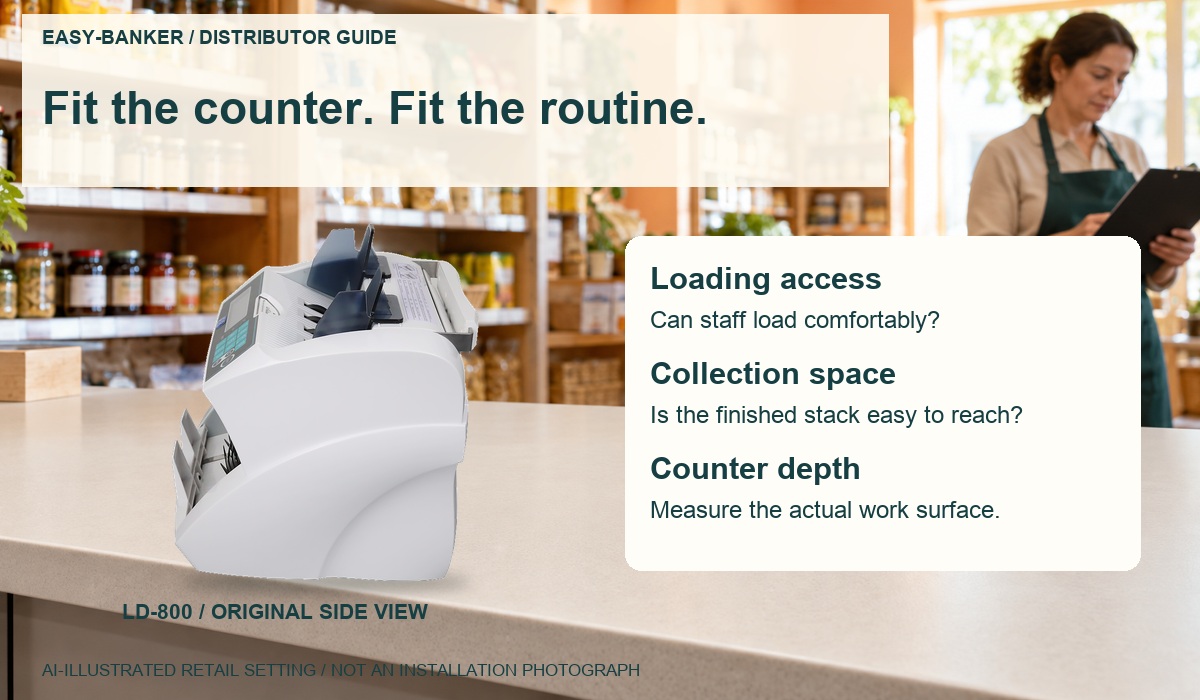
Every distributor who stocks cash-counting machines eventually faces the same catalog question: should the next SKU be a front-feeding or a back-feeding banknote counter? The two terms describe where the notes sit relative to the operator — and that one geometric choice changes throughput, jam behaviour, ergonomics, price point and even which detection functions can be fitted.
This guide walks through the mechanics, the trade-offs and the buying checklist, using real Easy-Banker models (LD-1500, LD-800, LD-1910) as worked examples so you can match each machine class to the customers you actually serve.
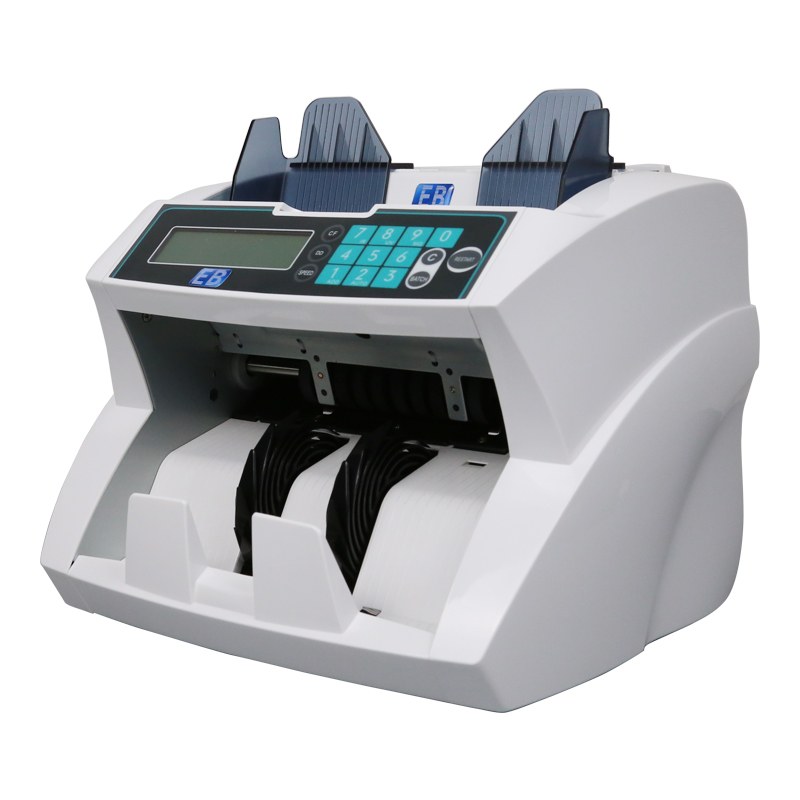
On a front-feeding counter the note hopper is placed at the front of the machine, close to the operator. You lift the bundle from the till or the cash bag and drop it into the hopper with a short forward motion. The counted notes stack on the far side, away from you.
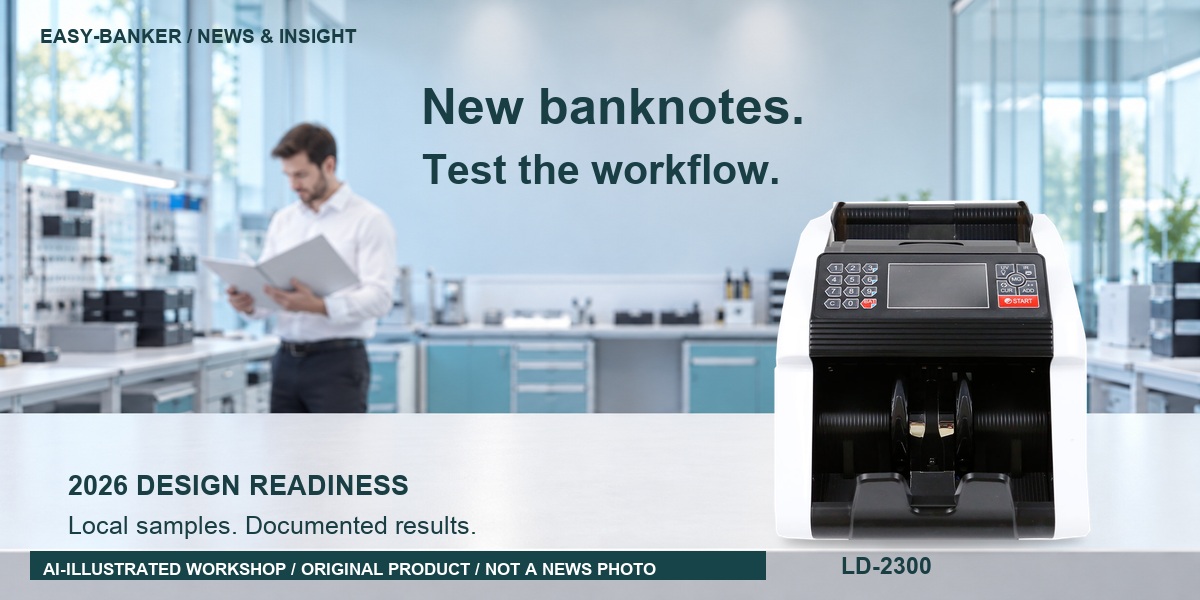
On a back-feeding counter the layout is reversed: notes are loaded into a hopper on the far (back) side, and the finished bundle stacks in the output tray closest to the operator. In practice, back-feeding designs tend to have the stacker — not the hopper — facing the user, which makes continuous "load-load-load, grab-and-bag" workflows faster because the counted bundle never has to be reached across the machine.
Both families separate notes with a friction-roller system, but the geometry matters. Front-feeding machines take notes from a gravity-fed hopper with a short transport path — fewer moving parts between the note and the sensors, which is why front-feeders are usually the smaller, lighter, lower-cost machines. Back-feeding machines route notes across a longer path with more robust pick-up rollers; that suits high-volume desks where notes of mixed condition (folded-corner, soft, old) must be fed without constant re-loading.
Practical consequence for distributors: front-feeders win on shelf price and counter footprint; back-feeders win on duty cycle and hopper capacity.
Worked example — Easy-Banker LD-1500 (front-feeding): counting speed above 1,000 notes/min, 100-old-bill / 200-new-bill hopper, UV + MG + IR detection, TFT display, 250×240×220 mm and 5.5 kg — a typical "retail till and bank teller" footprint.
Front-feeding suits: supermarket checkouts, convenience chains, front-desk cash offices, security-transport crews who count small bundles standing up, and any counter where depth is limited. Because the operator loads at the front and reads the LCD over the machine, it works even in an 18-inch-wide till area.
Back-feeding suits: bank back-offices, cash centres, currency-exchange bureaus, and any shift where the same operator counts continuously for hours. The near-side stacker means each finished 100-note bundle is grabbed and bagged without leaning over the transport path, and the bigger 200-note hoppers (as on the LD-1910) cut the number of interruptions per shift.
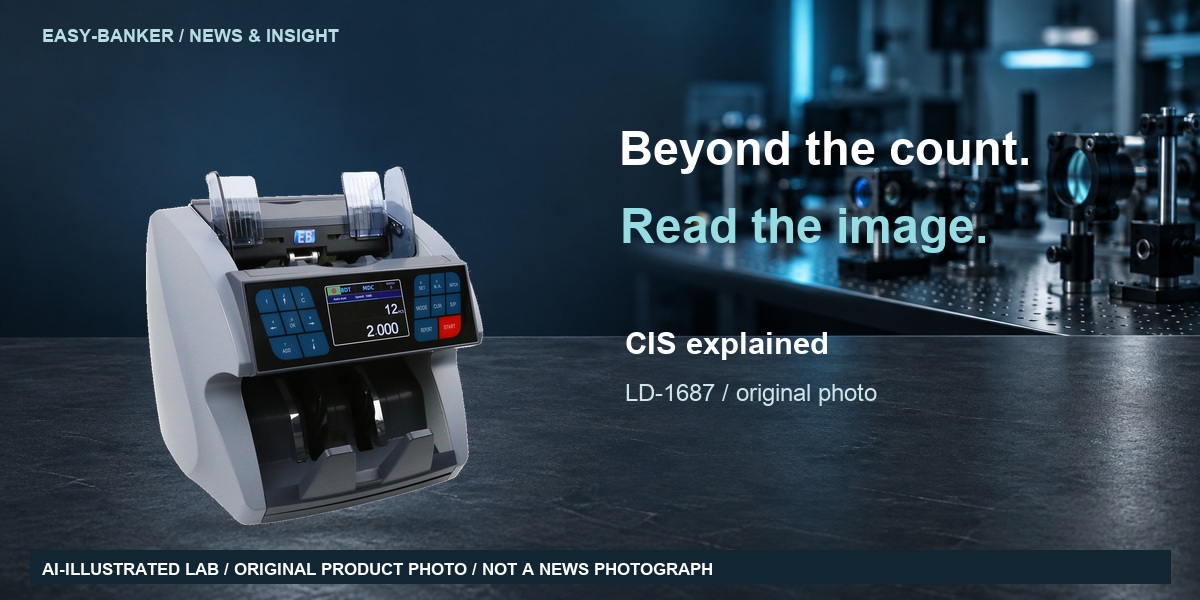
Worked example — Easy-Banker LD-1910 (back-feeding): 1,000 notes/min, 200-note hopper and 200-note stacker, one CIS image sensor plus UV and MG detection, mixed-value counting across currencies, USB and RS232 ports for till integration, 347×262×192 mm, wide 90–240 V input.
A common misconception in tenders is that one feeding style is "more secure" than the other. Detection capability depends on the sensor set, not the hopper position:
So if your end-user needs mixed-denomination totals in one pass, the question is really "does this model carry CIS value counting" — front-feeders such as the LD-1500 count and sort condition flags but do not do mix-value denomination work (their spec sheet marks that line as not fitted), while CIS-equipped back-feeders do.
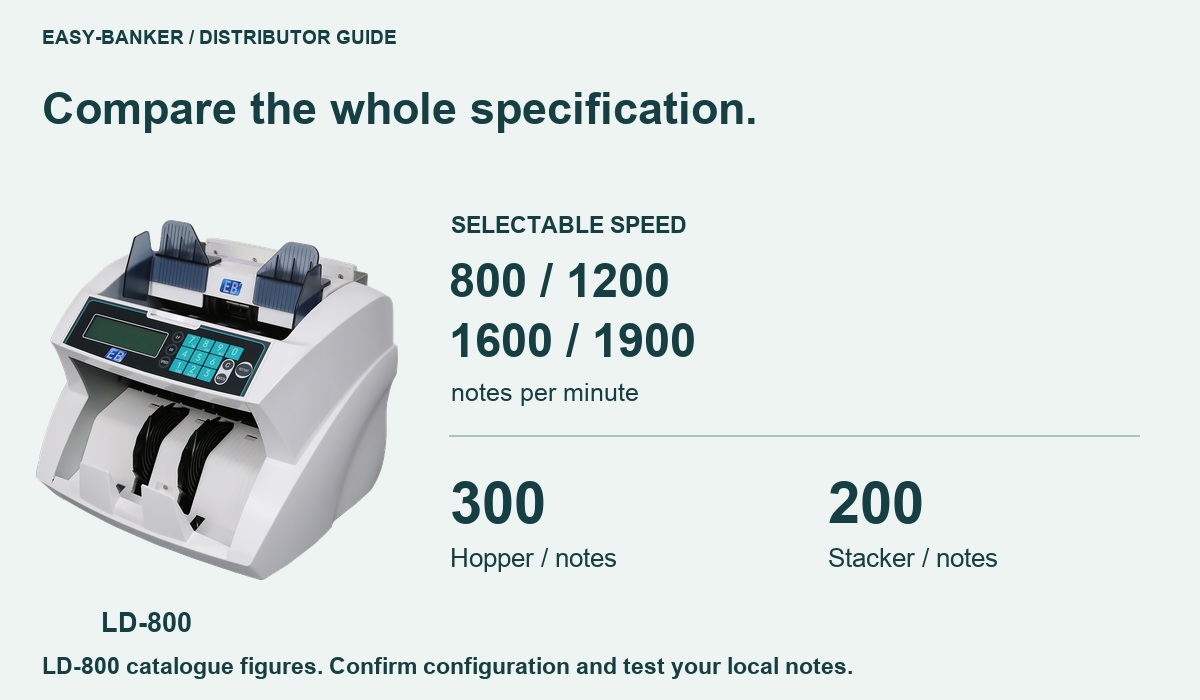
Three numbers to compare, not one:
Also verify power: 90–240 V wide-input models ship cleanly to markets with unstable voltage; fixed 220 V models need an adapter conversation with the reseller before the tender is won.
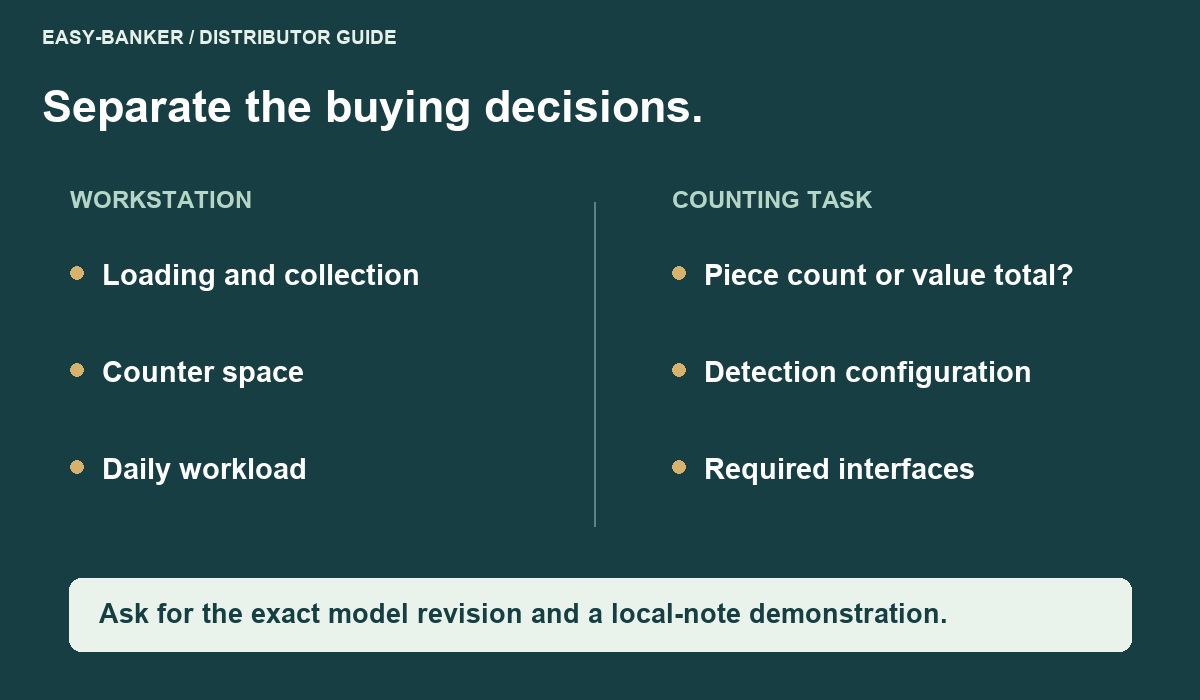
Bottom line: front vs. back feeding is an ergonomics and capacity decision; UV/MG/IR/CIS coverage is a security decision. Price your range so each customer tier gets the right combination — and keep both families in stock, because the counter you win on a tender is rarely the counter you expected to sell.
Specifications above are taken from the official Easy-Banker product pages (LD-1500, LD-800, LD-1910). For OEM/ODM programmes, sample units or distributor pricing, contact the Easy-Banker factory-direct team via the inquiry form on easy-banker.com.