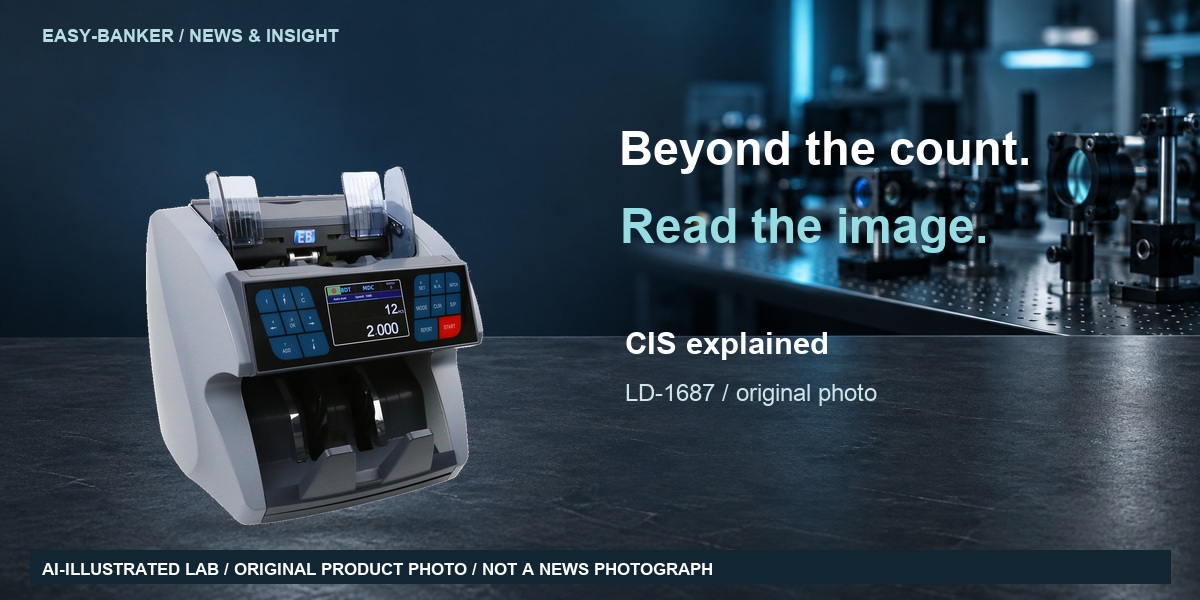
Banking Equipment

RBI Note Sorting Machine Master Direction 2026: The June 2027 Replacement Deadline

Views : 24
Author : Easy-Banker Editorial
Update time : 2026-10-15 21:29:29

A Master Direction, Not a Circular: What Changed on 2 October 2026

On 2 October 2026 the Reserve Bank of India issued its Master Direction on Note Sorting Machines (RBI/DCM/2026-27/473), consolidating years of scattered circulars into one binding framework under Sections 35A and 56 of the Banking Regulation Act, 1949. Previous circulars on the subject stand withdrawn from that date.

For banks, currency chests and cash-service companies, three provisions matter most:

  • Only BIS-certified machines may be procured going forward. The Bureau of Indian Standards published the NSM standard IS 18663:2024 (Gazette of India, 19 March 2024), and RBI now ties procurement directly to the certified-model lists for domestic (MANAK) and foreign (FMCS) manufacturers.
  • Discontinued models must be phased out by 30 June 2027. Every NSM currently deployed that is no longer in production has to be replaced within roughly nine months of this notice — failing which penalty provisions apply to branches and currency chests.
  • Quarterly calibration and test reporting becomes routine. Machines must pass periodic testing against authentication and fitness-sorting criteria, with results reported on a fixed quarterly format.

Why This Is a Fleet-Replacement Signal

India operates one of the world's largest cash-processing networks: thousands of banks, tens of thousands of branches and a dense currency-chest system that sorts billions of banknotes a year. A mandate that (a) locks procurement to a certification list and (b) puts a hard deadline on legacy hardware converts the entire installed base into a replacement pipeline with a fixed end-date. Market-research firms covering currency processing already describe India as the single largest demand concentration for both high-speed and compact sorters through the late 2020s.

The compliance clock also changes what gets bought. Machines that cannot prove authentication accuracy, fitness grading and mutilated-note detection to the IS 18663 test protocol are effectively out of the market, regardless of price. Sensor quality, documented test performance and firmware update paths become the purchasing criteria.
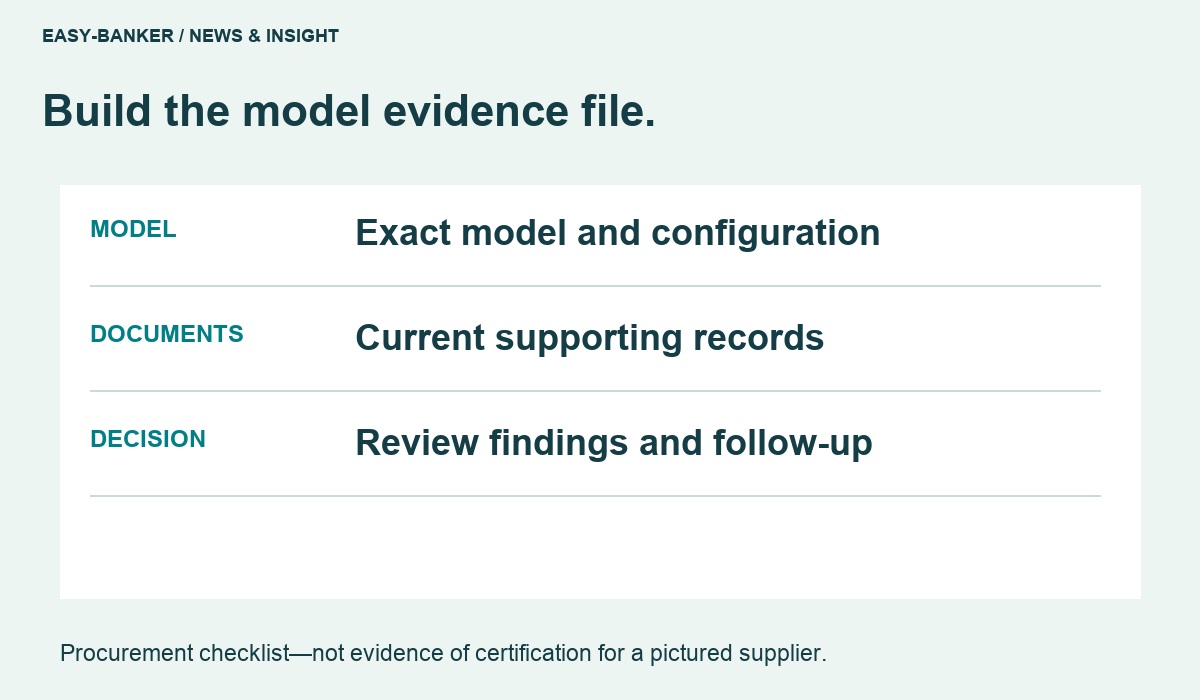
Model, documents and decision procurement checklist without certification claims.

What Distributors Should Do Before June 2027

  1. Check the certification status of every model you carry. RBI links both the domestic MANAK register and the Foreign Manufacturers Certification Scheme (FMCS) licensee list — a model absent from those lists cannot be sold into bank procurement.
  2. Position for the mid-speed desktop segment. Branch-level and currency-chest replacement demand favors compact counters and sorters with documented UV/MG/IR authentication, not just high-speed floor machines.
  3. Prepare test documentation in BIS language. Buyers will ask for authentication accuracy, fitness-sorting repeatability and mutilated-note detection data structured around the IS 18663 clauses and the quarterly test format.
  4. Expect spares and service contracts to move first. Nine months is a short window for a full fleet swap; rental, phased rollout and service-led offers will absorb much of the early volume.

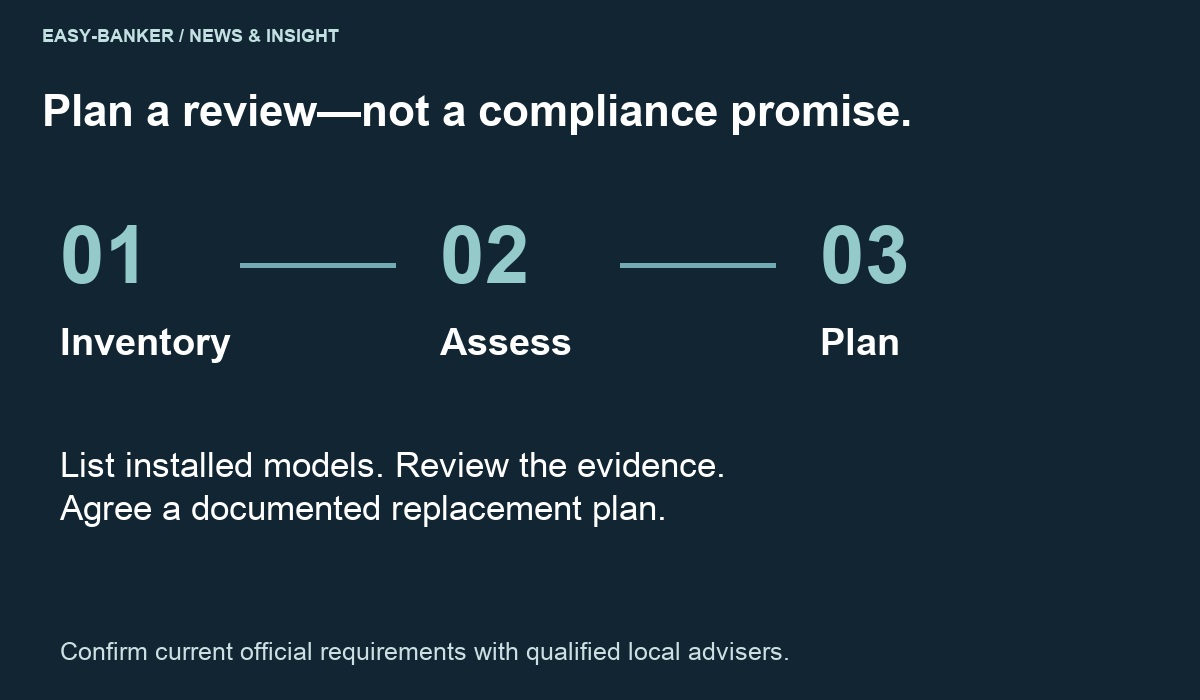
Inventory, assess and plan workflow for equipment review; not legal compliance advice.

Easy-Banker's Read

The RBI direction is the clearest example of a global pattern we track: regulators converting cash-handling equipment from a discretionary purchase into a compliance requirement. Similar dynamics are visible in the ECB's banknote-handling framework and fitness standards in Southeast Asia. For equipment makers and distributors with certified, well-documented machines, compliance deadlines are the strongest demand catalyst the industry has.

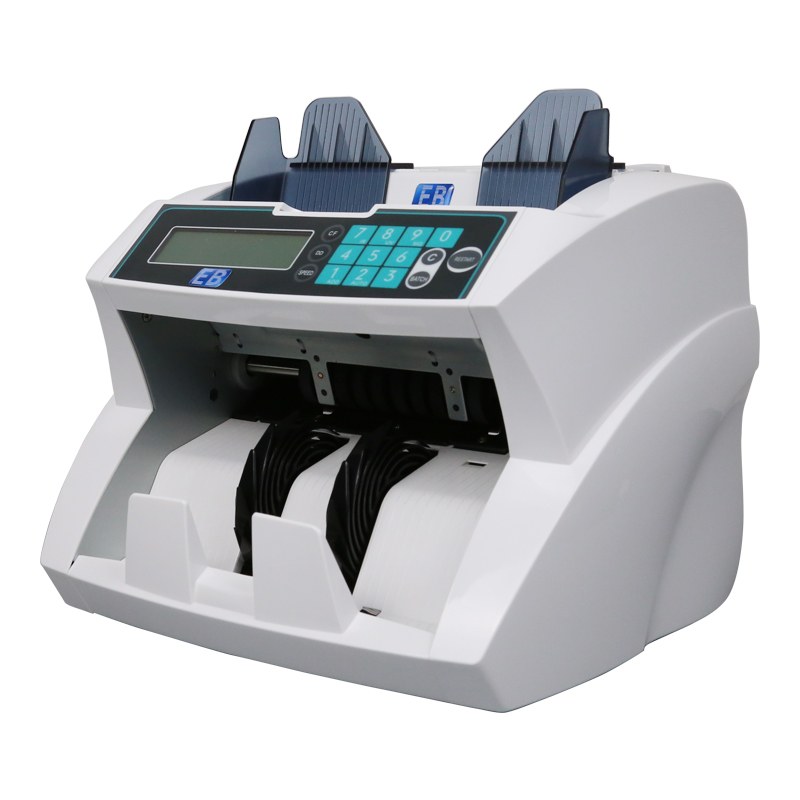
Easy-Banker's currency counters, mixed-value sorters and detection devices are built around multi-sensor authentication (UV / MG / IR / CIS) with configurable note sets for mixed denominations — the feature set the new procurement rules reward. Distributors evaluating BIS-path options for the 2026-27 replacement wave are welcome to contact us for model-level specifications and compliance documentation.

Sources: Reserve Bank of India, Master Direction on Note Sorting Machines, RBI/DCM/2026-27/473, 2 October 2026 (rbi.org.in); BIS IS 18663:2024, Gazette of India 19 March 2024.

Procurement questions in an AI-illustrated desk setting; no certification implied.

Related News
Read More >>
How CIS Sensors Turn a Money Counter into a Reading Machine
Oct .16.2026
One CIS or two? That single choice decides whether a banknote counter can only authenticate a note - or actually read it: denomination, series, fitness, serial number. A distributor guide to contact image sensors, the serial-recording rules spreading acro
New Banknote Designs in 2026: What the Redesign Wave Means for Cash Equipment
Oct .14.2026
Bangladesh is replacing a full series, Oman printed its first polymer rial, and commemorative polymer notes landed in the Pacific and Africa in 2026. Here is what each issue demands from counters, sorters and detectors - and how distributors should stock
Central Bank Cash Policy in 2026: Fed Print Order, Non-Sequential Straps, RBI Deadline
Oct .13.2026
Four late-2026 central-bank cash signals: the Fed's 4.8-5.7 billion-note 2027 print order, US non-sequential straps in the cash cycle, Banque de France recirculation findings and the RBI machine-verification deadline - and what each one means for cash equ