
Counting a stack of notes is the easy half of cash preparation. The half that decides whether a bank accepts your deposit - or refuses it at the counter - is what happens next: how notes are aligned, banded, strapped and bundled. For cash offices, armored carriers and retail back offices, banding is a compliance skill. For distributors of banknote handling equipment, it is a selling point: a counter that stops at exactly 100 and a bander that fixes a strap in under three seconds change the economics of every deposit run.
This guide walks from batch count to deposit-ready bundle using definitions from Federal Reserve Financial Services - its Deposit Visual Reference Guide and FedCash depositing standards (consulted 1 November 2026). Always confirm your own receiving bank's packing rules before shipping cash.
A strap is exactly 100 notes of one denomination held by a single paper band around the middle. A bundle is 1,000 notes of one denomination - ten equal straps bound together. The Fed requires $1-$20 notes to move in full bundles; $50 and $100 notes may go in full straps or bundles, and a shipping bag holds no more than sixteen bundles.
Bands must be white paper with color-coded edges per American Bankers Association (ABA) standards, between 1.00 and 1.57 inches (about 25.4-39.9 mm) wide, roughly 100 g/sqm, paper rather than synthetic. Edge colors follow a fixed ladder - blue ones, green twos, red fives, yellow tens, violet twenties, brown fifties, mustard hundreds - and each band shows the dollar amount, verification date and the initials of the verifiers.
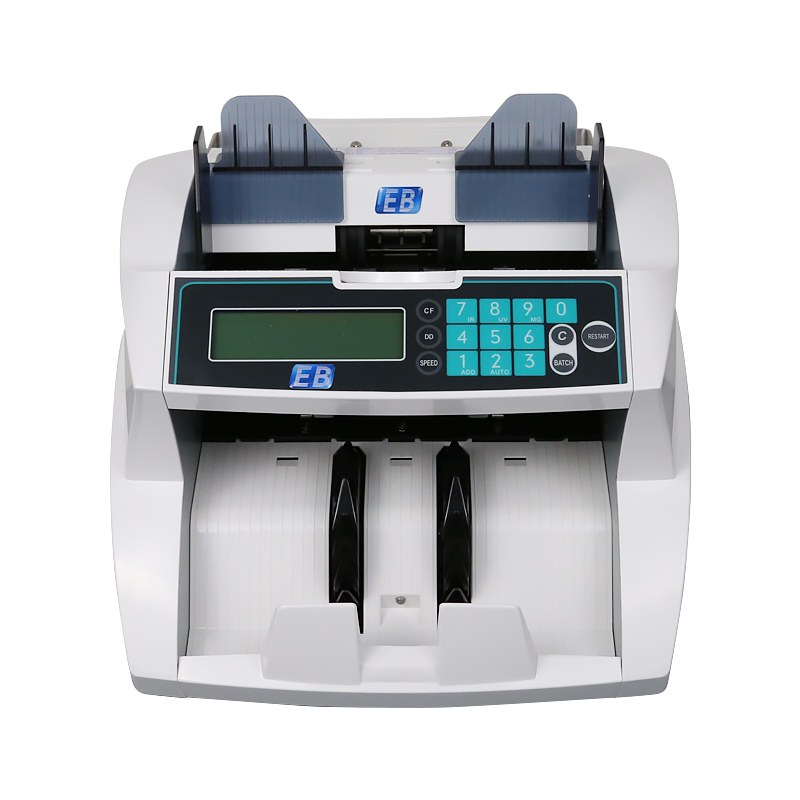
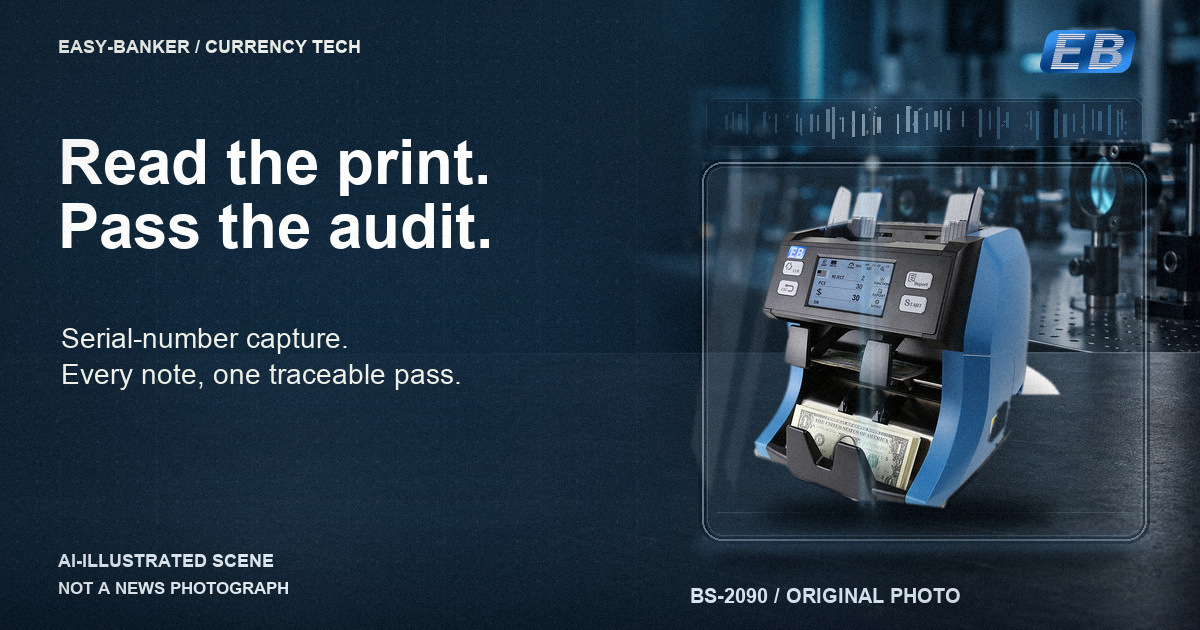
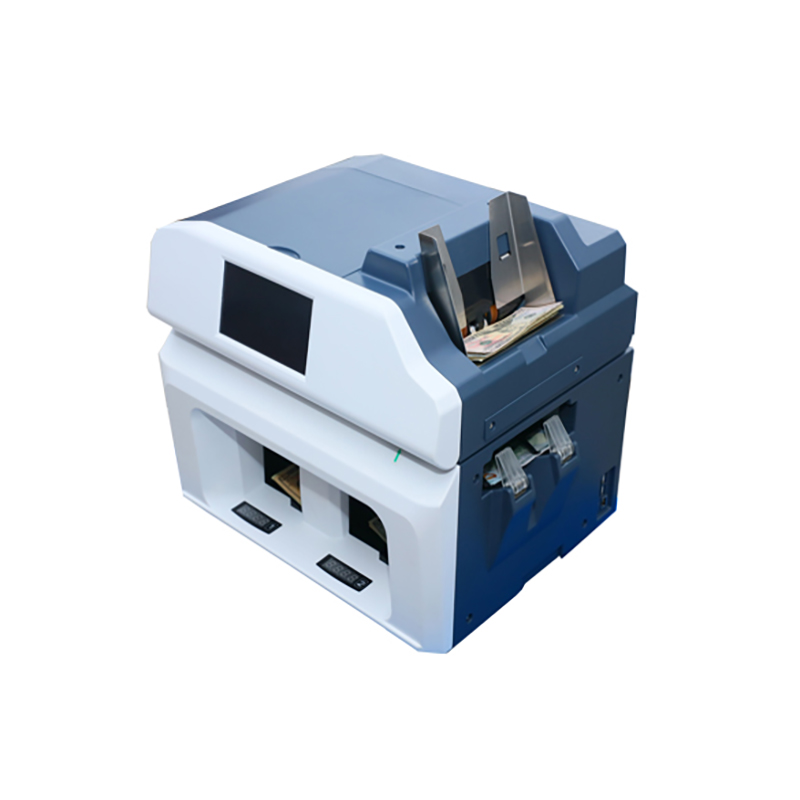
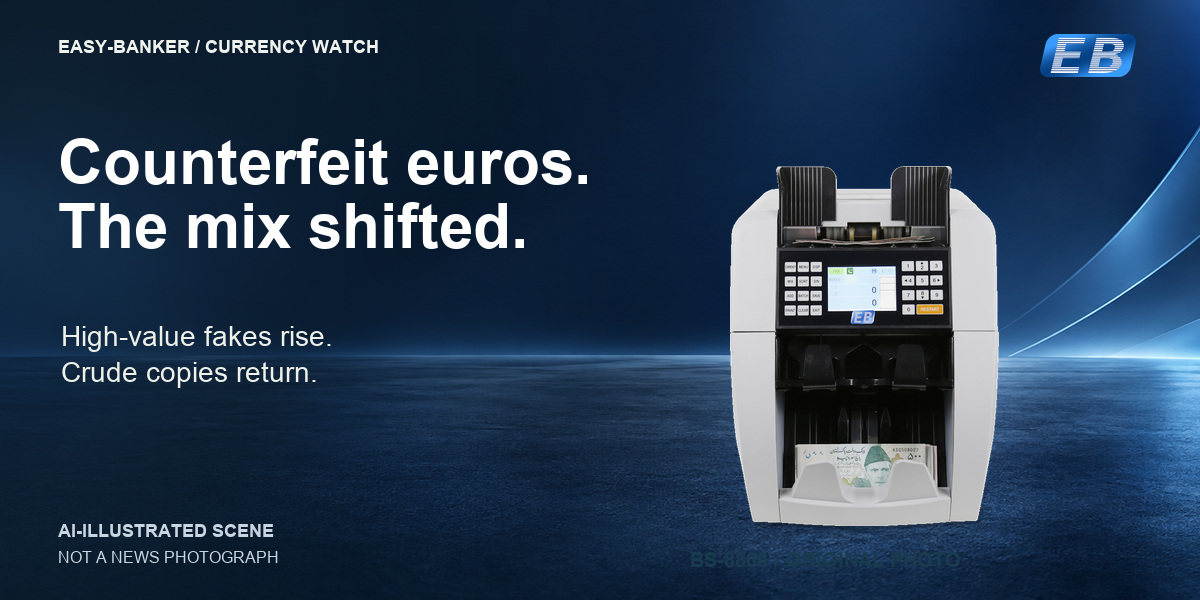
The Fed is explicit: notes must be piece counted and verified for authenticity before deposit, and every note must be clearly more than 50 percent of a note to receive credit. The LD-800 fits this workflow: its batch function presets a target number - set it to 100 and the machine stops the instant a strap is complete. It counts at 800, 1,200, 1,600 or 1,900 notes per minute, accepts notes from 130x50 mm up to 180x100 mm at 0.075-0.15 mm thickness, and its UV and magnetic-ink sensors plus half-note, chained-note and double-note detection stop the stack whenever a count could be wrong. See the guide to counting mixed denominations before strapping.
One 2026-era caution for experienced tellers: a strap used to be sanity-checked at a glance because the first serial number ended in 01 and the last in 00. The U.S. Currency Production Program's equipment modernization - phased in by denomination, $1 from May 2023, $20 from June 2025, $2 from October 2025, $5 from September 2026 - produces non-sequential straps with gaps in the serial pattern, and the new presses print no star notes. Serial continuity is no longer a count audit; the weight now sits on machine counting, batch stops and recorded verification - covered in the sorter audit-trail guide.
Before a strap closes, notes must be straightened with corners and edges aligned, and all paper clips, staples, rubber bands and excess tape removed, because residue makes notes stick together and skews the receiving bank's count. Unfit currency - torn, dirty, limp, worn or defaced - belongs in the regular deposit. Since June 2018, notes may be packaged without regard to direction or facing; straps within a bundle must still be arranged with all bank stamps facing the same way.
The band wraps once around the middle, secured without adhesive sticking to the notes inside, with minimal overlap and no loose tail. One strap, one band - rubber bands or clips subdividing notes inside a strap are not permitted.
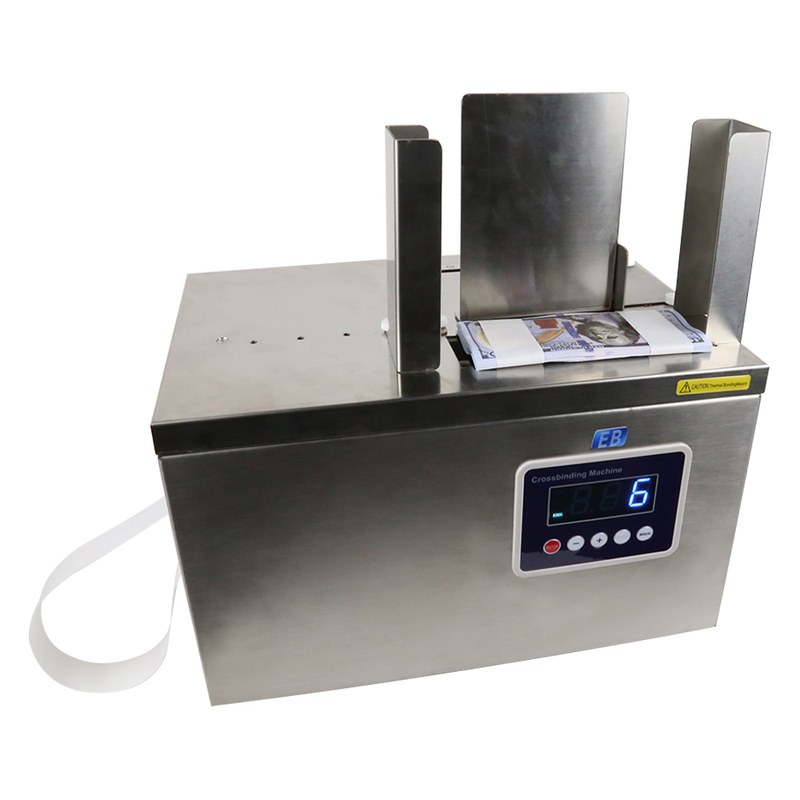
Pre-glued hand bands work; volume rooms reach for an automatic banknote banding machine. The JB-209's specification table lists 20, 30 or 40 mm paper or OPP tape on 50 mm inner-core rolls, 23-26 bindings per minute, adjustable binding position, sticking-time and tape-length adjustment, and stepless tension so the band is firm without creasing notes. A width check worth memorizing: the Fed's 1.00-1.57 inch paper-band window is about 25.4-39.9 mm, so 30 mm paper tape is the natural deposit-strap setting, while 20 mm tape and synthetic OPP film belong to internal bundling, not the strap band itself. Stock ABA color-coded bands for Federal Reserve deposits, and match roll cores (50 mm) to what your operators can actually buy - see the banding tape category.
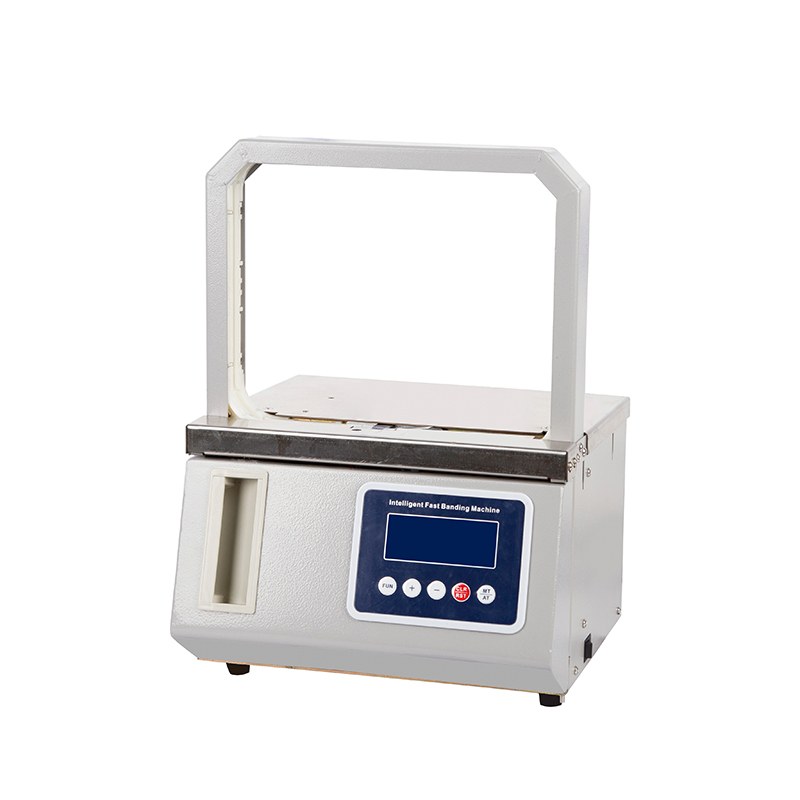
A bundle is ten banded straps stacked into one flush block. Tension material is secured across the short side at both ends - never lengthwise, never around subgroups inside the bundle - and must leave the strap bands clearly visible so counts can be checked without cutting anything open. The Fed names the two failure modes: too tight and the material bends or creases notes; too loose and straps shift or the binding fails in transit.
At throughput, an OPP strapper does this second binding step in seconds. The JB-412 runs both common OPP film tape and hot-melt paper tape, binds packages from 20x10 mm up to 200x160 mm, adjusts tightness so contents are secured without crushing, heats instantly, works by automatic induction or manually, stays under 75 dB, and operates on 220/110 V 50/60 Hz in a 320x300x400 mm footprint at 13 kg net weight.
FedCash states plainly that non-compliant deposits may be refused on inspection. The frequent causes: (1) sub-straps dividing notes inside a strap; (2) synthetic or unmarked bands instead of white ABA color-coded paper; (3) mixed denominations in a bundle; (4) pins, clips, staples or rubber bands left on the notes; and (5) mishandled partials - a strap of 50 notes or fewer must be fanned so more than 50 percent of each note stays visible and stapled before bagging, while 51-99 notes must be paper-banded and the band marked with the exact piece count and dollar amount.
For equipment buyers the workflow becomes a short list: a counter with a true batch-stop at 100 and UV/MG checks, a bander sized for your market's paper-band widths and roll cores, and a strapper whose binding range covers your bundles. Dual-voltage power matters for distributors serving mixed 110 V/220 V markets, and tape availability decides whether the room keeps running at quarter-end volume. Day-end reconciliation of straps, partials and exceptions is covered in our guide on how to close a cash shift.
One honest boundary: the rules quoted here are U.S. Federal Reserve requirements; other central banks set their own strap counts, band colors and stamping rules. Specify to your bank first, then match machines and consumables to that standard. Send your denominations, daily strap counts and packing rules to the Easy-Banker team for a counter, bander and tape combination that fits.