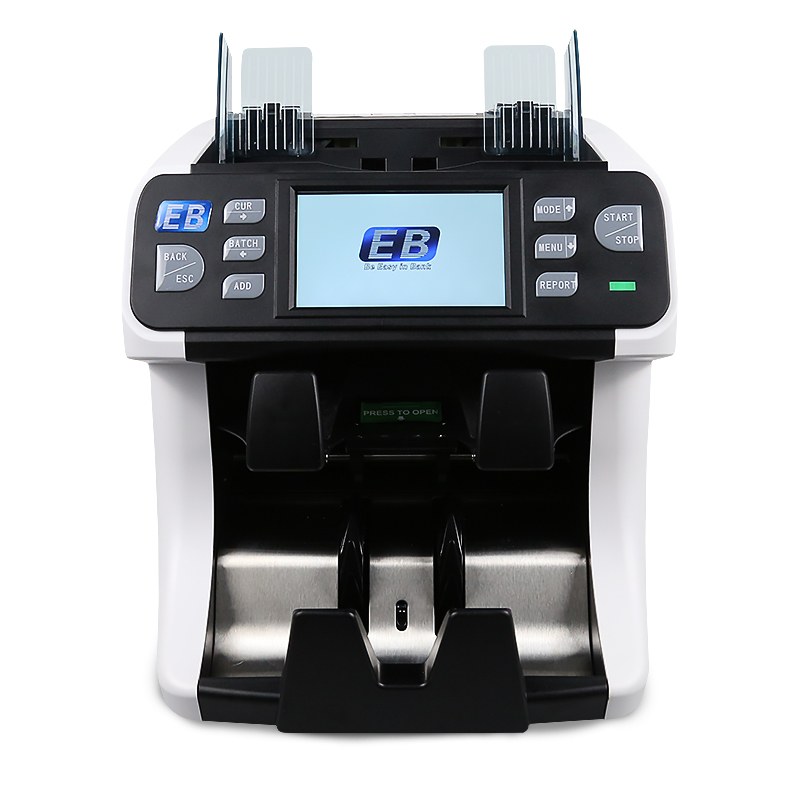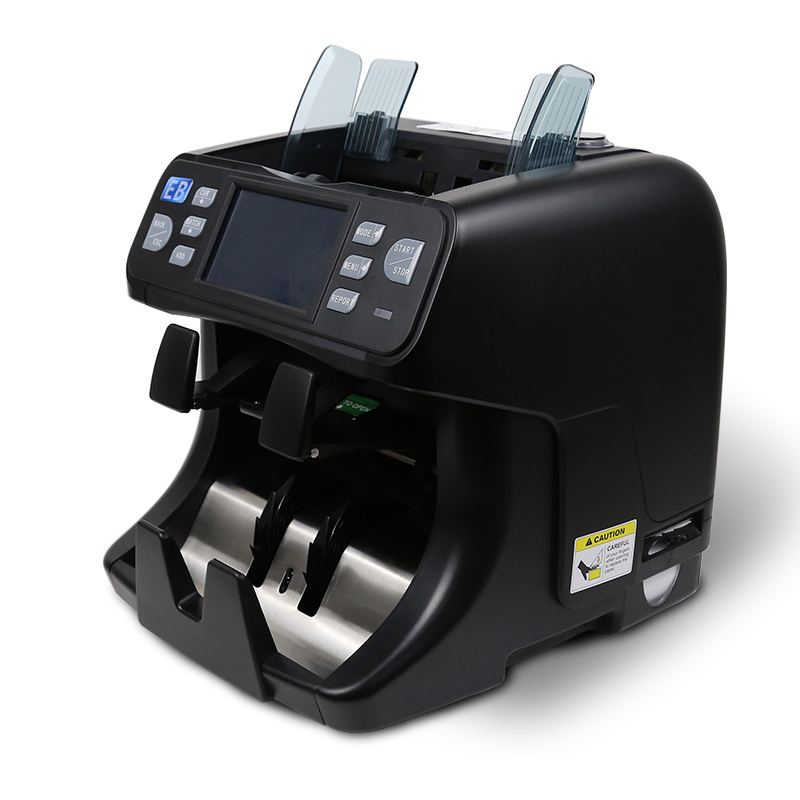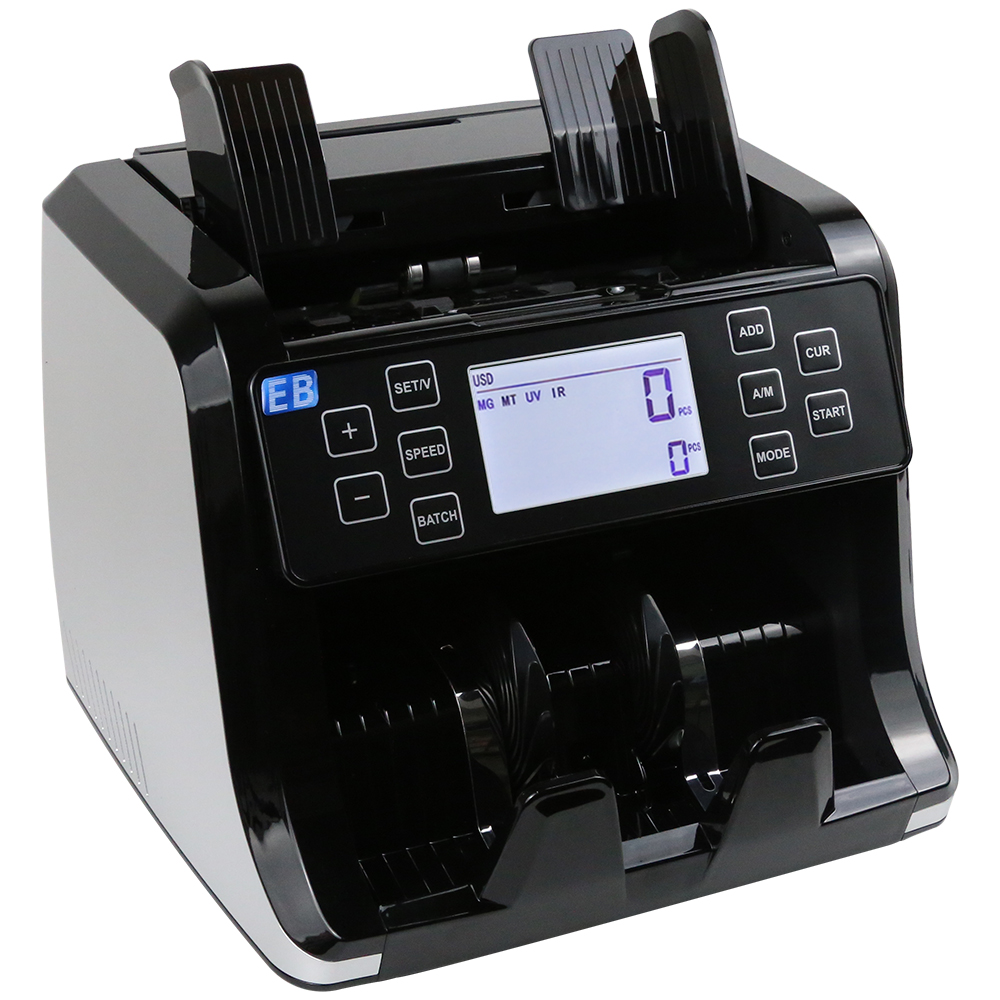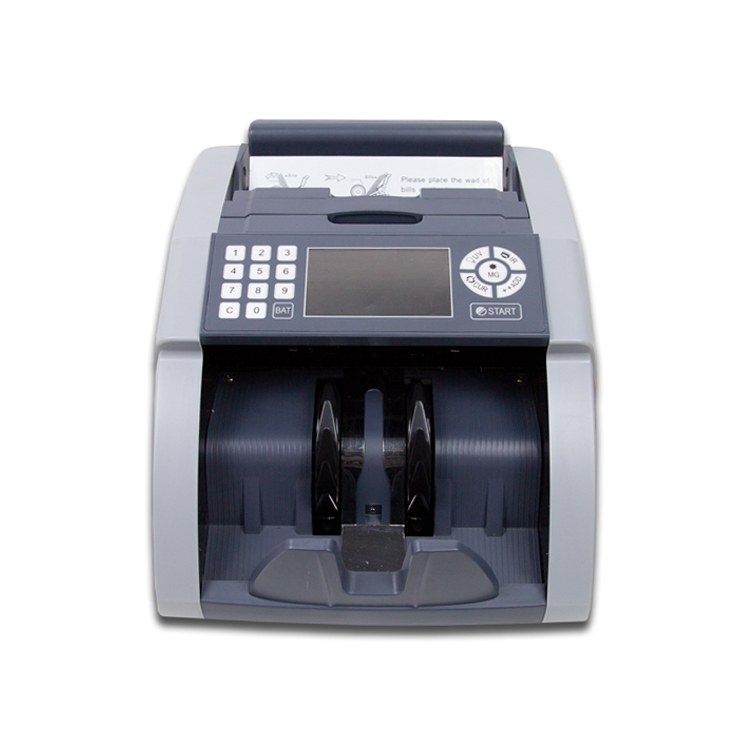

Every cash office lives by the same ritual: the shop floor stops, the safe opens, and someone has to prove that the money in the drawer matches the money on the sheet. Counting is the easy half. The difference between a routine close-out and an audit nightmare is what happens after the last banknote leaves the stacker — whether the count is verified, printed, reconciled and signed off. This guide walks through a practical end-of-shift routine for retail cash offices, bank branches and distributors, using the actual functions built into modern bill counters.
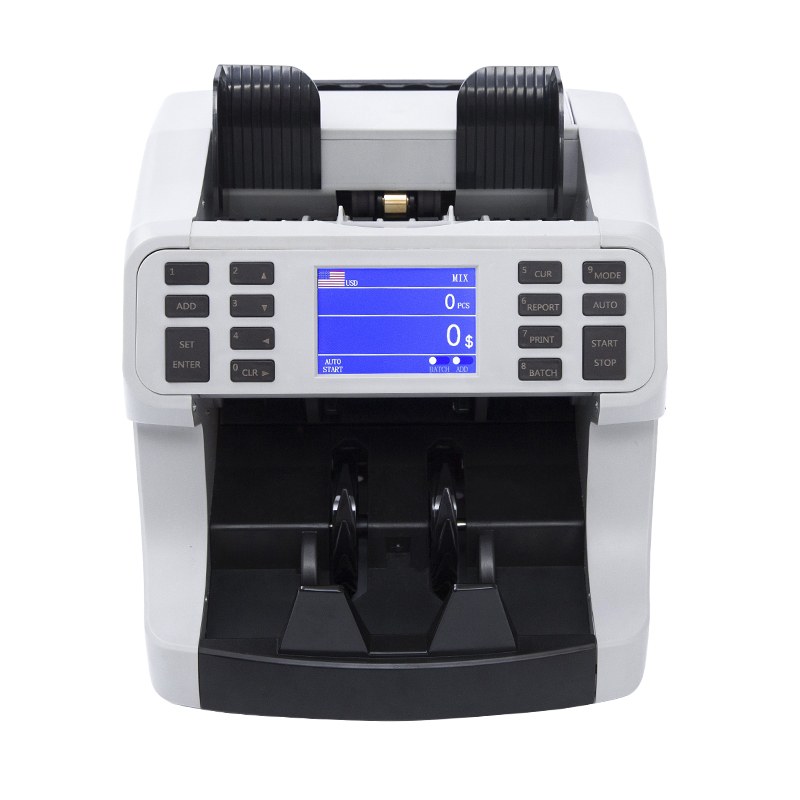
Step 1: Lock Down Your Counting Parameters Before the First Note
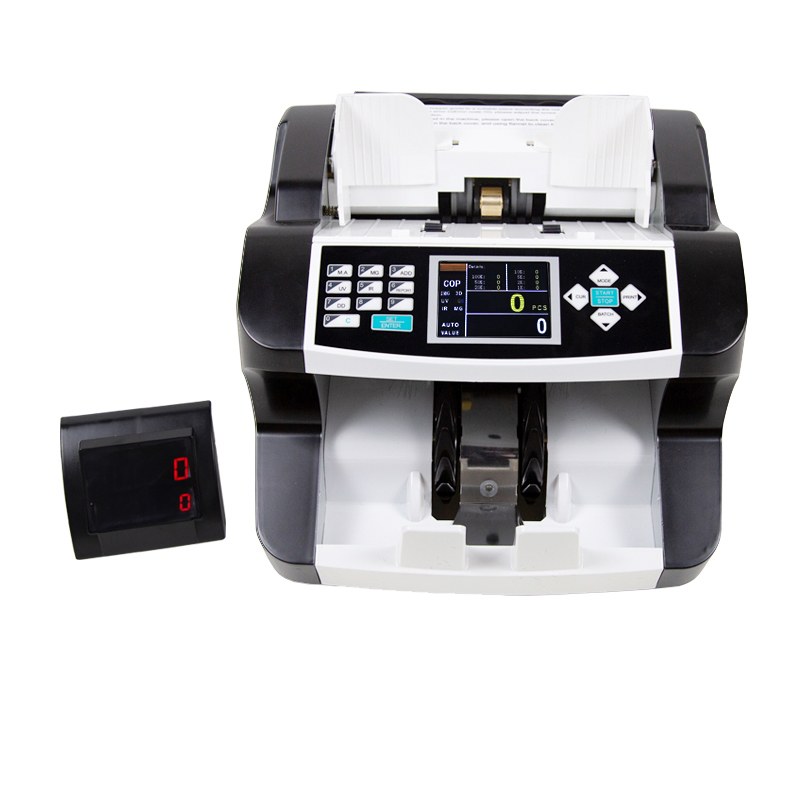
Shift reports only reconcile if every till was counted the same way. Before anyone touches a stack, standardise three settings on the machine:
- Mode: run mixed-value (MIX) counting so one pass produces both a piece count and a value total, instead of separating bundles by hand first.
- Batch discipline: use the batch preset for strap-sized lots and the add function for cumulative totals. On Easy-Banker counters such as the LD-8200, the add function accumulates up to a maximum of 999 notes, which covers a full cashier bag in one continuous record.
- Feed within capacity: the LD-8200 takes a 300-note hopper and delivers to a 100-note stacker. Overfilling the stacker mid-shift is a common cause of mid-count stalls and half-counted totals — empty the bin between tills, not between shifts.
Keep one machine, one operator sequence and one currency setting per close-out. If your team is still deciding how the counter's modes work in the first place, start with our walkthrough on setup, counting modes and daily operation.
Step 2: Quarantine and Verify Every Suspect Note
Alarms during the count are information, not verdicts. Three of the most frequent stop conditions on multi-currency machines have nothing to do with counterfeit production:
Width alarms. Machines with DD detection measure the width of every note against the first note of the pile. A creased, folded-corner or trimmed note of the same denomination triggers a “Width Different” message just as reliably as a foreign denomination. Fan the stack, straighten or remove the flagged note, and re-run from a clean reference note.
Thickness and feed alarms. The same spec window explains most rejections: notes must sit between 0.075 and 0.15 mm thick to be counted reliably. Sticky newly-issued bundles, taped repairs and laminated passes all fall outside that window. The automatic half-note, chained-note and double-note detection is doing its job — it is protecting your total, not fighting you.
UV alarms. Counterfeit pens and UV screens flag notes whose paper fluoresces brightly — but detergent residue, skin cream and wet storage also change how real notes react under ultraviolet light. Never condemn a note from one machine alarm.
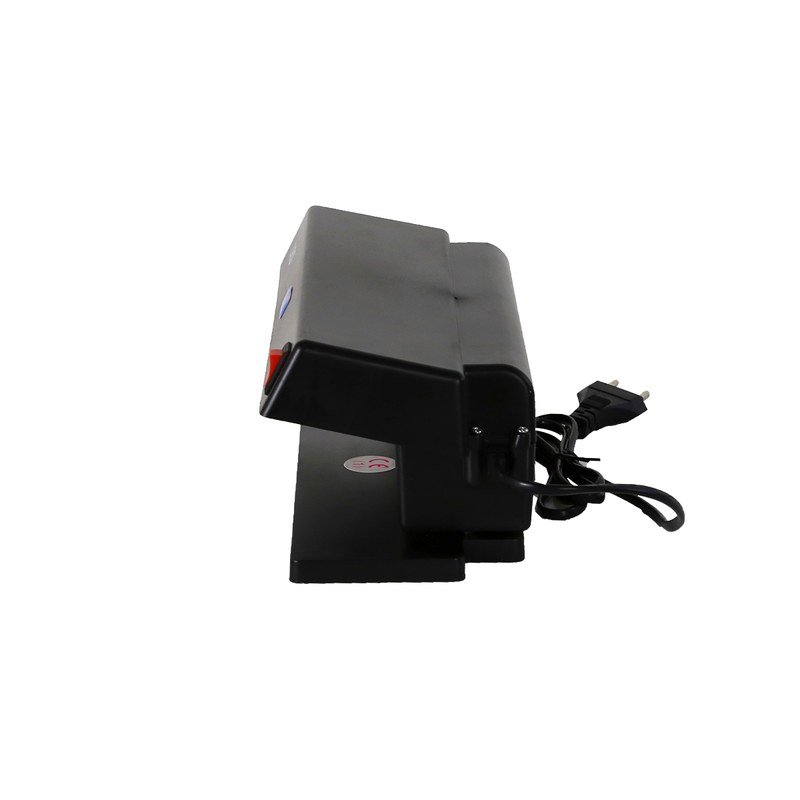
That is why a bench verifier belongs in every close-out kit. The DC-2028 desk detector is a small one: 270 × 120 × 100 mm, 0.55 kg net, a 16 W UV LED for fluorescence checks and a 16 W white LED side light for illumination, with switchable 110V or 210/220/230V input. It verifies banknotes, credit cards, passports and IDs on the same surface, so the flagged note can be examined under controlled light and compared against known-good stock before anyone writes it into the incident log. If rejects are chronic rather than occasional, the underlying cause is usually sensor hygiene — follow the daily-to-monthly cleaning routine before blaming the batch.
Step 3: Turn Totals Into a Record — Print or Export
A total that exists only on a display can be challenged; a printed line cannot. Two options cover almost every cash office:
Print at the machine. The LD-8700 value counter includes a built-in printer, so each counted lot leaves the machine with a physical ticket: denomination-mode totals, piece count and value on an 8-digit TFT display mirrored onto paper. Its 500-note hopper and 200-note stacker let a cashier bag be processed in fewer feeds, and it counts at 900/1000/1200 notes per minute. Physically, it still occupies only 274 × 259 × 265 mm and 5.5 kg — it lives on the desk beside the safe, not in a stockroom.
Export to the host. If your back office keeps electronic journals, machines with USB and RS232 ports — like the LD-1910 (1,000 notes/min, 200/200 hopper-stacker, TFT batch display) — pass totals to a computer so the close-out sheet and the machine record are generated from the same run.
Either way, the printed or exported slip becomes the operator's signature target. No slip, no sign-off.
Step 4: Reconcile Against the Sheet With Fixed Rules
Reconciliation fails when tolerances are improvised. Decide in advance: the variance threshold that triggers a recount (for example, one strap), who recounts (always a second person, never the original counter), and how suspect notes are booked — quarantined physically in an envelope, listed on the report with denomination and serial if readable, and forwarded per your bank's or head office's counterfeit procedure. If you are not sure what the counter's alarms actually detect while you count, this breakdown of half-note, chained-note and double-note detection will make the incident log much easier to read.
Step 5: Band, Label and Lock the Verified Cash
Verified and reconciled notes should never return to the drawer loose. Strap each signed-off lot, label it with the shift code and the print ticket number, and log the strap into the safe count. The notes that failed verification stay out of circulation entirely — a single repeatedly-rejected note costs more time across shifts than the machine that flags it.
Step 6: Know When the Close-Out Needs a Sorter, Not More Shifts
When quarantine envelopes grow weekly and re-counts become normal, the desk counter is carrying a cash-centre job. A sorter separates the problem automatically: the BS-631 runs at 800/1000 banknotes per minute with a feeder of up to 1,000 notes, three output pockets (3 × 100, extendable to 200 by software) and a dedicated reject pocket of up to 100 notes — so suspect and unfit cash lands in its own bin, counted and ready for the incident log without a second pass.
The Habit That Saves the Audit
Close-out discipline costs about ninety seconds per till: fixed parameters, verified suspects, printed totals, written variances, strapped cash. Distributors evaluating machines for supermarket chains and bank branches should weigh printer and interface options — built-in printer, USB/RS232 export — in the specification sheet, not just counting speed. Talk to Easy-Banker's team about configuration and OEM options for your market's cash office workflow.