How Does a Money Counter Work? Inside the Sensors That Count Your Cash
At a cash centre, a machine digests a fresh hopper of notes and flashes a total before the teller has blinked. One note per 0.1 second, counted, checked and sorted - without a single guess. Here is what actually happens inside a banknote counter.
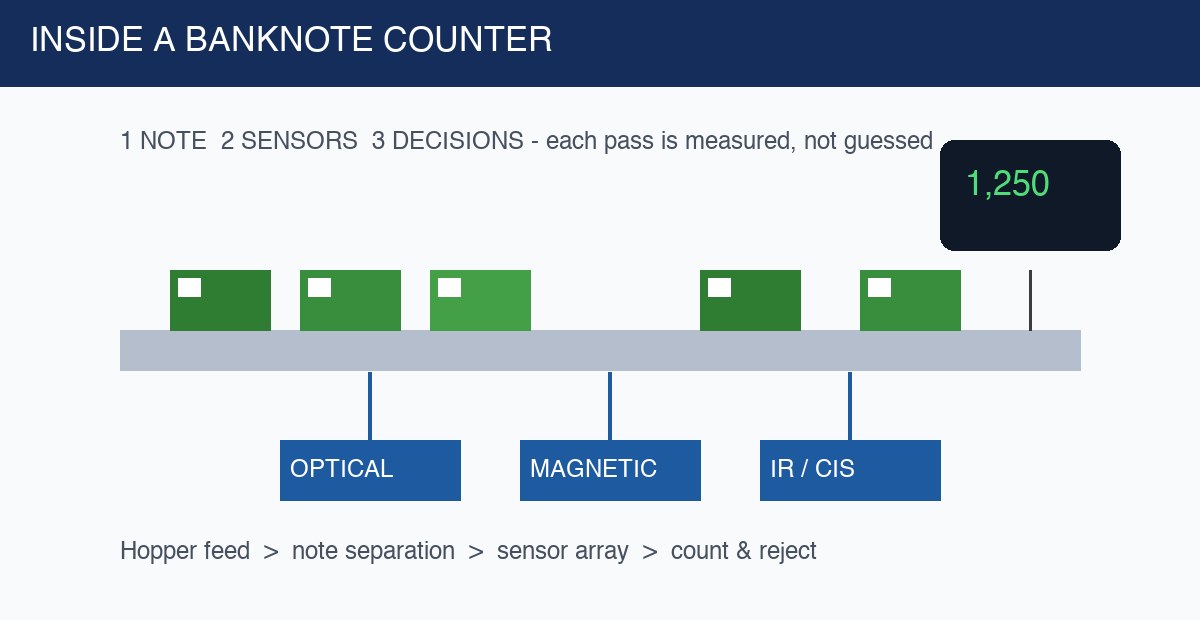
1. Hopper feed and note separation
Notes drop from the top hopper onto rubber belts and suction-style separators that peel one sheet at a time. A double-fed pair is the classic failure mode of cheap machines, which is why separation rollers and a thickness check sit at the very start of the path.
2. The optical pass: every note is measured
Inside the channel, a photocell beam watches each sheet. Overlap and double notes bend the light differently from a single note, so the counter hears the difference before it adds to the total.
3. Magnetic, infrared and imaging checks
Real banknotes carry magnetic ink, IR-absorbing patterns and machine-readable security features. Magnetic heads confirm the ink signature, IR lamps read the pattern, and CIS image sensors profile the note so damaged, taped or printed-out fake sheets are flagged and dropped into the reject bin.
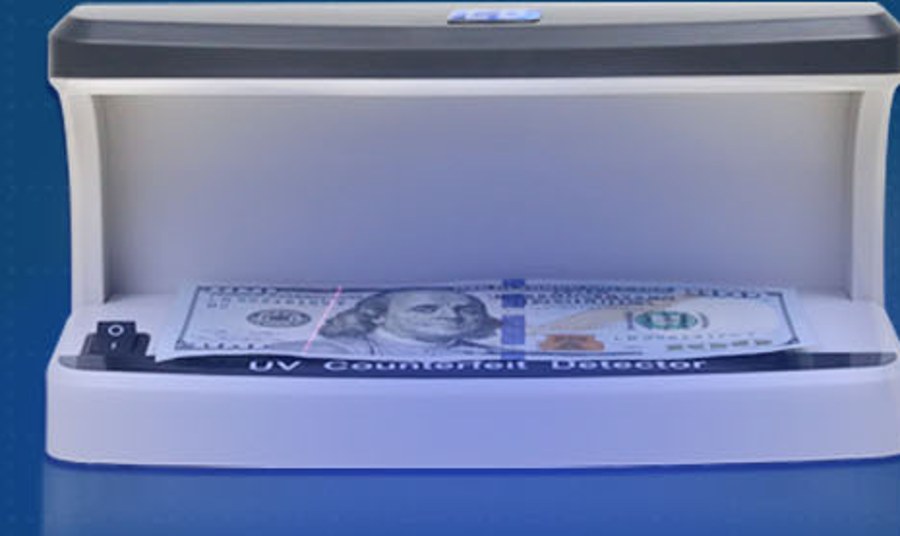
Under a dedicated ultraviolet lamp the security thread and fluorescent fibres light up - the same principle behind handheld and bench UV detectors used on the counter.
4. The decision, in milliseconds
All signals fuse into one verdict per note: count, warn or reject. Value counters add denomination recognition so mixed deposits come out as a total, batch mode stops the machine at 100 notes per bundle, and the external indicator reflects exactly what the sensor line saw.
Which machine for which job
Simple quantity and value counting lives in the front-loading counter range; UV and light-box verification sits with the DC-5000; full series and condition sorting - the imaging step scaled up - is what the BS currency sorters do pocket by pocket.
FAQ
Why does a counter reject clean-looking notes? Worn magnetic ink or a faded IR pattern reads as a signature mismatch; the note may be genuine but unfit for machines.
Can one machine count mixed currencies? Multi-currency models hold note libraries per currency; the teller picks the set or the machine auto-detects, depending on the series.
How often do sensors need cleaning? In daily cash-room use, dust from old notes coats the optical beam; a wipe-down weekly keeps reject rates low - see the specification table on each product page for duty details.