A Day of ECB Decisions: Rates Held, a Succession Clock and the 2027 Cash Roadmap
On 29 October 2026, the European Central Bank delivered three signals in a single day: a monetary policy decision, the resignation date of its President, and a keynote speech on Europe's next financial-infrastructure milestone. None mentions banknotes. All three shape the procurement calendar of every bank, cash-in-transit company, retail chain and distributor buying cash handling equipment for 2027.
1. Rates on hold: a predictable cost environment for cash programmes
The ECB's Governing Council kept its three key rates unchanged, with the deposit facility, main refinancing operations and marginal lending facility holding at 2.50%, 2.65% and 2.90% respectively, per the official decision published 29 October 2026 (ecb.europa.eu). The statement cited rising energy prices as an upside risk to inflation and a downside risk to growth, stressed that the Council "is not pre-committing to a particular rate path", and noted the APP and PEPP portfolios run off "at a measured and predictable pace".
For cash operations managers, this is what capital budgets like: no sudden re-pricing of the carrying cost of vault inventory, no reason to freeze a multi-year branch or cash-centre refresh. Where a programme was already justified by fitness compliance or throughput gaps, the macro case did not change this week.
2. The succession clock and the euro banknote redesign decision
In a second release the same day, the ECB said President Christine Lagarde informed the Governing Council and the President of the European Council, Antonio Costa, that she will step down on 7 February 2027. Her successor will be appointed by the European Council under the nomination process of Article 283 of the Treaty on the Functioning of the European Union.
Why buyers should track an appointment calendar: the Council that decides the next euro banknote series is not the body that will oversee its rollout. The ECB's redesign FAQ, ahead of the decision expected at end-2026, states the six denominations from €5 to €200 will not change and that sizes and dominant colours are likely to remain broadly the same, precisely to limit the costs of adapting banknote handling machines. The decision lands this year; the machine-adaptation window straddles the February 2027 handover. The practical reading is continuity, not revolution.
One caveat, stated plainly: the machines below are Easy-Banker models with our own sensor configurations; they are not on the Eurosystem's list of customer-operated tested machines, and no buyer should assume a certification a vendor has not shown in writing.
3. A modernisation agenda that runs beside cash, not instead of it
Also on 29 October, Executive Board member Piero Cipollone said in Frankfurt that Europe will move to next-day (T+1) securities settlement on 11 October 2027, with T2S night-time settlement changes planned from June 2027, framing tokenisation and distributed ledger technology as an opportunity to simplify the architecture of finance itself.
It is tempting to read modernisation as the end of cash. The same institution's data says otherwise: more than 30 billion euro banknotes, worth over €1.5 trillion, remain in circulation, and the ECB's position is that the digital euro and a new series will coexist with cash. Across the Channel, the Bank of England's October 2026 communication likewise kept "cash still matters" as its premise, with the next series designed to retain current sizes and colours. What modernisation changes is not the volume line but the compliance line: fitness-reading, serial-number-capture and detector-interface bars keep rising — which is why our earlier explainers on the ECB rulebook and on firmware you must maintain repay a re-read before you spec anything.
4. A hard deadline on another continent to compare
While Europe moves by soft windows, India moves by date. The Reserve Bank of India's Note Sorting Machine Master Direction series (RBI/DCM/2026-27/473, dated 2 October 2026) sets BIS IS 18663:2024 as the procurement standard and requires banks and currency chests to retire non-compliant machines by 30 June 2027. Distributors with euro-area and Indian customers are running two clocks at once: a replacement deadline that cannot slip, and a redesign adoption curve announced this year and executed over several.
5. What belongs on a 2027 cash equipment sheet now
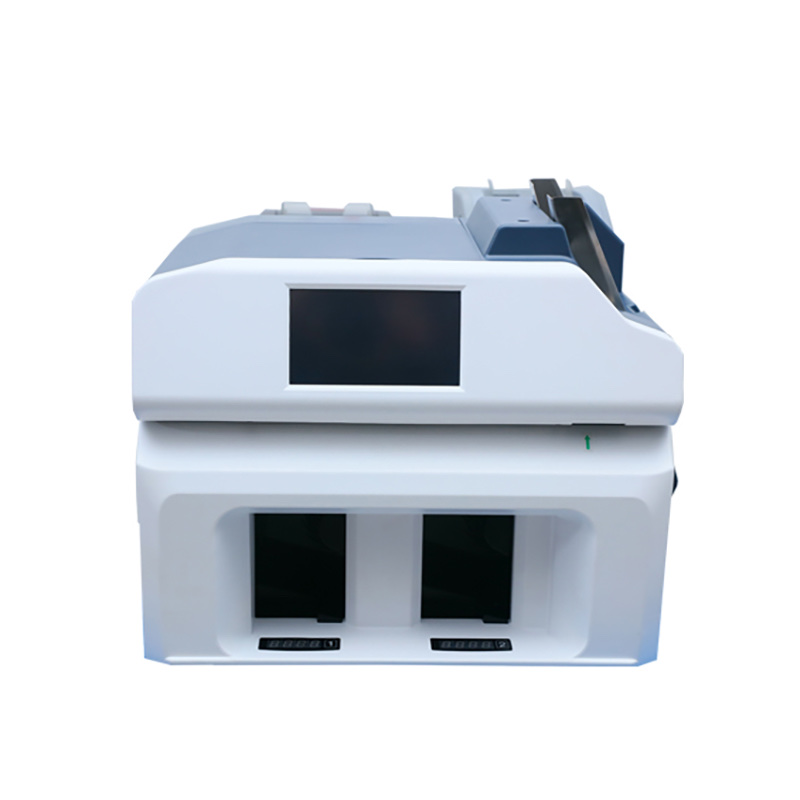
Fitness sorting at the CIT and branch layer. The BS-621 note sorter authenticates, values, sorts by denomination and fitness (FIT/UNFIT) at 800/1,000 banknotes per minute, with two output pockets (2×100, expandable to 200 by software) plus a reject pocket up to 100 notes. Its sensing stack — CIS at 200 dpi reading both sides by reflection and transmission in visible and IR, strong/weak magnetic and metal-thread analysis, RGB and UV washed-note checking, mechanical thickness analysis and serial-number capture to print or memory card — mirrors the parameter families the ECB framework measures. A fitness standard with no machine that reads it is just paperwork.
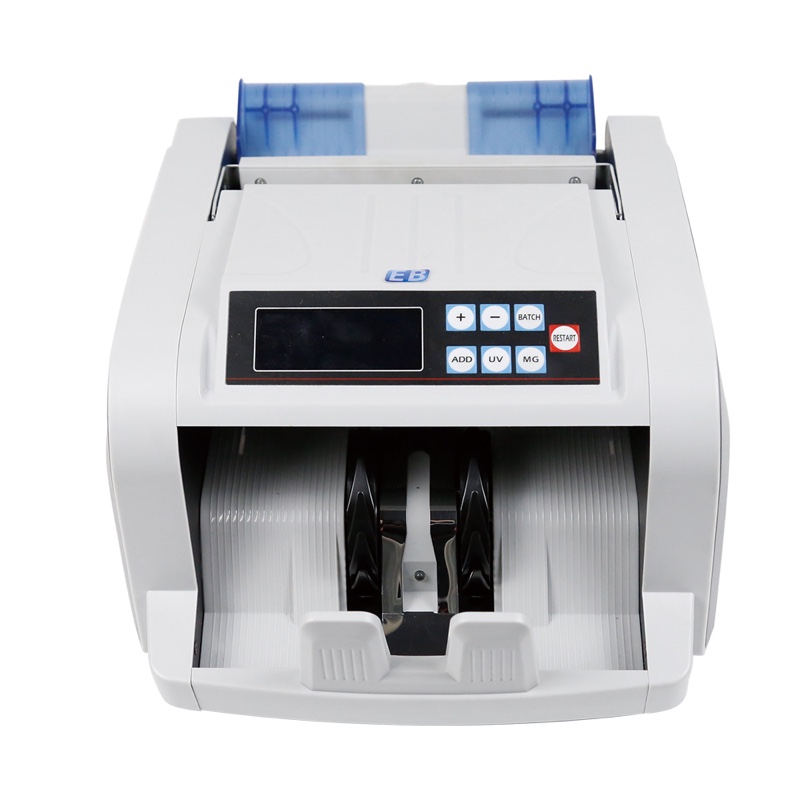
Counting and detection at the teller layer. The LD-2820 back-feeding counter runs 900 banknotes per minute with 130-note hopper and stacker, UV and magnetic detection, width-difference detection, automatic half-, chained- and double-note stopping, batch and add up to 999, and accepts notes from 50×110 to 90×180 mm at 0.075–0.15 mm thickness on AC 220–110 V at ≤80 W. The notes that break small counters operationally are worn, taped and half-note rejects long before they are design changes.
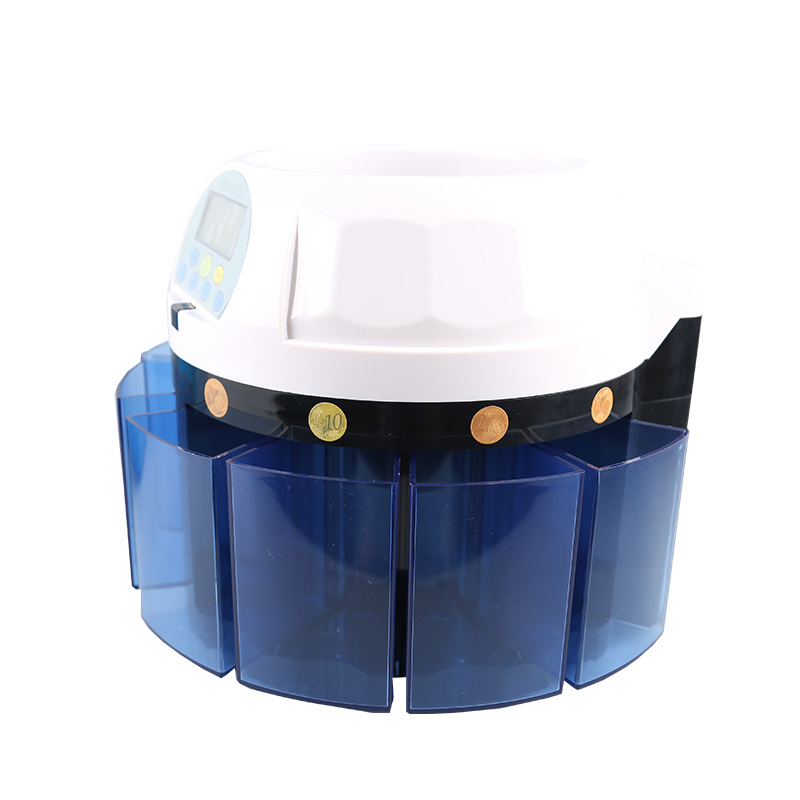
Coins, because retailers still bank them. The CS-6500 coin sorter sorts mixed coins into separate drawers at 650 coins per minute, with a 350–1,000 coin hopper, per-denomination batch function, LCD display, 302×278×258 mm footprint, 5 kg and 45 W on AC 220 V or 110 V. The coin bench is usually the cheapest capacity gain per dollar in a 2027 budget.
The takeaway for procurement planners
October 29 was not a drama day for cash: rates steady, a resignation eight months out, a settlement milestone on a fixed calendar. The buying discipline it implies is equally calm — treat the euro redesign decision expected before year-end as a design freeze, not a demand shock; treat the RBI 30 June 2027 date as a hard deadline for India-facing fleets; and put fitness-read and reject-detection capability, not marketing adjectives, at the centre of 2027 quotations. If you are building a 2027 spec sheet for a bank, CIT firm, retail chain or distribution catalogue, send our team your denomination list and throughput profile and we will size from the real specification tables — model by model, pocket by pocket.
Sources: ECB "Monetary policy decisions", "ECB President Lagarde to step down on 7 February 2027" and the Cipollone T+1 keynote (all ecb.europa.eu, published 29 October 2026, fetched directly from the ECB site on 30 October 2026); ECB banknote circulation and redesign FAQ (verified 21–26 October 2026); Bank of England notes programme communication (verified 28 October 2026); RBI Note Sorting Machine Master Direction coverage (verified 15 & 29 October 2026). Product parameters from the live Easy-Banker product pages on 30 October 2026.