Banknote Fitness Standards, Explained: The ECB Rulebook That Shapes Every Serious Sorter Spec
At the end of 2026, the ECB Governing Council is expected to choose the design of the next euro banknote series, following the public survey that ran from 23 July to 21 September 2026 on the ten shortlisted proposals. The most interesting sentence in the whole redesign is not about art. It is buried in the ECB's own redesign FAQ: the same denominations (EUR 5 to EUR 200) will be kept, and "to facilitate the changeover and limit the costs of adapting banknote handling machines, the sizes and dominant colours are also likely to remain the same." Central banks, in short, design their money around what machines can handle. If you specify a banknote sorter for a bank, a cash-in-transit company or a cash centre, the euro-area rulebook is the most quoted engineering checklist on the planet - and you can borrow it, whatever currency you process.
Twelve Defects: The Fitness List Every Sorter Must Translate Into Sensors
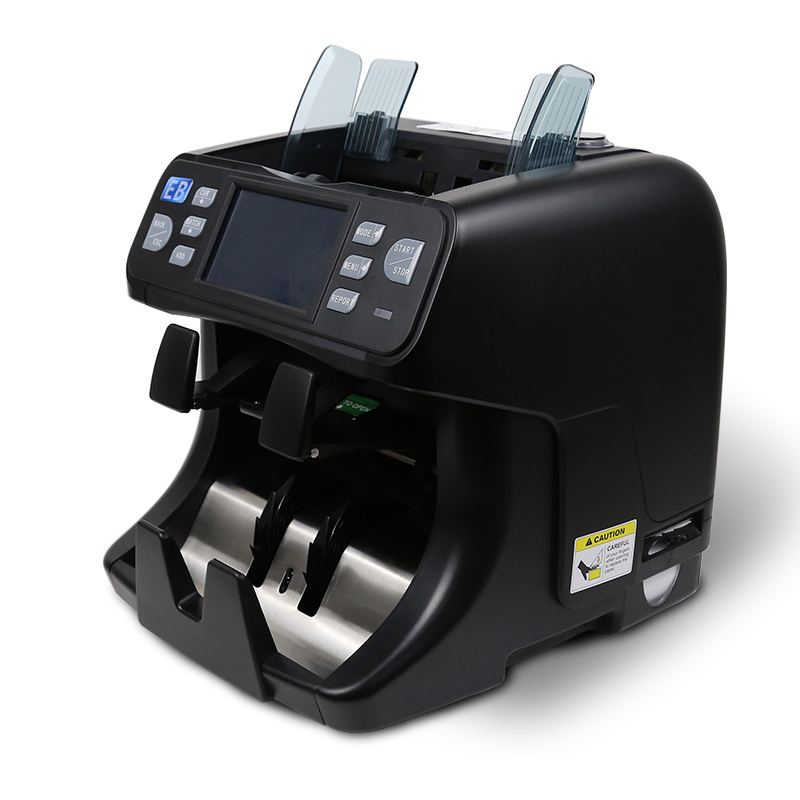
ECB Decision ECB/2010/14 (2010/597/EU), Annex IIIa, defines when a euro banknote is "unfit." It lists twelve mandatory defect criteria that an automated fitness check has to recognise: soil (general dirt across the note), stain, graffiti, de-inked notes, tears, holes, mutilation (a missing part along at least one edge), repair (parts joined by tape or glue), crumples (multiple random folds), limpness (structural loss of stiffness), folds, and folded corners. A human teller can spot all twelve; a machine has to map each one to a physical measurement. That is why serious banknote sorting machines combine image capture with mechanical probing. The BS-2080B we ship, for example, analyses each note by reflection on both sides and by transmission at 200 dpi in visible and infrared light, adds a UV channel, and measures mechanical thickness to decide FIT or UNFIT - a sensor stack that directly addresses the soiling, tear, repair and limpness families in the ECB table. It also runs a dedicated washed-banknote check, because a de-inked note looks clean to a naive camera.
The 5% Tolerance: Why "False Fit" Is a Regulated Error
The rulebook does not demand perfection - it demands bounded error. In the words of the Decision: "The acceptable tolerance level for the fitness checks by banknote handling machines is 5%. This means that a maximum of 5% of the euro banknotes that do not meet the fitness criteria may be misclassified by the machines and sorted as fit." Two error rates live inside every sorter, with opposite economics. False-fit (an unfit note recirculated) is capped at 5% because it degrades the quality of money the public sees; as vendors such as G+D note, it is the regulated failure. False-unfit (a fit note destroyed or returned to the central bank) is not capped - but every false-unfit is a direct financial loss and an unnecessary reprint. Ask any supplier two questions: what false-fit rate has been verified on aged, defective note sets, and what is my false-unfit bill at the same threshold setting? Configurable thresholds - not a single fixed sensitivity - let you tune that trade-off for your own note population.
Physical Separation: Categories, Stackers and the No-Intervention Rule
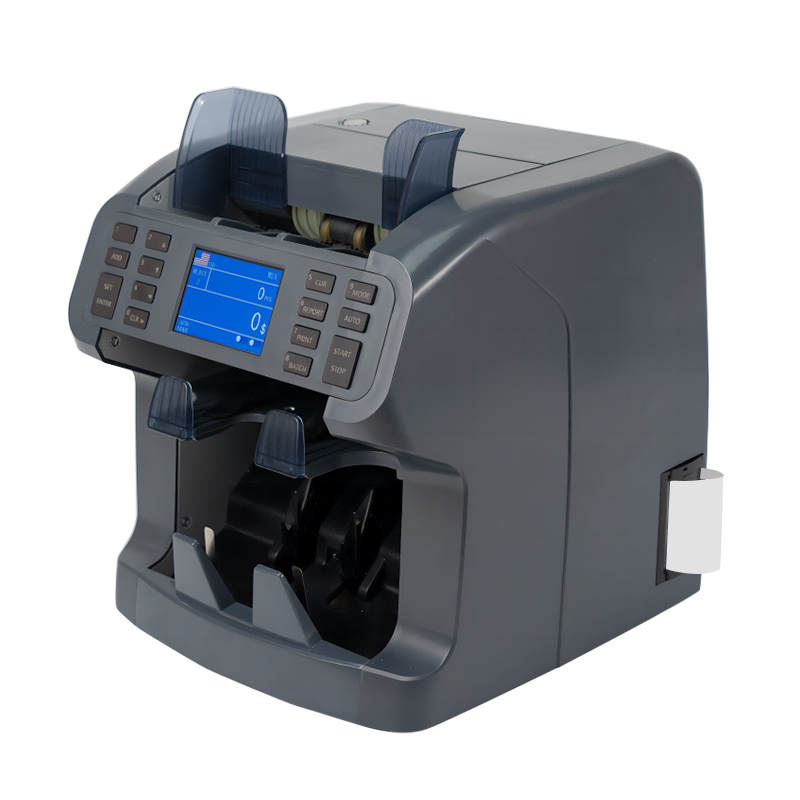
Fitness sorting is not software trivia; the Decision forces it into hardware. Banknotes must be classified and physically separated into categories - genuine-and-fit (4a) versus genuine-and-unfit (4b) - with suspect notes routed out of recirculation and handed to the national central bank no later than 20 working days. Annex IIb requires that fully automated classification happens "without the intervention of the machine operator," which means dedicated output stackers and routing flaps that never let unfit notes touch the fit stream. Two-pocket discriminator-sorters, such as our BS-8900, implement the pragmatic version of this discipline: one stack for fit value, one for suspect/reject output, with a 3.5-inch TFT, USB storage and a built-in printer so the sort decision leaves a paper trail. A machine that only nominally "knows" a note is unfit but lets it mix back into the fit stream fails the principle the rulebook was built around.
The Adaptability Clause: You Buy a Platform, Not a Snapshot
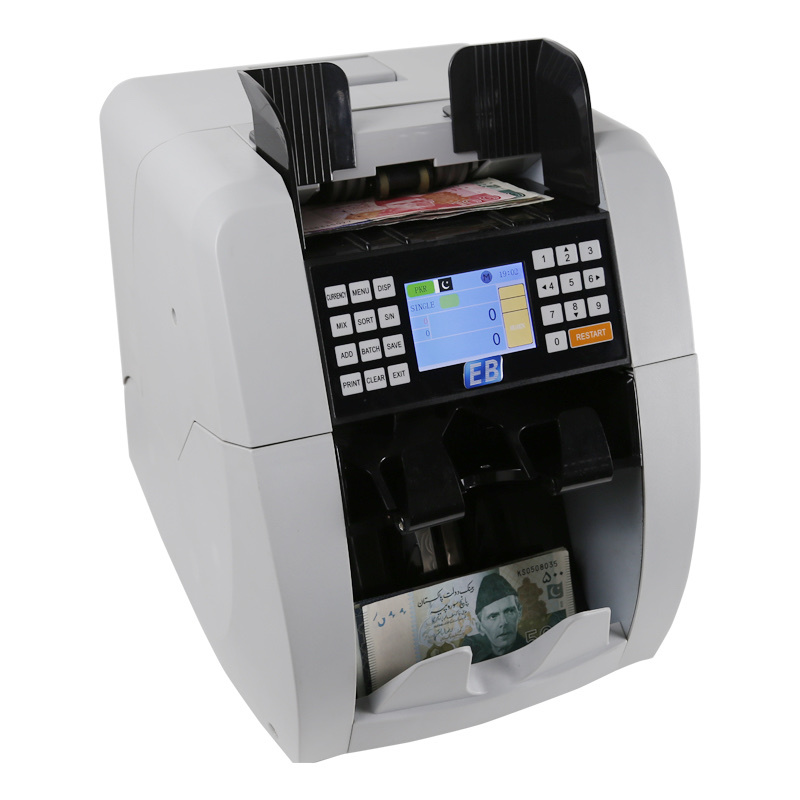
Another line rarely quoted but decisive at tender time: banknote handling machines "have to be adaptable to ensure that they are capable of reliably detecting new counterfeits" and "to enable the setting of more or less restrictive fitness sorting standards" (Annex I, section 1.2 of the same Decision). Counterfeit campaigns and note ageing evolve every quarter; a sorter whose detection can only be updated by returning the unit to a workshop is already obsolete, and serial-number capture belongs to the same traceability story. The BS-8800 captures each note's serial number, with results printable and storable to a memory card, and reads strong-magnetic, weak-magnetic and metal-thread features across USD, EUR, GBP, CNY, JPY, KRW, RUB, INR and other currencies at 800-1,000 banknotes per minute.
Why Buyers Outside the Eurozone Should Care Anyway
The euro framework binds euro cash handlers: since 2011, commercial recirculation is only allowed for notes processed on machines that passed Eurosystem testing and appear on the ECB's published list, and cash handlers report machine types, volumes processed and volumes sorted unfit every six months (see ECB Occasional Paper No 204 on euro banknote quality in circulation). Easy-Banker machines are built for multi-currency markets worldwide and are not positioned as Eurosystem-listed recirculation devices - buyers targeting regulated euro recirculation should verify the ECB list before procurement. But for banks, CIT operators and cash centres from Lagos to Jakarta, the ECB rulebook has become the de facto procurement template precisely because it translates vague promises like "accurate sorting" into measurable obligations: twelve named defects, a bounded false-fit rate, physical category separation, serial traceability and field-updatable detection. The ECB's own redesign logic - stable sizes and dominant colours so machines are not rebuilt - tells you what to demand: currency parameters that absorb a new series without replacing the fleet. For higher-volume sorting, see our larger BS-2090.
A Five-Question Checklist Before You Order a Sorter
Before you order a banknote sorter, ask five questions, each lifted straight from the ECB discipline: (1) Which fitness defects does the machine actually measure, and with which sensors - image, UV, magnetic, mechanical thickness? (2) What false-fit rate has been verified on an aged note population, and can the threshold be adjusted? (3) Does the output path physically keep unfit and suspect notes away from the fit stream without operator intervention? (4) Is detection software updatable for new counterfeits and new note series, as the size-colour stability of the 2026 euro redesign hints they will be? (5) Does every batch leave an auditable record - count, value, rejects, serial data? If the answers are concrete, you are buying a platform. If they are marketing adjectives, you are buying tomorrow's scrap metal. Our sensors explainer breaks down how optical, magnetic and thickness channels work inside; for distributor pricing or a review of your tender specification, use the inquiry page.