Central Banks Mandate Machine Cash Verification: BOT & RBI Rules
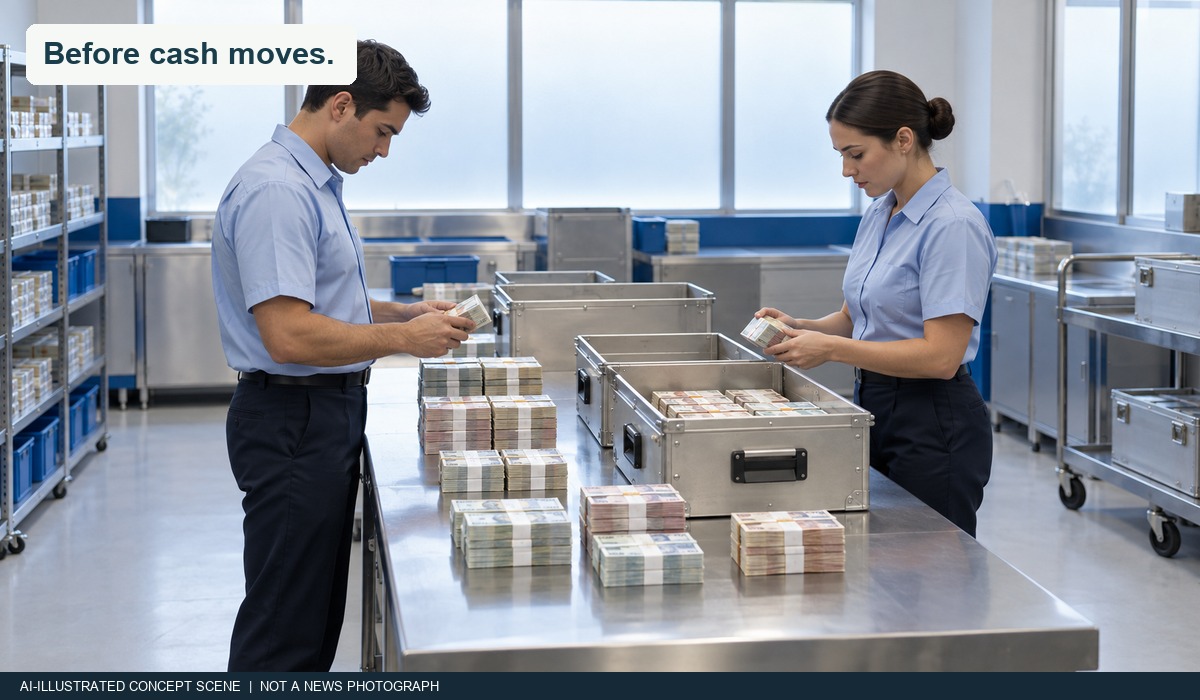
Two central banks changed the rules for physical cash this autumn, and both changes point in the same direction: cash is no longer handled on trust. The Bank of Thailand is tightening scrutiny of every large banknote transaction moving through Thai banks, and the Reserve Bank of India has told commercial banks that machines — not eyes — must verify the notes their branches receive. For distributors of cash handling equipment, a rule that forces banks to buy detection and sorting hardware is a demand signal worth understanding early.
The Bank of Thailand Extends Cash Controls to Deposits and Exchanges
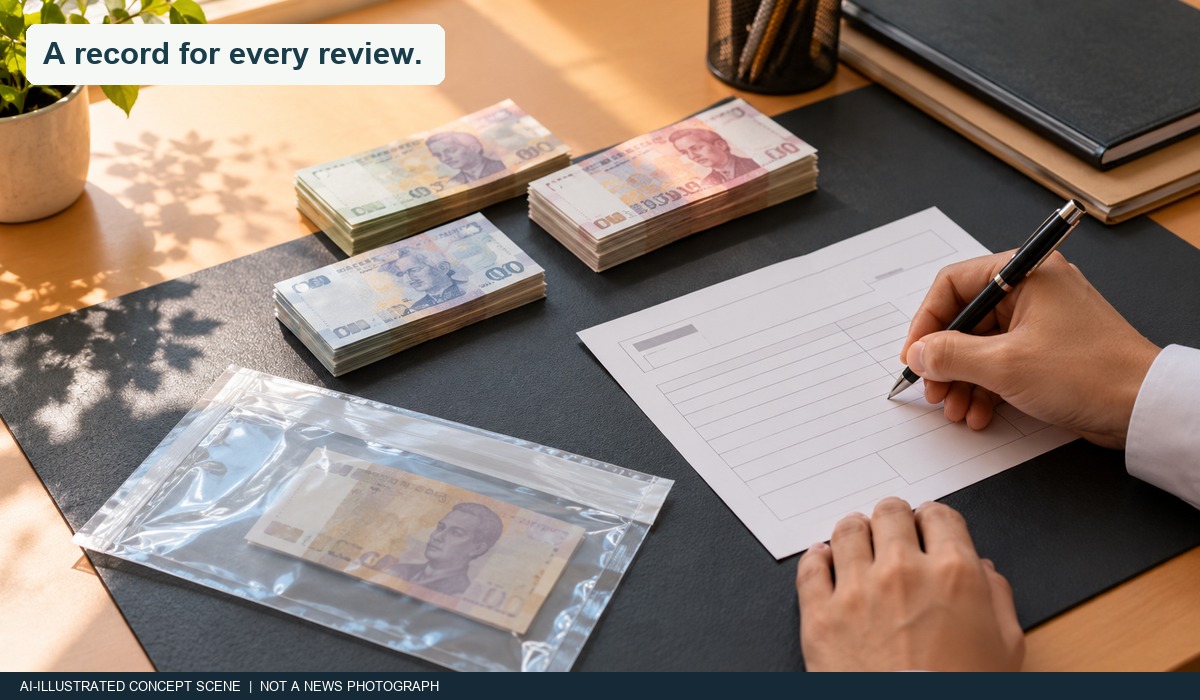
Since 1 April 2026, anyone withdrawing 5 million baht or more in cash at a Thai bank branch in a single day has had to tell the bank what the money is for. The Bank of Thailand (BOT) now reported that the measure reduced large cash withdrawals by roughly 35 percent, according to figures quoted by Bangkokbiznews and Money & Banking Magazine — evidence that the disclosure requirement genuinely changed behavior rather than just adding paperwork.
The next phase goes further. In August 2026 the BOT opened a public consultation (5 August to 3 September) on a draft revision that expands "cash-related transactions" beyond withdrawals to cover four new categories: cash deposits of 5 million baht or more, Thai baht banknote exchanges between denominations, cash received in exchange for issuing cheques and drafts, and the purchase, sale or exchange of foreign banknotes. Under the draft, which the BOT intends to bring into force on 15 October 2026, the person depositing the cash must explain where it came from — not just the person withdrawing it. Law firm Tilleke & Gibbins, which summarized the draft in detail, notes that banks must run enhanced customer due diligence on any flagged transaction and must refuse the transaction entirely if the check cannot be completed.
One practical consequence is easy to miss: the draft explicitly covers banknote exchanges. Converting 10 million baht in 1,000-baht notes into 100- or 500-baht notes — a routine request from markets, retailers and cash-intensive businesses — now requires a stated justification. Cash centers, armored-carrier operators and the retail chains they serve will feel that first.
India's RBI Puts Machine Verification on the Branch Checklist

On 31 July 2026 the Reserve Bank of India issued a circular directing that every branch located in a district along India's international borders must be equipped with note authentication and sorting machines. Reporting by New Kerala, The Daily Jagran and PropNewsTime confirms the key obligations: all banknotes received at these branches must be examined for authenticity using machines; detected counterfeits must be impounded — never returned to the tenderer or destroyed at the branch; and a serialised acknowledgement receipt, countersigned by both cashier and tenderer, must be issued whenever a fake note is seized.
The directive builds on the RBI's April 2026 Master Direction on Fake Indian Currency Notes (FICNs), which already required all branches and identified back offices to have ultraviolet lamps or note sorting/authentication machines. The border-district order hardens that baseline into a location-specific mandate, and the RBI set a hard deadline for the human half of the program: all cash-handling staff must complete security-feature training by 31 October 2026. Banks were also told to activate their Forged Note Vigilance cells to analyze FICN data and map hotspots.
Read together, the two measures say the same thing in different legal languages: note-by-note machine verification is becoming a compliance expectation, not an operational preference.
What This Means for Banks, CITs and Cash Centers
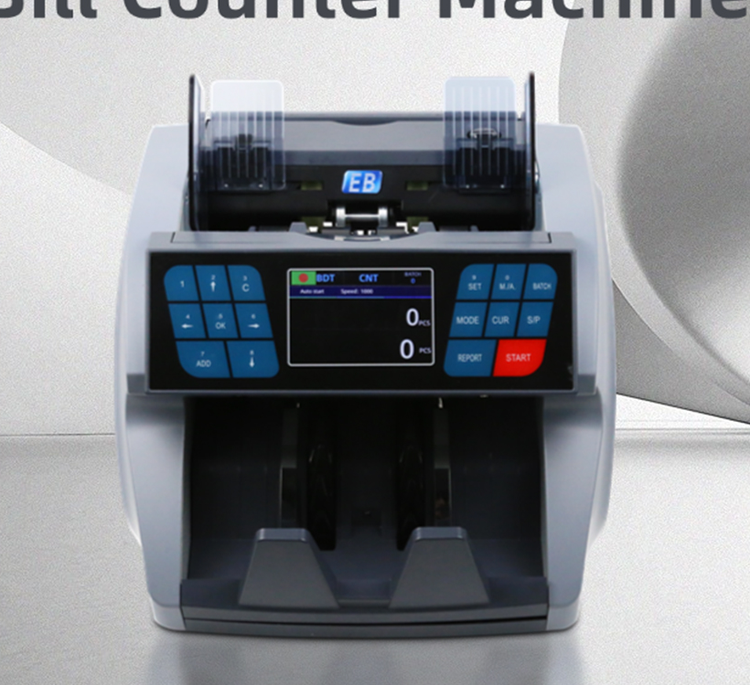
For branches inside scope, compliance decomposes into three hardware layers. First, detection at the counter: at minimum UV authentication under the RBI's April direction, and in practice multi-sensor machines, because staff trained on security features will escalate the notes a machine rejects. A compact UV+MG detector such as Easy-Banker's DC-5100 covers the counter-level check with magnetic-ink and ultraviolet verification plus a magnifier for the manual confirmations training teaches.
Second, counting with authentication built in. Once every received note must be machine-examined, banks find it cheaper to let the value-counting pass do the authenticity screening too. Front-feeding and back-feeding counters with UV, MG and IR sensors — for example the LD-series mixed denomination value counters — process teller-box volumes while flagging suspect notes for the impound-and-receipt workflow.
Third, sorting and fitness. The RBI circular names sorting machines explicitly, and the Bank of Thailand's denominational-exchange clause steers large volumes of physical notes through cash centers that grade and re-issue them. That is the natural entry point for currency sorters and, downstream, bundling: banded bundles are how sorted cash moves between a cash center and its branches.
Distributor Playbook for the Next Two Quarters
Distributors serving Thailand, India and the Gulf-SEAsian corridor should treat these rules as a sales calendar. In Thailand, the 15 October effective date means branches and the cash centers serving them need note-count-and-verify capability on the deposit side before year-end; cash exchanges bureaus that trade foreign banknotes fall under the same draft and are historically under-equipped. In India, the border-district list is a public target map: hundreds of named branches must show machine verification, and the 31 October training deadline tells you the hardware orders already placed are about to be installed and used.
Two practical pitches work better than generalities. Offer the counter tier (UV detector) and the machine tier (value counter with detection, or sorter) as one compliance package rather than three separate quotations — procurement teams under a circular buy against the checklist in the circular. And lead with documentation support: buyers facing a central-bank audit value manuals, training material and inspection reports almost as much as the hardware, because the RBI directive pairs machines with mandatory staff training.
Regulation does not usually create demand for counting machines — but when a central bank writes "note authentication/sorting machines" into a compliance circular and adds a deadline, it effectively does.
Bottom Line
The BOT's 35 percent drop in large withdrawals shows these rules change real behavior, and the expansion to deposits and exchanges from 15 October extends the friction to the receiving side of cash. India's machine mandate at border branches shows the same instinct expressed as hardware specification. Cash handling equipment distributors who map these requirements onto product tiers — detection at the counter, verification inside counting, sorting at the cash center — are selling compliance outcomes, not machines. Easy-Banker manufactures the full tier range and supports distributors with OEM/ODM programs; contact the sales team for configurations matched to these regulations.