Money Counters for Banks: What Branches and Cash Centers Really Need
Money Counters for Banks: What Branches and Cash Centers Really Need
A bank branch and a cash processing center both count money, but they do it for different reasons, at different volumes and with different risks. A teller lane needs a compact, fast counter that a cashier can trust between customers. A cash center needs machines that count mixed denominations by value, flag suspect notes and survive ten-hour shifts. Buying the wrong class of machine for either job is one of the most common procurement mistakes we see across our distributor network.
Easy-Banker manufactures banknote counters, currency detectors, banknote sorters and cash bundling equipment for distributors and institutional buyers in the USA, Southeast Asia, South America, Africa, the Middle East and Europe. This guide explains what each banking environment actually needs from a money counter, so specifications match the workload instead of the brochure.
1. The Teller Lane: Speed, Footprint and Simple Detection
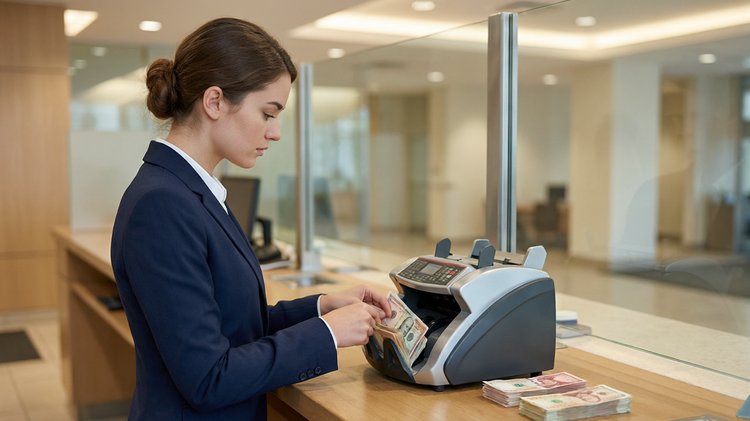
At the branch counter, the machine is part of the customer experience. It must start counting the moment a bundle is dropped in, finish in seconds and give the teller an unambiguous result. For this role, a back-feeding bill counter with UV and MG detection, automatic start/stop and a clear TFT display is usually the right class: small footprint, one-hand operation, and detection that covers the two most common counterfeit markers on circulating notes.
What matters most here is not top speed on paper but consistency on worn notes. Branch cash is old cash: soft, taped, folded. A counter rated at 1,000 notes per minute that jams on worn notes is slower in practice than a 900-note machine that never stops. Ask any supplier for the reject rate on circulated notes, not only the nameplate speed.
2. The Cash Vault and Back Office: Mixed Value Counting
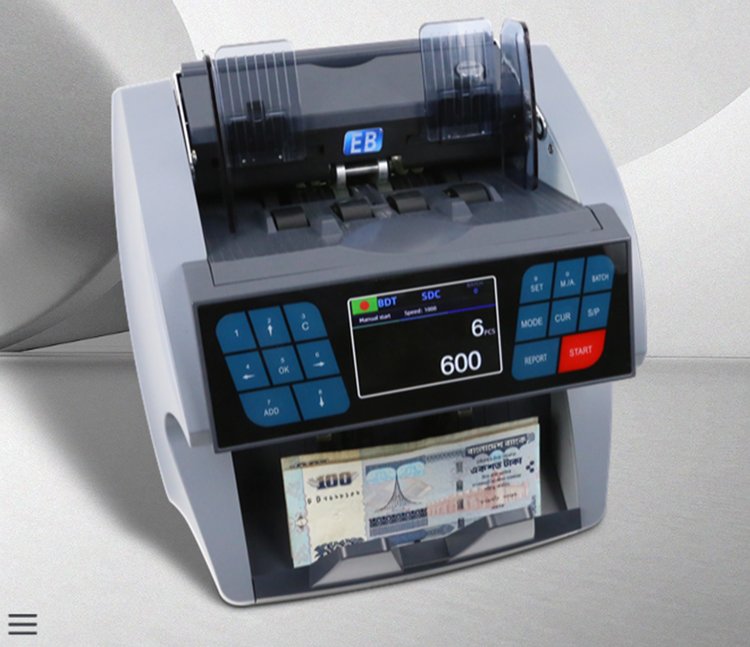
Behind the counter, deposits arrive as mixed bundles from retailers, fuel stations and ATM replenishment. Counting them by hand denomination is the most expensive labor line in a cash center. This is where mixed-value counters and sorters earn their price: machines with CIS sensors read each note, count by denomination and report the total value in one pass. Models with serial number scanning add a second layer - an audit trail per note, which cash-in-transit companies and central bank depots increasingly require.
When specifying this tier, check three numbers: counting speed per denomination mode, stacker and hopper capacity (200-note stackers reduce operator stops), and whether value counting is field-upgradable per currency. A machine that needs a factory return to add a new currency is a hidden cost every time a central bank issues a new series.
3. Detection Depth: UV and MG Are the Floor, Not the Ceiling
UV (ultraviolet) and MG (magnetic) detection verify two security features present in most world currencies. For branch use they are the accepted baseline. For cash centers handling high-value deposits, IR (infrared) and CIS image analysis add protection against higher-quality forgeries that pass UV alone. The rule of thumb we give distributors: match detection depth to the value of a single missed note in that position, not to the average note.
4. End of Day: Bundling and Handover
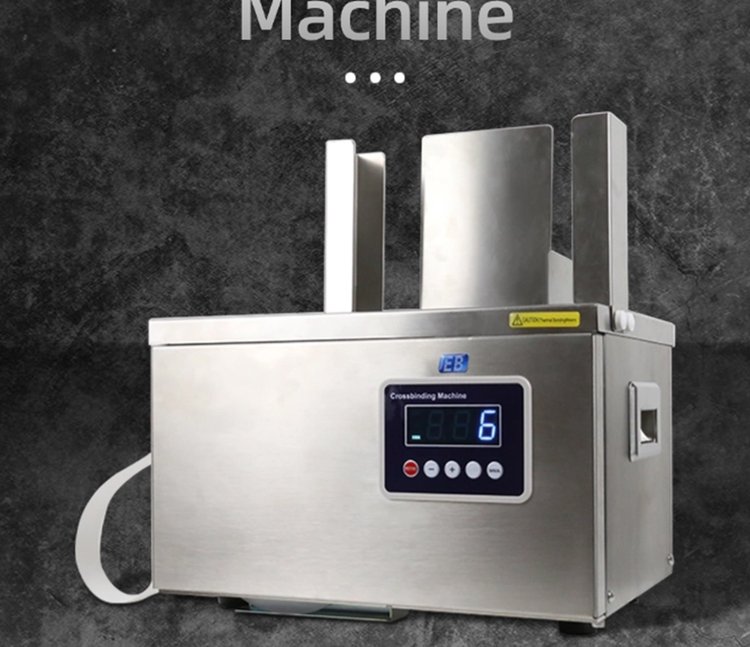
Counted cash has to be bundled, strapped and sealed before it moves. An automatic banknote banding machine turns a manual, tape-and-rubber-band task into a repeatable 20-plus bundles-per-minute operation with consistent tension and clean, printable straps. For branches this is a back-office convenience; for cash centers it is throughput infrastructure. Pairing counters with a bundling machine from the same supplier also simplifies spare parts and service training.
5. Durability, Service and the Distributor Question
Bank equipment runs five to seven days a week. The commercial questions that decide total cost of ownership are: roller and sensor replacement intervals, availability of spare parts kits in region, firmware currency support, and whether the supplier offers OEM branding so your company - not a factory label - stands behind the machine. Easy-Banker supplies all of its counter and sorter lines OEM/ODM, with documentation and spare parts programs built for distributors rather than end users.
6. Where the Industry Is Heading in 2026
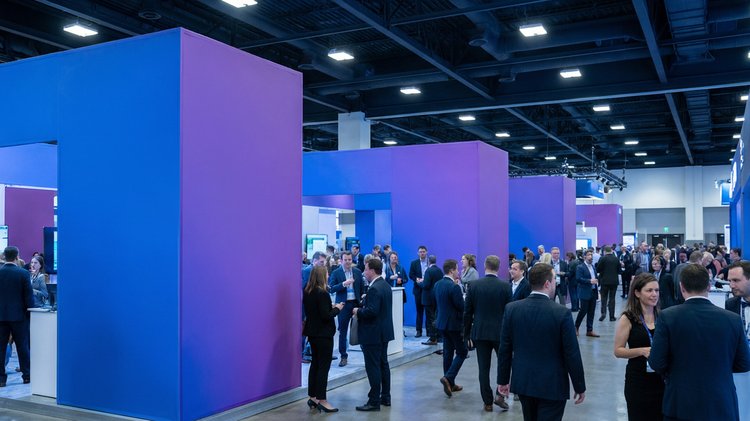
Cash handling sits inside a wider payments conversation this autumn. Money20/20 USA, the largest fintech and payments gathering in the United States, runs October 18-21, 2026 at The Venetian Expo in Las Vegas (per the organizer's published event dates), where cash logistics, branch transformation and fraud prevention share the agenda with digital payments. For cash equipment buyers, these events are useful less for the keynote stage than for the operator tracks: how banks are re-balancing branch cash, ATM and cash-center capacity. (Event facts: Money20/20 official site, accessed September 2026.)
7. A Simple Specification Checklist
- Branch teller lane: back-feeding counter, UV+MG, auto start/stop, compact footprint, worn-note reliability.
- Branch back office: batch (preset) counting, external display option, daily duty cycle rating.
- Cash center intake: mixed-value counting, CIS sensors, 200-note stacker, serial number scanning where audit is required.
- Cash center output: automatic bundling, strap printing, seal integrity.
- Every tier: spare parts availability in region, currency firmware update path, OEM/ODM terms.
If you distribute cash handling equipment or supply banks and retail chains, talk to Easy-Banker about the counter and sorter lines behind this guide - factory-direct, with OEM branding and distributor pricing. Send your target specifications and volumes and we will return a model shortlist with quotations.