HSP Asia 2026 Hong Kong: The Banknote Cycle Agenda for Cash Equipment Buyers
Next week, Hong Kong hosts one of the most consequential gatherings for anyone whose business depends on physical money. High Security Printing (HSP) Asia 2026 runs from 30 November to 2 December 2026, organised by Reconnaissance International. The official event site shows the conference "Sold Out", directing late interest to HSP EMEA in Vienna. Asian editions typically draw 300-350 delegates, and the audience is decision-heavy: central banks, state print works, currency issuers, security-feature suppliers and cash-cycle operators.
Easy-Banker is not exhibiting at this event. But if you distribute or operate banknote counters, detectors and sorters, the programme is worth reading closely — almost every currency-track topic eventually lands on a machine that has to count, detect or sort real notes.
What the Programme Says About Asia's Banknote Future
The official programme, as published on hsp-asia.com (checked 30 October 2026), opens the main conference on Tuesday 1 December with a session titled "The Currency and ID Landscape in Asia". The speaker line-up reads like a who's-who of the regional currency establishment: currency news from the Hong Kong Monetary Authority, "Affordability of Cash in Asia" from the International Currency Association (ICA), "Driving Banknote Innovation: New House Notes" from China Banknote Printing and Minting Corporation (CBPM), and "Imagining Indian Currencies for the 2030s" from Bharatiya Reserve Bank Note Mudran (BRBNMPL).
The Currency in Transition track on the same day includes the Central Bank of Azerbaijan presenting its upgraded 100 Manat banknote, plus papers on micro-optic security (CCL Secure and Oberthur Fiduciaire's CINEMA Mangrove series), polymer banknote design (JURA), dynamic security features (Authentix) and eco-friendly banknote production (Polish Security Printing Works' "BreathNote").
The Monday pre-conference workshops go a level deeper into operations. One workshop, run by CCL Secure and restricted to central banks and state print works, deals with strategic choices for a more efficient banknote cycle — the economic, operational and environmental trade-offs of managing notes in circulation. Another, a Cash Sustainability Workshop run with the ICA, explicitly covers how unfit banknotes are disposed of at the end of their lives and how central banks manage the cash cycle, with input from a central bank (Thailand) and the Asian Cash Management Association.
Four Signals a Cash Equipment Buyer Should Read
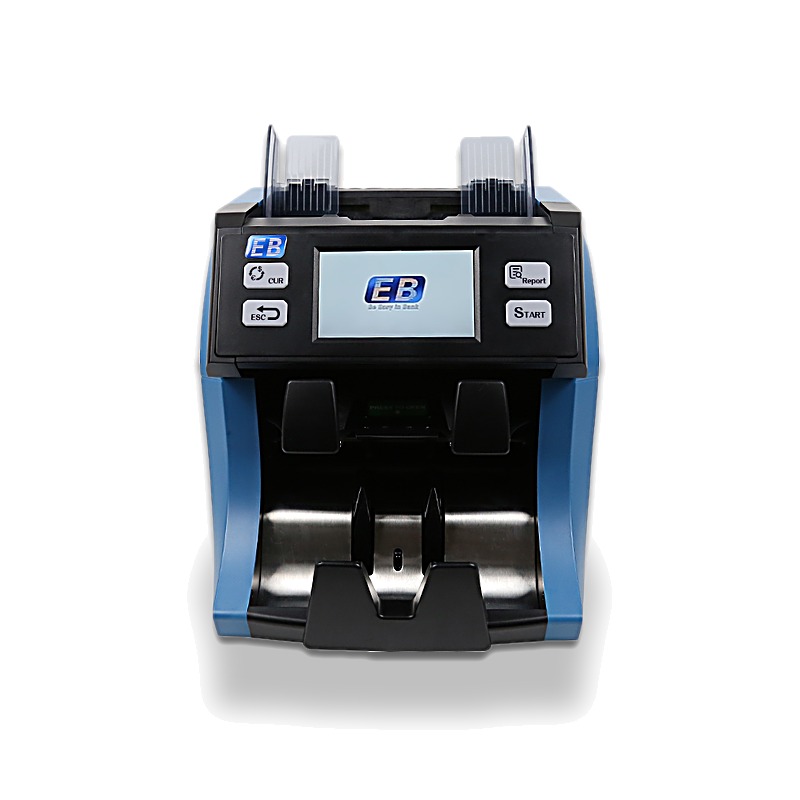
1. New series and new versions are coming, so your machines must recognise them quickly. When a currency issuer presents "new house notes" or an upgraded denomination at a conference, it usually means new designs entering circulation across the region within months. A counter that cannot distinguish an old series from a new one becomes a reconciliation problem on day one. This is exactly what denomination and version sorting is for: our LD-1910 pairs a 1-CIS image sensor with magnetic-ink and UV detection and adds mixed-value counting plus denomination/version sorting, per its specification table — counting at 1,000 notes per minute with 200-note hopper and stacker, accept notes 110-180 mm long and 50-90 mm wide, 0.075-0.15 mm thick, and exports through USB and RS232 for cash-centre record keeping.
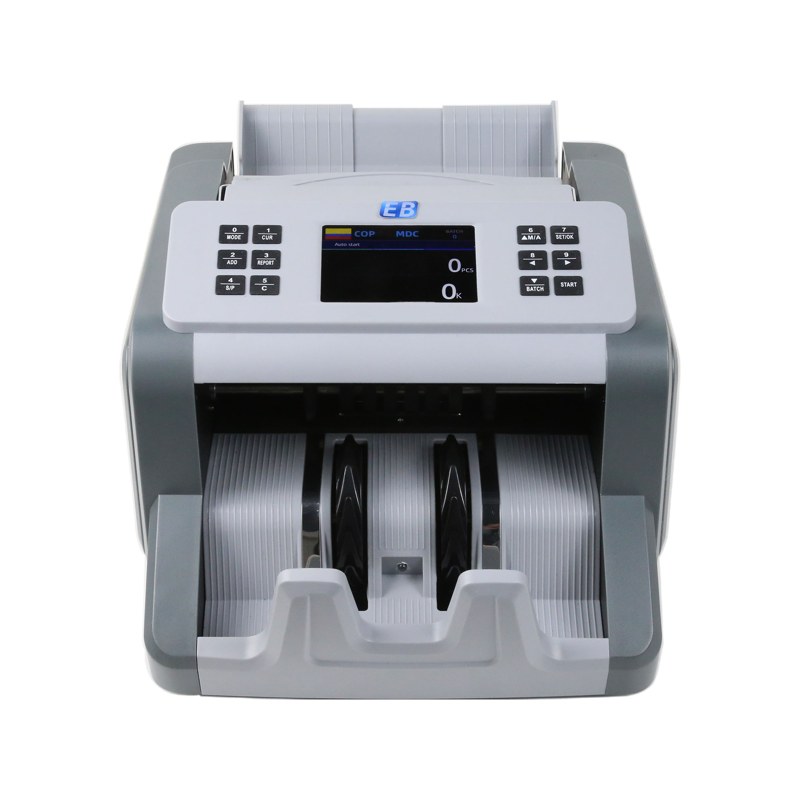
2. Polymer is becoming a co-existing format, not a replacement. The programme devotes sessions to polymer design and to composite substrates, and the issuers in the room are the same ones deciding note materials. In practice, cash offices will handle paper and polymer notes side by side for years. Counting machines should therefore state their thickness and size tolerance honestly and handle both formats. The LD-2300 is specified for polymer and paper note compatibility, counting 50×110 mm to 90×180 mm notes between 0.075 and 0.15 mm thick at 900 notes per minute, with UV, magnetic-ink and dimensional (width) detection plus automatic half-note, chained-note and double-note protection. Its 130-note hopper and stacker, 4-digit TFT count display, batch and add functions (up to 999) make it a practical retail or back-office unit.
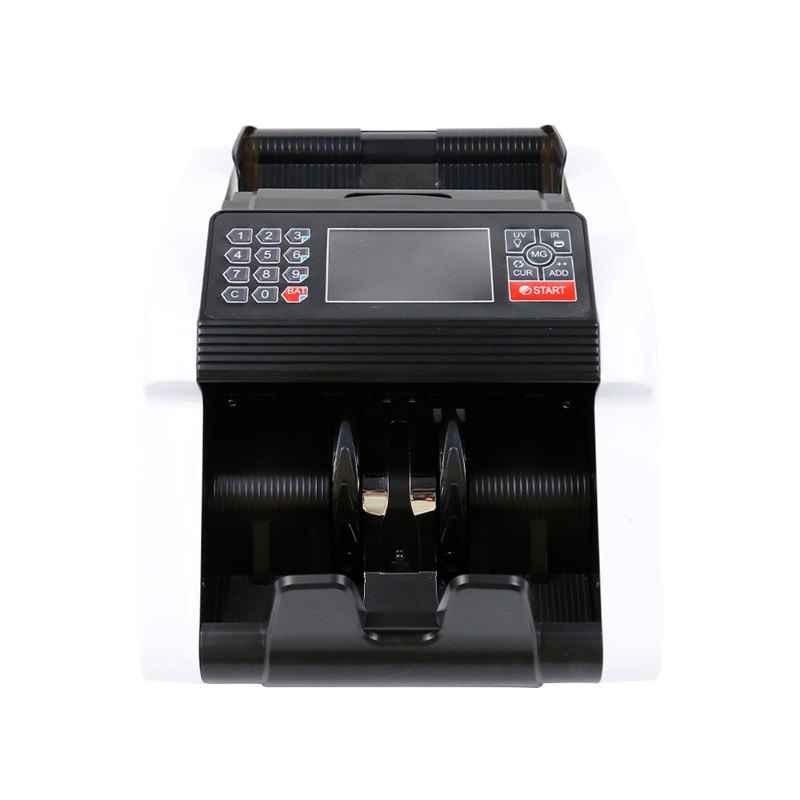
3. Sustainability workstreams mean stricter fitness control. A workshop agenda that centres on the banknote cycle and unfit-note disposal tells you where central bank procurement attention is heading: keeping circulation cleaner and cost per cycle lower. At the counter level, fitness discipline starts with reliable reject handling — detecting damaged notes rather than passing them silently. The mechanical checks listed above (half, chained and double notes, plus width and thickness sensing) are the front line of that discipline. If you want to understand what actually happens inside these sensors, see our companion piece How Does a Money Counter Work? Inside the Sensors That Count Your Cash.
4. New security features move counterfeiting pressure to the counter. Dynamic security prints, micro-optics and colour pairing are designed for the public and cash handlers to verify. That only works if the people touching the notes know how to look. A simple bench tool still earns its place at any teller line or cash office: the DC-5100 combines a 365 nm UV lamp, a magnetic-ink sensor, a 5X magnifier for micro-printing and a printed ruler area for quick size checks, verifies notes as well as ID documents and travel documents, runs about 4 hours on its 1200 mAh rechargeable battery (with USB or AC 110/220 V power options) and weighs 0.55 kg in a 200×105×105 mm body.
How to Use the Conference If You Have No Seat
Because HSP Asia is sold out, most buyers will follow it indirectly. Three practical steps: first, read the published agenda — the speaker list tells you which issuers and printers are actively pushing new series in the next 12-24 months, which is your forward sales pipeline if you distribute equipment in Asia Pacific. Second, when the conference summaries and press coverage appear in December, use them to re-test your own counters against the note versions entering your market — ask your supplier for firmware or detection updates before the new notes arrive, not after. Third, audit your reject rates now: a machine that is already rejecting heavily on the current series will behave worse on a redesigned note, and the fix is usually calibration or a model upgrade rather than a workaround.
Physical cash in Asia is not a sunset story — the agenda itself, with affordability and cash sustainability as headline themes, argues the opposite: issuers are investing in making cash cycles cheaper and cleaner. Equipment buyers who track those investment decisions early will be quoting while competitors are still catching up.
Questions on the note-size, thickness or version-recognition capability of any model for your market? Contact Easy-Banker with the currencies you handle and we will match detection coverage to your cash cycle.
Facts and citations: HSP Asia 2026 dates, venue, sold-out status, delegate numbers, fee structure and all session titles and speakers are from the official programme on hsp-asia.com, fetched 30 October 2026. All machine specifications are quoted from the live Easy-Banker product pages as of the same date.