The Upgrade Imperative: How RBI, ECB and UK Rules Turn Counterfeit Detection into Software You Maint
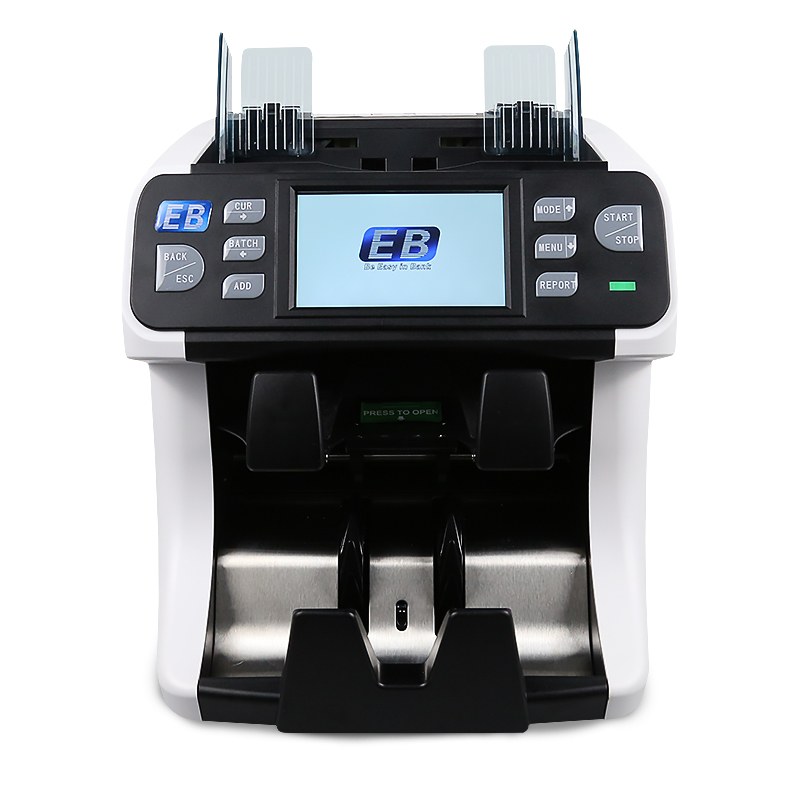
A counterfeiting campaign moves faster than a procurement cycle. That asymmetry explains most of what central banks have written about banknote handling machines in recent years - and why the newest rules treat counterfeit detection less like a feature you buy and more like software you maintain. For distributors and bank equipment buyers the consequence is blunt: a machine that cannot be verifiably updated is becoming unsellable into regulated channels.
The October 2026 Evidence: India Writes the Update Obligation into Binding Rules
On 2 October 2026 the Reserve Bank of India issued its Master Direction on Note Sorting Machines (RBI/DCM/2026-27/473), consolidating five circulars from 2009 through 2025 into one document issued under Sections 35A and 56 of the Banking Regulation Act. Three provisions are technology-maintenance requirements in regulatory clothing:
- Quarterly verification, forever. Banks must test deployed machines every quarter for accuracy and consistency, recalibrate where required and keep signed certificates; legal summaries of the Direction describe a 2,000-note minimum test deck, a 5% tolerance on fitness checks and zero tolerance for fully integral counterfeit notes. Performance is not assumed at purchase - it is re-proved every 90 days.
- A procurement gate through certification. "Going forward, banks shall only procure the BIS certified Note Sorting Machines (NSMs)," against standard IS 18663:2024 (Gazetted 19 March 2024). RBI publishes no approval list of its own; the Direction points procurement files to BIS records - ManakOnline for domestic licences and the BIS FMCS licensee list for foreign manufacturers. Without a live licence naming the shipping factory, a model cannot clear a bank tender.
- A hard deadline on stale fleets. NSM models discontinued from production must be phased out of banks on or before 30 June 2027, with penalties linked to RBI's currency-chest penalty framework. The primary text is on rbi.org.in (notification 13723), republished in full via TaxGuru.
Even the much-quoted pencil-scribble exemption in the Direction - markings "may not be classified as unfit" if they do not obscure the note and reflectance and optical-density criteria still pass - is a software statement: thresholds and interpretation live in machine parameters, and regulators edit them like code.
The Eurosystem Got There First: Retest or Vanish
The ECB's regime around Decision ECB/2010/14 (amended by ECB/2012/19 and ECB/2019/39 on 5 December 2019) has always made the update duty explicit. Under the published test procedures, a machine type that passes one national central bank must face verification tests, then annual tests and ad-hoc retests; any update touching core functionality forces a fresh retest, and a type that has not passed a retest within 12 calendar months is pulled from the published list of successfully tested machines. The Eurosystem's own framing: because "new counterfeits exhibiting properties differing from the euro banknotes used in the tests may emerge at any time," listed results only ever describe the test deck of the day - and it "urges manufacturers to follow developments in the field of counterfeiting and regularly update their machines."
The pre-test disclosure list reads like an engineering review of your update pipeline: which security features the machine checks and how; whether it can be adapted to detect new counterfeits and how the user can verify that; how fitness thresholds can be changed; how often sensors must be cleaned to keep behaviour reliable; how the user verifies the installed software version. Detection adaptability is not a marketing line here - it is paperwork the NCB collects.
The UK Closes the Triangle
Britain's banks run the Machine Test Framework ("Framework for the Testing of Automatic Banknote Handling Machines," September 2023 edition, UK Finance), where an independent test provider checks that machines accept genuine new and circulated notes and reject or separate suspects - across classes from single-note readers and desktop counters with authentication sensors up to sorters running 10-40 notes per second. Three jurisdictions, one pattern: recurring third-party verification and machines judged by demonstrable, maintainable behaviour.
What This Demands of the Sensor Stack
Read across the three rulebooks and the required detection architecture converges on layered redundancy - no single sensor can carry a regulated decision:
- Optical imaging - both-side reflection plus visible/IR transmission at ~200 dpi - anchors fitness grading and serial capture;
- Ultraviolet fluorescence flags the bleached paper and bright stains counterfeits lean on;
- Magnetic analysis - strong field, weak field and the metal security thread - verifies intaglio inks cheap printers cannot fake;
- Mechanical measurement (thickness, dimension) catches repairs, doubled notes and limpness imaging can miss;
- Serial-number capture with storage or printing supplies the traceability the Eurosystem tests directly on customer-operated machines.
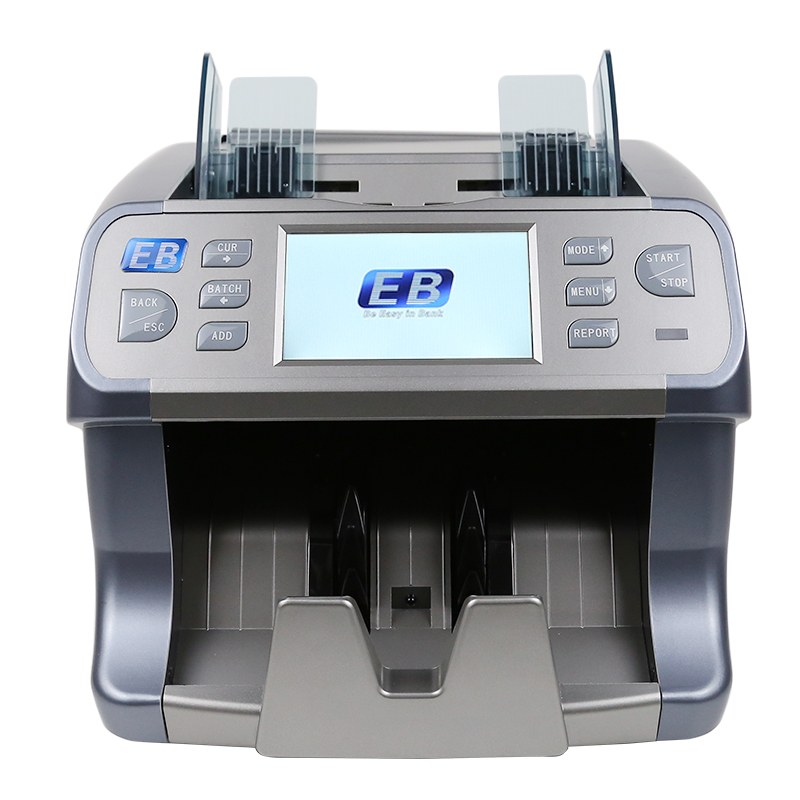
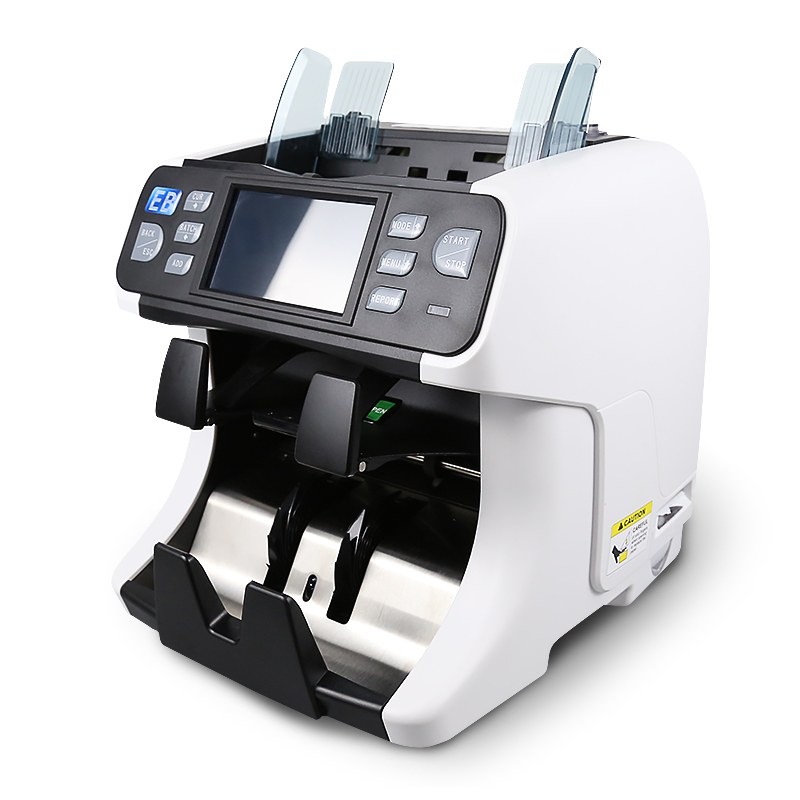
Our desktop range is built to exactly that brief. The BS-2080W sorter runs dual 200dpi CIS analysis in visible and IR reflection/transmission, UV and magnetic channels including strong/weak patterns and the metal thread, mechanical thickness checking, FIT/UNFIT grading, tear, tape and double detection plus a dedicated washed-note check, and serial-number capture with optional printing - at 800/1000/1200 notes per minute, 260 x 280 x 275 mm, 9 kg net. The BS-6800 scales the same sensor philosophy to cash centres (750 notes/min, watermark and safety-line feature checks, 4.3-inch touch TFT, 502 x 304 x 293 mm). At the teller line, the LD-2700G pairs UV/IR/MG/CIS detection and serial-number recording with a 500/200-note hopper-and-stacker, 800/1000/1200 notes per minute and support for notes from 110-185 x 50-85 mm at 0.075-0.15 mm thickness.
Two honest caveats. First, certification is per model and per jurisdiction - nothing here should be assumed to hold a BIS licence or an ECB list entry; if a tender requires either, we confirm status model-by-model before you bid. Second, the software side is contractual, not cosmetic: ask, in writing, what the update channel is for new counterfeit profiles, what the sensor-cleaning interval is, and whether fitness thresholds are user-configurable - those answers are what quarterly and annual retests will interrogate.
Your 2027 Readiness Path
With India's phase-out date fixed at 30 June 2027 and the euro-area list cycling annually, Q4 2026 is the window to audit installed fleets, match models to licence and test-list evidence, and replace machines whose detection cannot be proven current. For the engineering companion - what the ECB fitness criteria mean for sorter and sensor choices - see our explainer on banknote fitness standards and the inside-the-sensors series, then bring your regulator list to our export team - model, market, required certification - and we will reply with what is certified, what is certifiable, and what needs a test plan.
Sources: RBI Master Direction on Note Sorting Machines RBI/DCM/2026-27/473, 2 October 2026 (rbi.org.in notification 13723; full text republished by TaxGuru; quarterly-deck figures per CorpLaw Updates' summary); ECB Decision ECB/2010/14 and Eurosystem common test procedures for banknote handling machines, with the successfully-tested-machines list (ecb.europa.eu); UK Finance Machine Test Framework, September 2023 edition; Easy-Banker specifications from live product pages as published 29 October 2026.