
Distributors and bank procurement officers ask us this question every week: "Is a money counter enough, or do we need a banknote sorter?" The two machines look similar on a spec sheet - both count notes fast and both detect counterfeits - but they solve different problems in a cash room. Choosing wrong means either overpaying for capacity you will not use, or buying a counter that bottlenecks your operation within a year. This comparison explains the real functional difference, side by side, so you can match the machine to your daily volume.
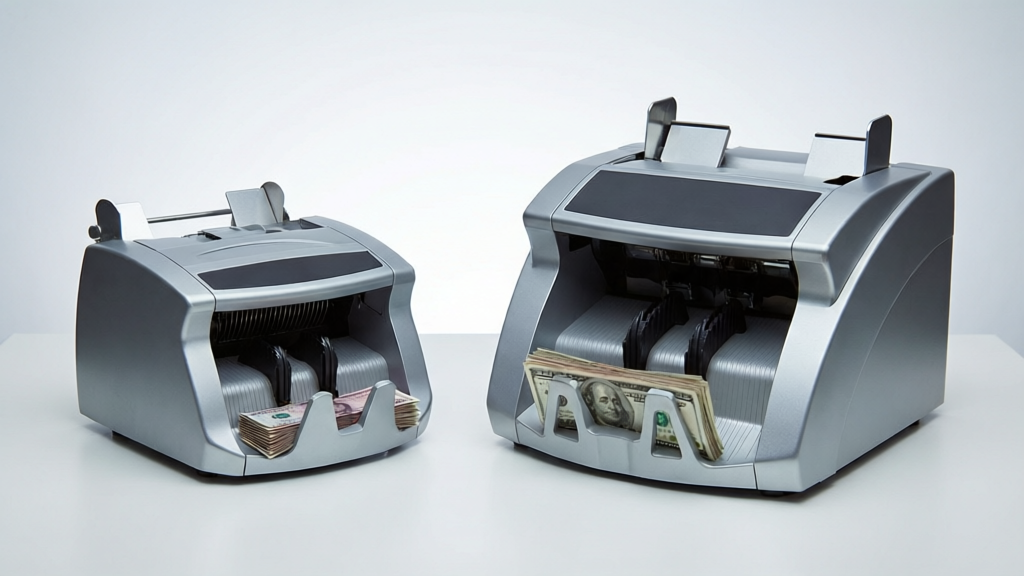
A money counter tells you how many notes passed through and whether they look genuine; a banknote sorter tells you which notes passed through - separating them by denomination, orientation and physical condition into different pockets in a single pass. Everything else in this article follows from that distinction.
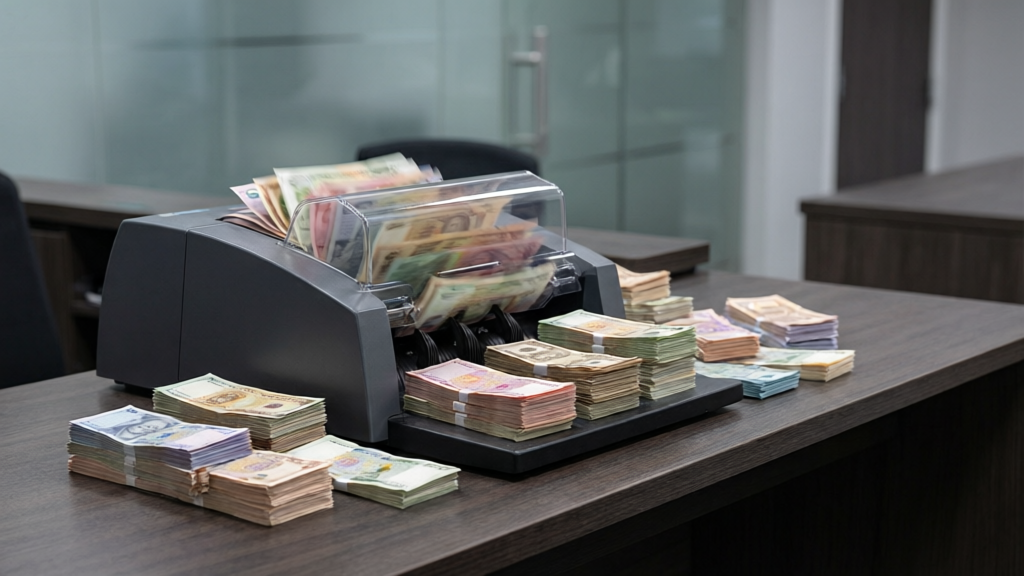
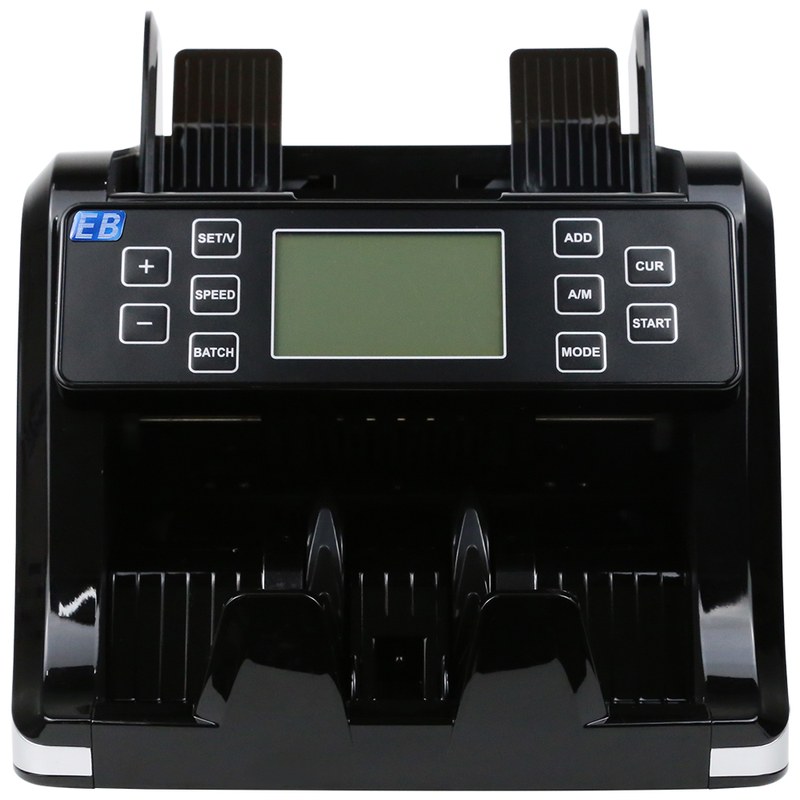
A modern bill counter such as the LD-1687 multi currency bill counter counts at 800 to 1,500 notes per minute, checks UV, MG and CIS sensors for counterfeit suspicion, and totals pieces and value. Higher-end counters add mixed-denomination value counting: the LD-1910 mixed value money counter recognises denominations with CIS imaging and reports total amount as well as total pieces, and the LD-1687 even scans serial numbers for USD and EUR notes. For a supermarket back office, a retail chain or a currency exchange booth, that is usually the whole job: count the till, flag suspect notes, print or export the result.
Counters also win on footprint and budget. A counter sits on a desk, runs on a single hopper of a few hundred notes, and costs a fraction of a sorter. If your staff counts deposits once or twice a day and manually separates denominations anyway, a counter is the honest answer. Our money counter buying guide covers how to pick the right counter class.
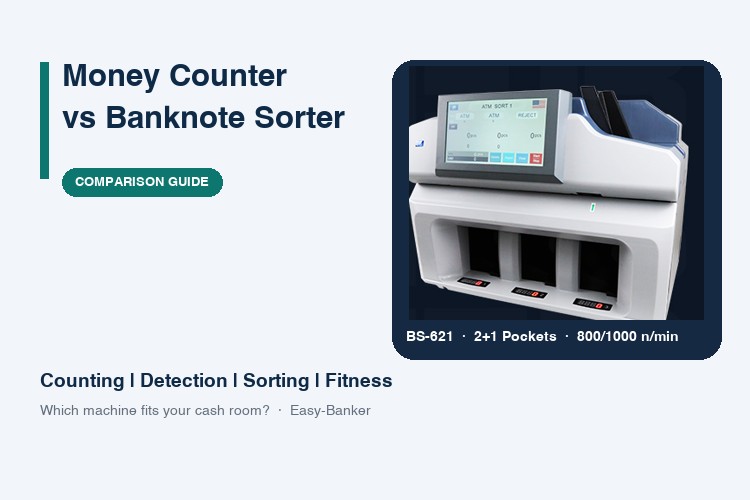
A sorter replaces manual separation with mechanical separation. The BS-621 three pocket banknote sorter, for example, authenticates, values, recognises denominations and judges fitness at 800 to 1,000 notes per minute, then routes notes into two output pockets plus a reject pocket - each output pocket holding 100 notes, extendable to 200 by software. Its 200 dpi CIS sensors, UV analysis and full-width mechanical thickness check perform fitness sorting (fit versus unfit), which a counter cannot do at all: worn, limp, taped or soiled notes are pulled out automatically instead of reaching an ATM or a customer.
Entry sorters such as the BS-611 two pocket currency sorter bring the same logic - denomination sorting plus reject handling - to smaller cash centres. The practical effect: one operator feeding mixed cash gets face-ready, fitness-checked bundles per denomination, ready for strapping or recirculation, without touching the notes twice.
| Capability | Money counter (e.g. LD-1687) | Banknote sorter (e.g. BS-621) |
|---|---|---|
| Counting speed | 800-1,500 notes/min | 800-1,000 notes/min (with sorting) |
| Counterfeit detection | UV, MG, CIS; suspect note stops machine | UV, MG, 200 dpi CIS, thickness; suspect note diverted to reject pocket |
| Mixed denomination | Value counting and report; notes stay mixed | Physical separation by denomination into pockets |
| Fitness / quality sorting | Not available | Fit vs unfit sorting in single pass |
| Serial number reading | Available on LD-1687 (USD, EUR) | Available on higher sorter classes |
| Output | One stacker, totals on display | 2+1 pockets (BS-621), sorted bundles |
| Typical user | Retail, supermarket, exchange booth, branch teller | Bank cash centre, CIT company, processing hub |
First, measure your peak mixed-cash volume per shift, not your average. Second, list the currencies you handle and confirm each one is supported by the sensor set - detection profiles are currency-specific. Third, decide whether unfit notes must be removed (they must, if you recirculate cash or feed ATMs). Fourth, check integration: USB and RS232 ports let counters and sorters export journals to your back-office software. Fifth, ask your supplier about pocket capacity, reject handling and service intervals - these decide daily throughput more than headline speed. Browse the full banknote counter and note sorting machine ranges to compare classes.
Can a money counter sort denominations? It can count and report mixed value, but the notes remain in one stack. Physical separation requires a sorter's pockets.
Do I need fitness sorting if I only deposit to the central bank? Most central banks charge penalties for unfit notes in deposits; sorting before deposit avoids rejection and re-handling.
Which machine is better for a distributor's demo room? Carry both classes: a counter for retail customers and a 2+1 pocket sorter for bank tenders, so you can demonstrate the difference live.
Easy-Banker manufactures banknote counters, currency detectors and banknote sorters in China for distributors and institutions in the USA, Southeast Asia, South America, Africa, the Middle East and Europe, with OEM/ODM support and factory-direct pricing. Send your daily volume, currency list and pocket requirements via our contact page and our engineers will recommend the matching machine class - counter, sorter, or a combination of both.