
Short answer: November 2026 brings two new banknote designs and a fresh round of counterfeit statistics that matter to anyone who handles cash. On 11 November the Central Bank of The Bahamas releases a Series 2026 $10 note on a hybrid paper-polymer substrate with a machine-readable security thread, and Nepal Rastra Bank has issued a recoloured Rs 1,000 note with new watermarks and security features. At the same time, central banks in Russia, Serbia and Germany report that counterfeiters keep targeting the highest-value and most-used denominations. For banks, exchange offices and retailers, the practical lesson is simple: keep detection settings and currency data up to date, and verify notes with more than one feature, using tools such as the BS-8900 banknote sorter, the LD-1500 counter and the DC-5100 UV and magnetic detector.
According to a press release published by the Central Bank of The Bahamas on 5 November 2026, the Series 2026 $10 note goes into circulation on 11 November 2026. It is a refined version of the existing $10 in the CRISP Evolution family. The central bank says the note is similar to the previous version in all material respects, but its colour has been tilted more towards grey so that it is easier to tell apart from the other denominations in the family.
Two details are especially relevant for cash equipment. First, the note is printed on Landqart AG’s Durasafe substrate, which the central bank describes as a composite of security paper and transparent polymer. Second, it carries Crane Currency’s RAPID Detect thread, which the bank says allows faster authentication both by the public and by cash-handling machines. The note measures 156 mm by 67 mm and shows Sir Stafford L. Sands on the front and the Hope Town Lighthouse in Abaco, with two flamingoes, on the back.
Because the size and design family stay the same, most operators will not need mechanical changes. What does change is the look of the note to optical sensors and the way a hybrid substrate behaves under light, so banks and cash centres in the Caribbean should confirm with their equipment suppliers that sorters and counters recognise the grey-toned version before it reaches their tills in volume.
As reported by World Coin News in its 5 November 2026 bank note round-up, Nepal Rastra Bank’s new Rs 1,000 note from the 2025 series keeps Mount Everest on the front but adds a new colour scheme with a green background and purple border, rhododendron imagery, denomination watermarks and multiple security measures. The back continues to show the twin elephants Ram and Laxman and now adds the historic Lachhoka pillar at Hanumandhoka and rhododendron flowers representing Nepal’s seven provinces.
A new colour scheme on the highest denomination is exactly the kind of change that can trip up older value-counting machines, which rely on colour and image data to identify denominations. Operators who count Nepalese rupees should treat the new Rs 1,000 as a separate design until their machines are confirmed to recognise it.
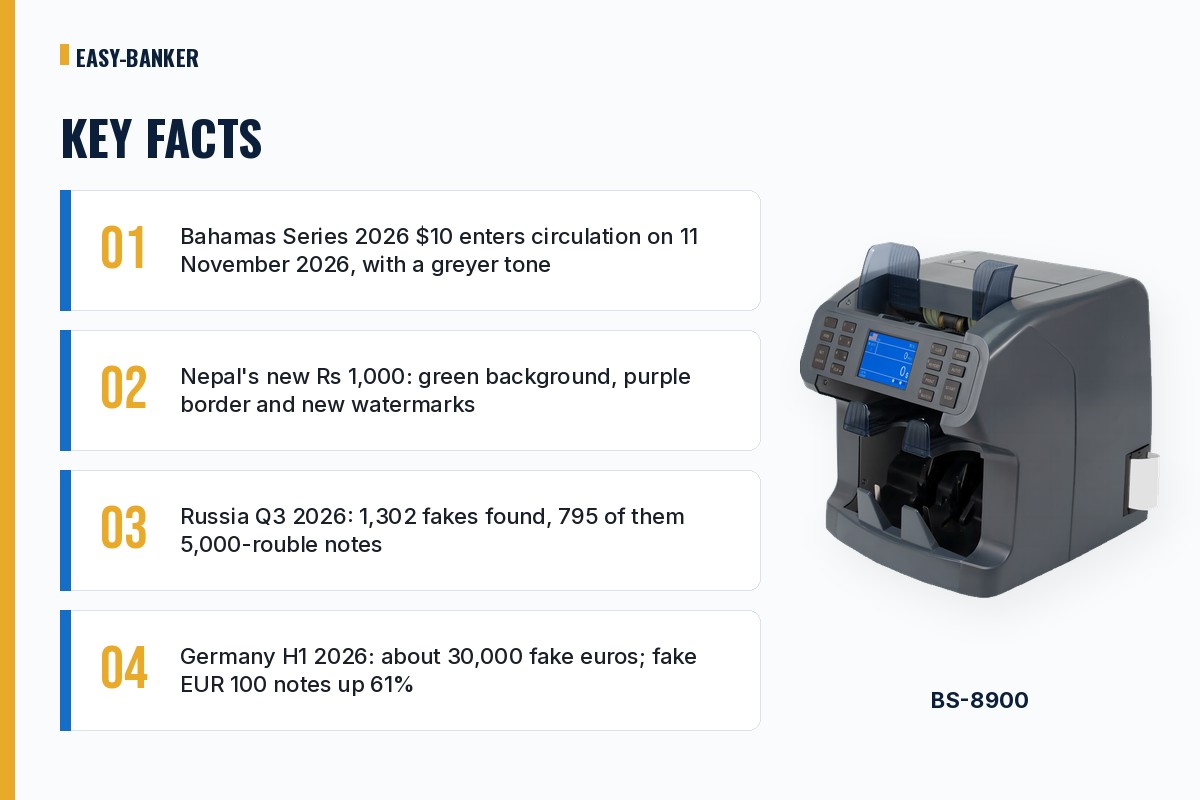
New design launches happen against a steady background of counterfeiting, and the latest official numbers show where the pressure is.
The pattern is consistent across very different economies: counterfeiters go after high-value notes and the denominations people use most, and foreign currency such as the US dollar shows up wherever it circulates. Exchange offices and border-area retailers that take several currencies face the widest exposure.
A few practical steps reduce both rejection rates and counterfeit risk when new notes arrive:
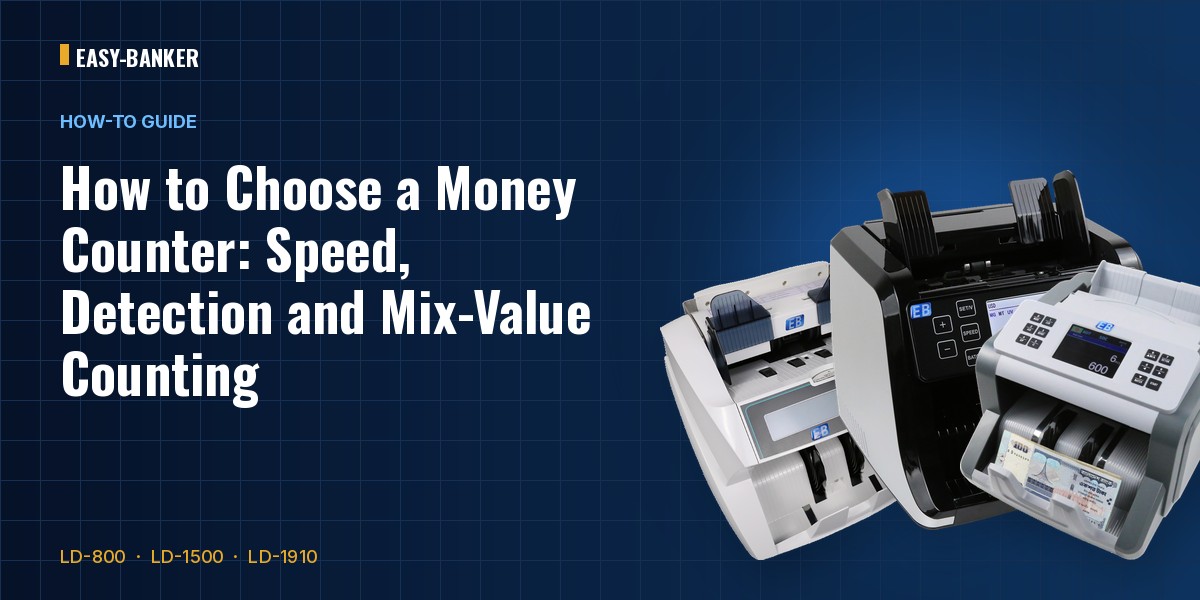
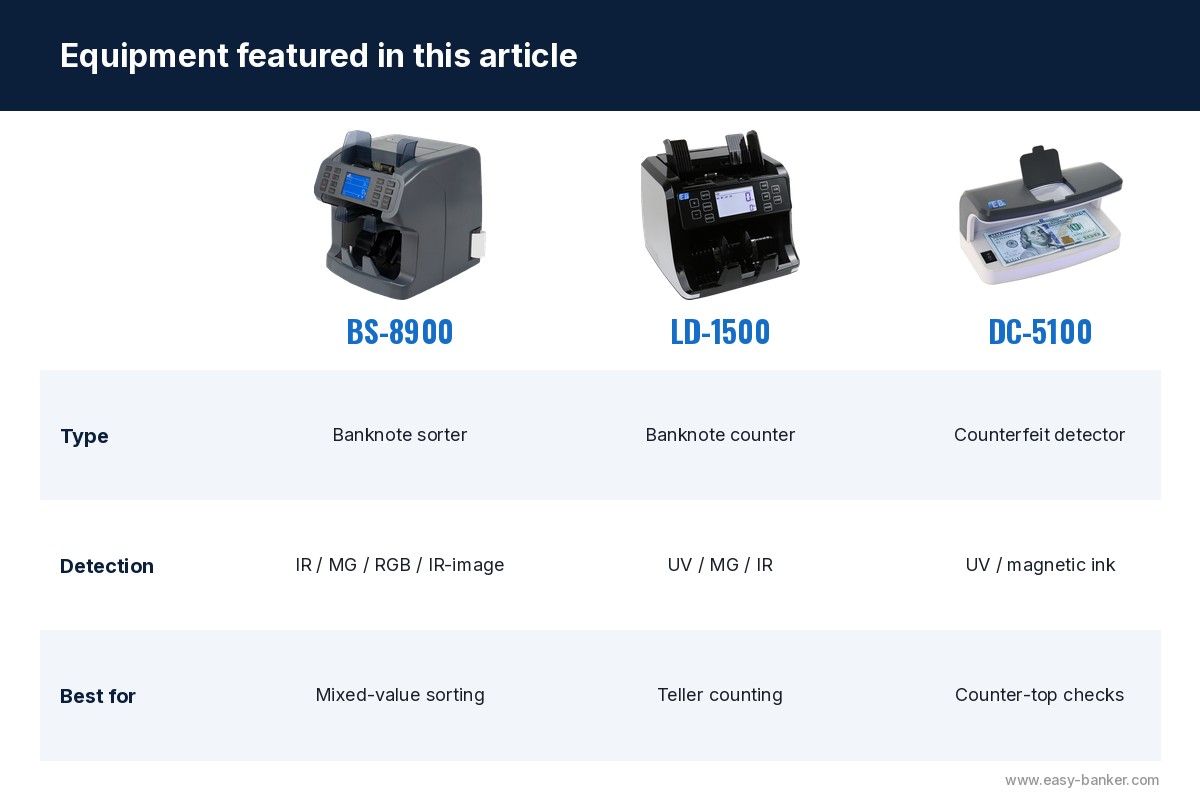
For cash centres and bank branches that sort mixed denominations, the BS-8900 sorter uses IR, MG, RGB, white light and IR-image detection, supports mix value counting of multiple currencies and has a VER mode that automatically tells paper banknotes and plastic notes apart when they are mixed. It also detects half notes, double notes and chain notes, with an output pocket and a reject pocket.
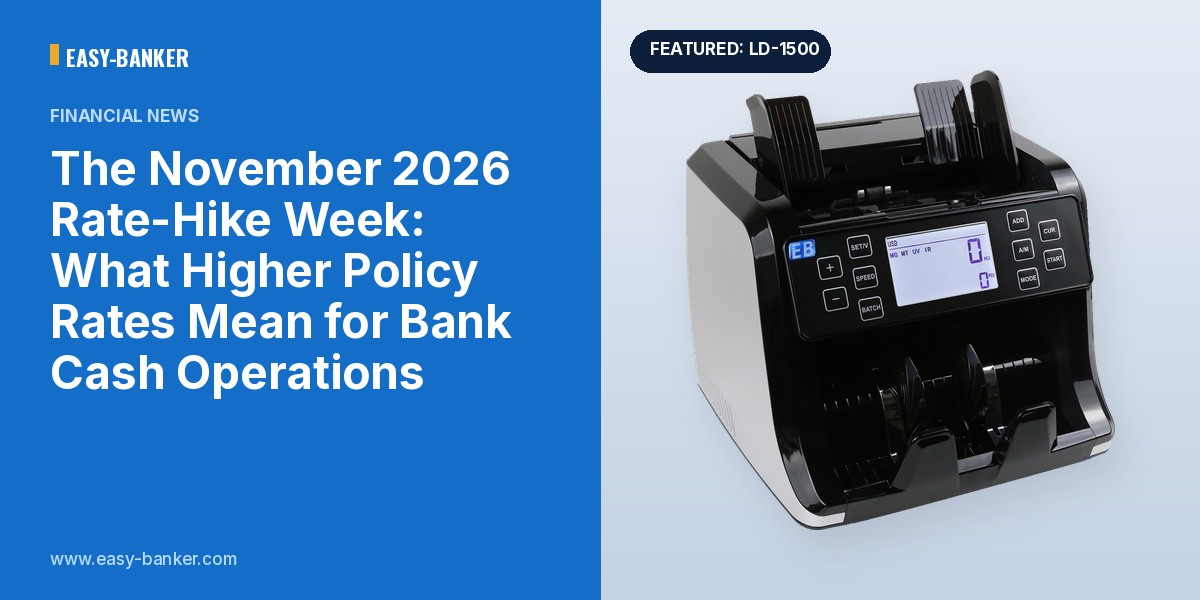
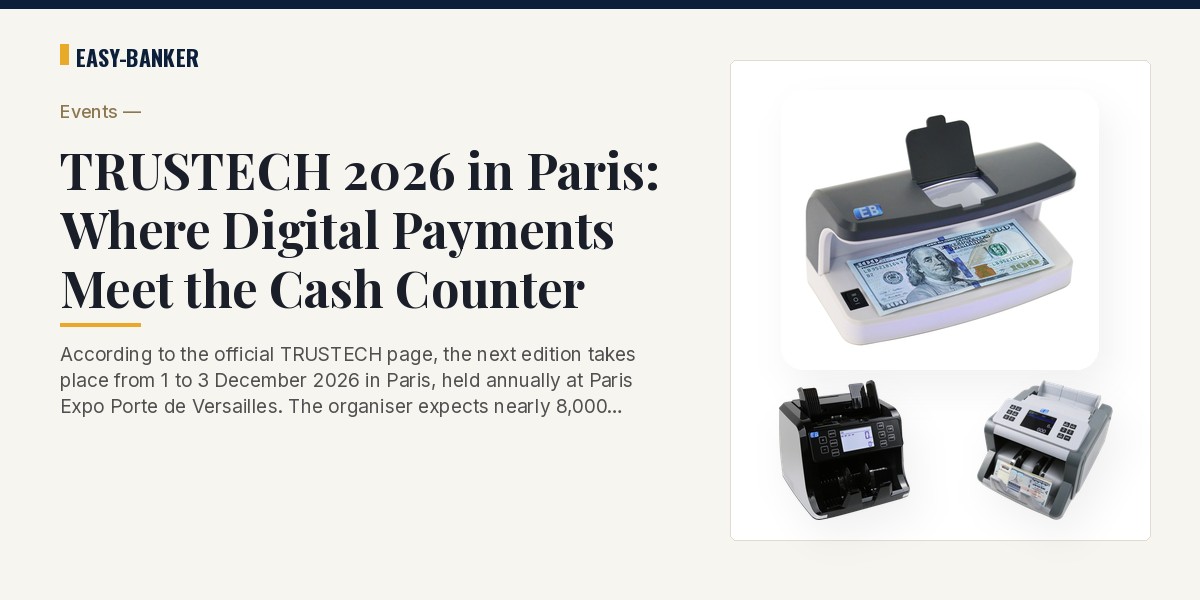
For tellers and retail cash offices, the LD-1500 bill counter combines UV, MG and IR detection with an amount preset function for counting bundles. For a quick second opinion at the counter, the portable DC-5100 detector uses ultraviolet light to check security threads and fluorescent features, verifies magnetic ink, and runs on a rechargeable lithium battery.
The Central Bank of The Bahamas says the Series 2026 $10 note is released on 11 November 2026. It is legal tender for ten dollars under the Central Bank of The Bahamas Act, 2020.
The central bank says the note’s RAPID Detect thread allows faster authentication by cash-handling machines. Because the colour has shifted towards grey, operators should still confirm with their supplier that counters and sorters recognise the new version.
The latest official reports point to high-value and widely used notes: 5,000-rouble notes in Russia, 2,000-dinar notes in Serbia, and €50 notes in Germany, where fake €100 notes also rose sharply. US $100 notes dominate dollar counterfeits found in Serbia.
No. Combining UV, magnetic and infrared checks, together with trained staff who know each note’s public features, gives much better protection than relying on any single feature.