
Short answer: On 4 November 2026 Poland's national postal operator, Poczta Polska, announced that it is rebuilding its cash centres around industrial banknote and coin sorters. It is replacing a two-stage process, in which cash moves by hand between several single-purpose machines, with a one-step line where notes and coins are counted, authenticated, graded for fitness and sorted in one integrated flow, with results sent straight into a cash-logistics system. The network will grow to 25 modern cash centres, with the rollout running to 2027. For banks, cash-in-transit companies and large retailers, the lesson is clear: the value of cash equipment now lies less in raw speed and more in how well counting, detection, sorting and reporting are joined together. Smaller operations can apply the same idea with machines such as the BS-2080W banknote sorter, the LD-7000 mix-value counter and the CS-9500 coin sorter.
According to the Poczta Polska press release of 4 November 2026, the company is modernising how it processes cash by installing machines that automatically count and sort banknotes and coins. The investment runs alongside a wider upgrade of its sorting facilities and the replacement of its fleet of cash-transport vehicles.
The scale is significant. Poczta Polska says it handles around PLN 150 billion in cash a year and carries out about 200,000 transports of valuables every month. It recently began servicing part of the network run by Euronet Polska, which manages almost 8,000 ATMs and deposit machines across Poland. Its customers also include banks and retail chains.
The equipment is named in the release. Banknotes will be processed on G+D BPS C2 machines and industrial G+D BPS C5 sorters, while coins will go through Scan Coin ICX-9 sorters. The first machines have already been delivered, with more deliveries planned soon. In parallel, the company is building a nationwide network of 25 modern cash centres, which it says is already about 50% larger than competing private operators.
In a classic two-stage cash centre, cash is first counted on one set of machines, then moved by hand to other stations for authentication checks, fitness sorting or coin processing. Every handover adds time, creates a queue and introduces a chance for error or loss. Poczta Polska describes the old process as one that relied on several devices with different functions and on manual movement of cash between workstations.
The new model joins banknote and coin handling into a single process that uses shared standards for control, quality and reporting. The release says the machines automatically recognise denominations, verify authenticity, assess circulation quality and separate cash according to set criteria. Counting results go directly into the system, giving live access to operational data. The company expects shorter counting and sorting times, higher throughput and fewer of the bottlenecks that manual processes create.
Michał Pęsiek, director of the company's Cash Protection and Logistics Department, summed up the aim: high-performance banknote and coin sorters are being combined with a new cash-logistics management system to create one coherent process that improves efficiency, strengthens settlement security and reduces the risk of errors.
A basic counter tells you how many notes are in a stack. A sorter does four jobs in one pass: it identifies each denomination, checks authenticity with several sensors, judges whether a note is fit to go back into circulation, and routes notes into different pockets. That is why central cash centres use sorters. Fitness grading decides which notes go back to ATMs and which are returned to the central bank, and per-note data makes reconciliation auditable.
Not every business needs a large industrial line. But the same functions, on a smaller scale, are what separate a desktop sorter from a counter. The question for a buyer is which steps in your own cash flow still depend on someone moving cash by hand between machines.
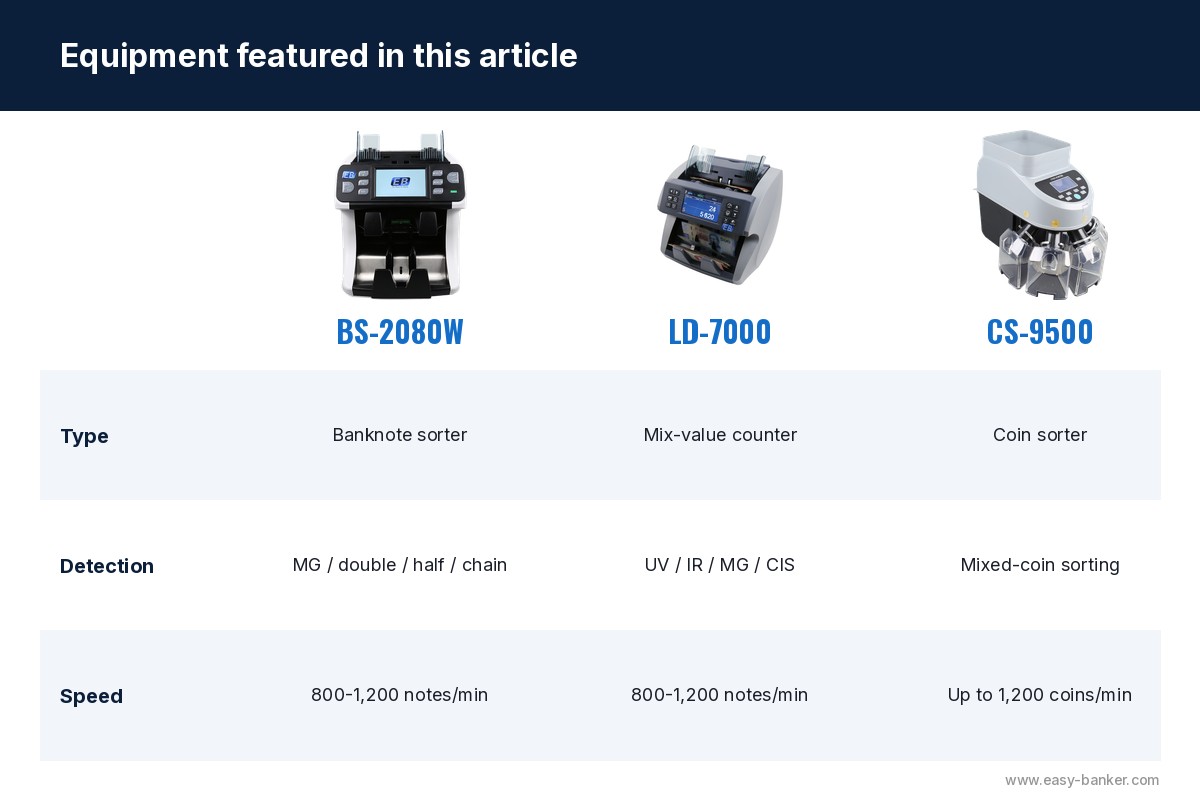
The principle behind Poczta Polska's upgrade, fewer handovers and more data, works at branch and back-office level too. Three practical steps follow from it.
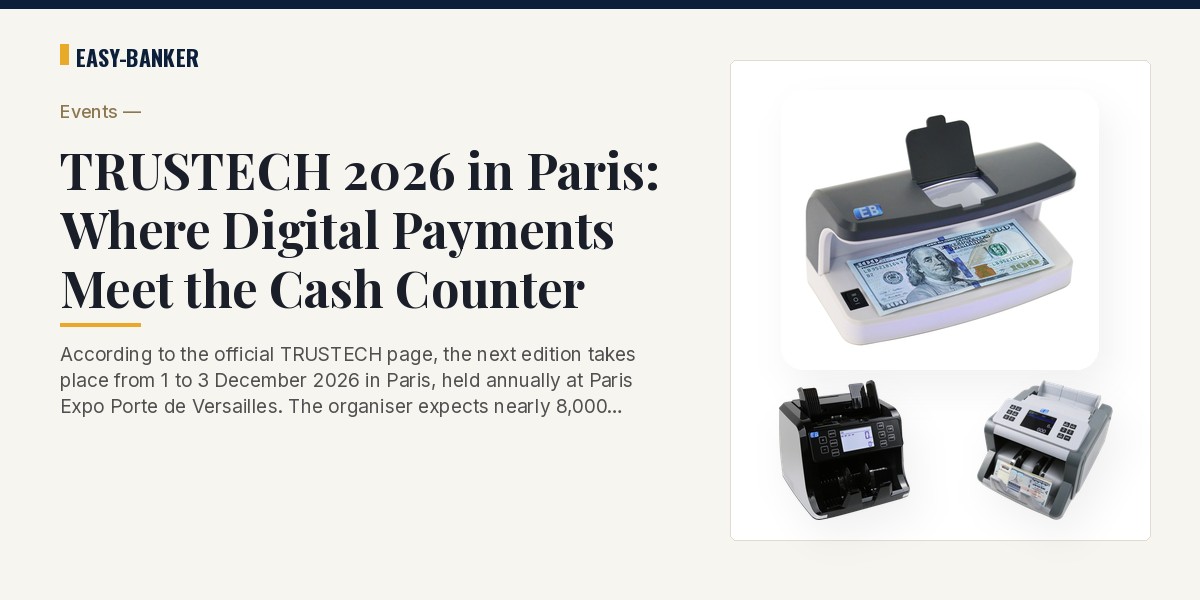
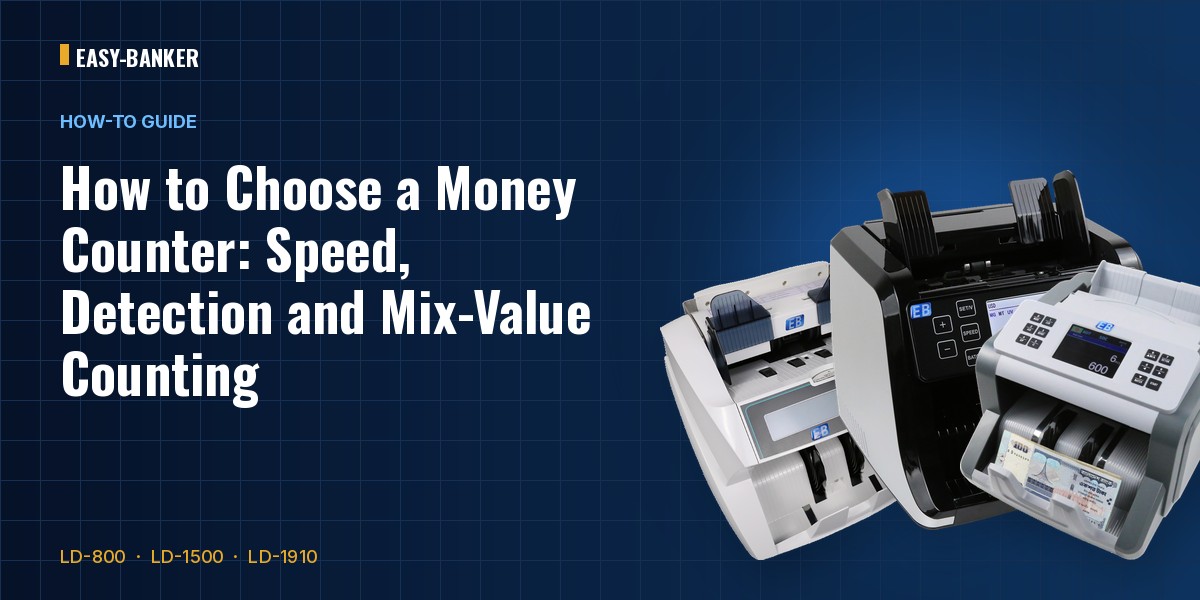
Combine counting and checking. A mix-value counter that recognises denominations and checks authenticity in the same pass removes the separate checking step. Our LD-7000 is a mix-value counter with CIS image sensing that supports 140+ currencies, detects counterfeits with UV, IR, MG and CIS, runs at 800, 1,000 or 1,200 notes per minute and has a 4.3-inch TFT touch screen, a 500-note hopper and a 200-note stacker.
Sort before you store or ship. Sorting by denomination, face and orientation before cash leaves the branch cuts work for the next stage. The BS-2080W counts mixed values and sorts by denomination, face and orientation at 800, 1,000 or 1,200 notes per minute. It covers 140+ currencies, has magnetic, double, half-note and chain-note detection, and offers an optional built-in printer and external display.
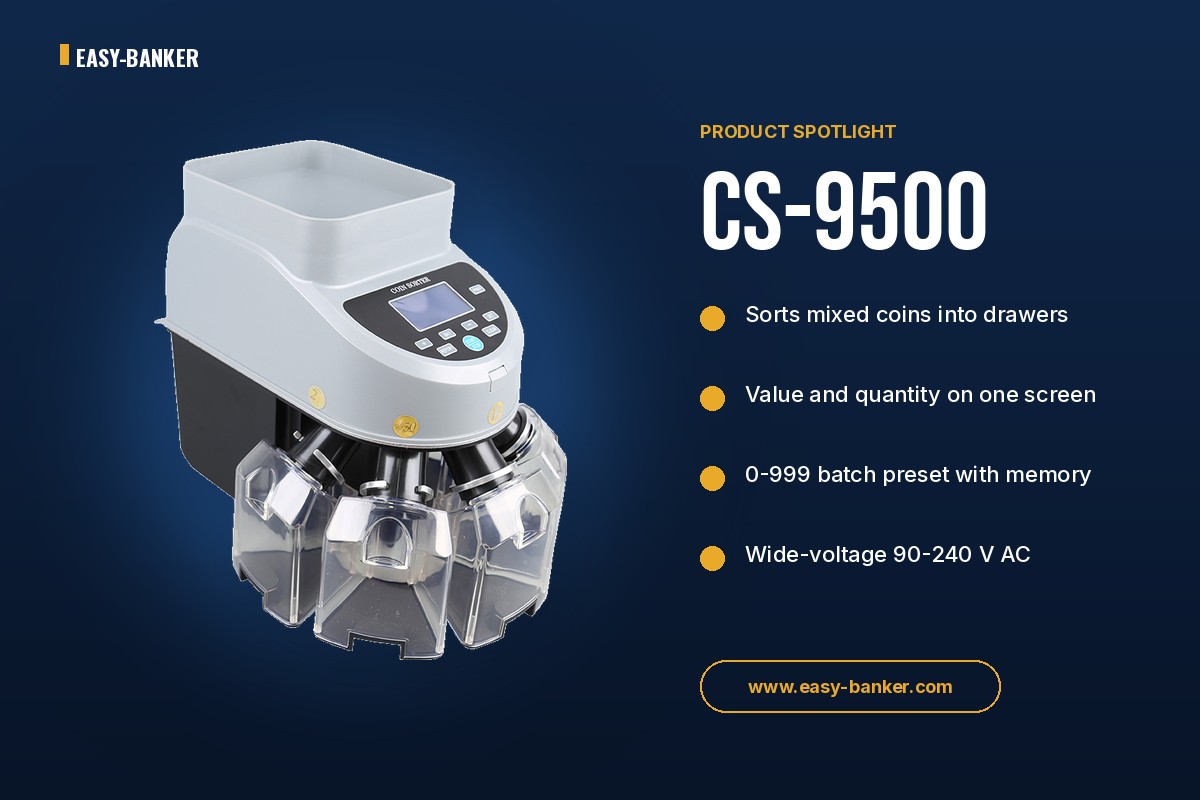
Do not leave coins as a manual job. Poczta Polska put coins into the same line as notes. Retailers, transport operators and vending businesses often still count coins by hand. The CS-9500 coin sorter counts and sorts mixed coins into separate drawers at up to 1,200 coins per minute (16 mm coins) or 1,000 per minute (20 mm coins). It shows value and quantity on one screen, has a 0-999 batch preset with memory, and runs on 90-240 V AC.
Before you buy, map your cash flow from receipt to deposit and count the manual handovers. Then check whether each machine you consider can recognise the denominations and currencies you actually handle, detect counterfeits with more than one sensor, and export or print results so that totals do not have to be keyed in again. Ask suppliers for the specification table, not just a brochure headline. Make sure speeds, hopper and stacker capacity, and power supply match your workload and local mains.
Finally, plan for change. New banknote series and counterfeit trends keep evolving, so ask how currency data and detection settings are updated over the life of the machine.
When did Poczta Polska announce the cash-centre upgrade?
On 4 November 2026, in a press release on its media site. The company says the network of modern cash centres will be expanded through 2027.
Which machines is Poczta Polska using?
G+D BPS C2 machines and industrial G+D BPS C5 sorters for banknotes, and Scan Coin ICX-9 sorters for coins, according to the release.
What is a one-step cash-processing model?
It is a process in which banknotes and coins are counted, authenticated, graded and sorted in one integrated line, with results recorded automatically, instead of moving cash by hand between separate machines.
Does a small bank branch or retailer need an industrial sorter?
Usually not. Desktop mix-value counters, compact banknote sorters and coin sorters bring the same benefits of fewer handovers and better data at branch or store scale.
Where can I get specifications for Easy-Banker sorters and counters?
Each product page lists the specification table. You can also send us your currencies, daily volume and country through the inquiry form for a recommendation.