Cash-in-Transit Consolidation 2026: What the Loomis Peru Deal and CIT Modernization Mean for Equipme
Cash Is Still Moving — and the Companies Moving It Are Consolidating Fast
While headlines focus on digital payments, the physical cash cycle keeps running — and 2026 has become a defining year for the cash-in-transit (CIT) and cash processing industry. The world's largest cash logistics players are buying competitors, electrifying fleets, and centralizing banknote processing into fewer, larger, better-equipped centers. For distributors and suppliers of cash handling equipment, these shifts map directly into where the next wave of equipment demand will appear.
Loomis Doubles Down on Latin America
The clearest consolidation signal came from Loomis. In May 2026, the Swedish cash management group announced its intended acquisition of Hermes Transportes Blindados, the market leader in secure valuables logistics in Peru (company presentation published 5 May 2026). The transaction values Hermes at an enterprise value of PEN 1,450 million (approximately SEK 1.2 billion), bringing roughly 3,200 employees, 19 branches, an installed base of 1,000 smart safes, and 2025 revenues of about SEK 1.2 billion into the Loomis network. Loomis pointed to Peru's cash usage of around 70% of transactions as a core reason for the deal — a reminder that in many emerging markets, cash is not declining; it is the dominant rail.
Two months later, in July 2026, Loomis completed its acquisition of Argentina's Transportadora del Interior, extending the same playbook. The group now operates more than 200 cash processing centers and around 400 branches across 23 countries.

Fleet and Facility Modernization Is Now a Board-Level Topic
Consolidation is only half the story; the other half is modernization. On 3 June 2026, Loomis announced that its first electric armored car route went out from its Dallas, Texas branch (EVinfo, June 2026), expanding a battery-electric CIT fleet partnership with Xos that dates back to 2019, together with charging infrastructure at its Montebello, California facility.
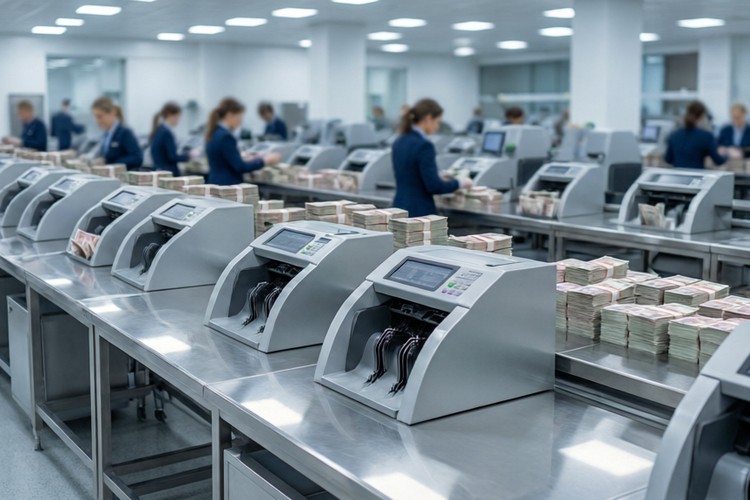
Inside the processing centers themselves, the equipment baseline is rising too. Industry market research published in 2026 describes cash-in-transit companies investing in centralized processing centers where high-capacity currency sorters improve throughput, chain-of-custody visibility, and reconciliation accuracy (ResearchAndMarkets, Currency Sorting Machine Market, 2026). Numbers from three independent research houses frame the scale:
- The currency sorting machine market is projected at USD 4.29 billion in 2026, growing to USD 6.08 billion by 2032 (5.91% CAGR) (ResearchAndMarkets / 360iResearch).
- The banknote counters market is valued at USD 1.24 billion in 2026, projected to reach USD 1.96 billion by 2035 (5.20% CAGR) (MarkWide Research).
- The automatic banknote sorter segment is estimated at USD 892.5 million in 2026, heading to USD 1,559.85 million by 2035 (6.40% CAGR) (MarkWide Research).
These are third-party research-house projections, not guarantees — but all three point the same direction: fewer, larger cash centers, each running more authentication, fitness sorting, and serial-number capture than the branch-level machines they replace.
Pressure Points: When Cash Infrastructure Gets Squeezed
The transition is not frictionless. In Australia, banks and major retailers — Commonwealth Bank, Westpac, NAB, ANZ, Coles, Woolworths, Bunnings, Wesfarmers and Australia Post — agreed in July 2025 to extend a AUD 25.5 million lifeline to Armaguard, on top of roughly AUD 50 million provided over the prior twelve months, to keep the country's dominant CIT provider running while a sustainable pricing mechanism is developed (Australian Banking Association joint statement, 14 July 2025). Armaguard handles about 90% of Australia's cash movement, an estimated AUD 6 billion weekly. Australian cash payments fell from 62% of transactions in 2010 to 13% by 2022, with projections of around 4% by 2030 (ChannelNews, July 2025).
In the UK, the squeeze showed up as a labor dispute: in March 2026 the GMB union reported that almost 1,500 cash protection officers at G4S Cash and Loomis were ready to strike after pay-freeze proposals, with more than 90% of balloted members supporting action (GMB, 19 March 2026). Both stories carry the same lesson for buyers: cash infrastructure is becoming more concentrated, and resilience — automation, redundancy, verified equipment — matters more than the lowest per-unit price.
What Centralization Means for Authentication at Every Touchpoint
Big processing centers get the sorters, but cash still changes hands thousands of times before it reaches them — retail tills, casino cages, bank branches, currency exchange counters. Every one of those touchpoints needs fast, affordable counterfeit detection so that unfit and fake notes never enter the recirculation chain. This is exactly where compact UV and magnetic detectors earn their place: a teller or cashier can check UV features, magnetic ink, micro-printing and note dimensions in seconds.
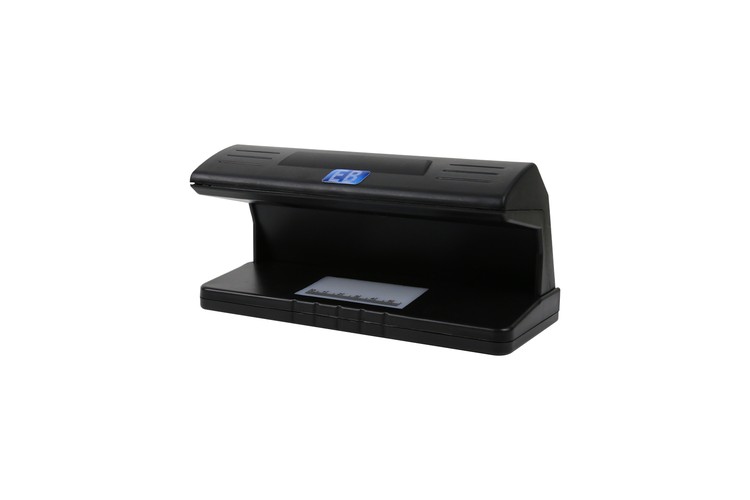
Easy-Banker manufactures this full chain of equipment: mixed-value banknote counters with CIS sensors and serial-number scanning for cash centers, UV/magnetic currency detectors for retail and branch counters, banknote banding machines for end-of-day bundling, and cash registers and POS hardware for the retail edge.
The Takeaway for Distributors and Equipment Buyers
Three practical conclusions for 2026–2027:
- Follow the consolidation. CIT mergers (Loomis–Hermes in Peru, Loomis–Transportadora del Interior in Argentina) standardize equipment across dozens of branches at once — a single qualification can become a fleet-wide order.
- Specify for the center, sell to the edge. High-capacity sorters anchor the cash center; volume demand for counters, detectors and banding machines sits in branches, retailers and exchange offices feeding it.
- Buy from manufacturers with OEM flexibility. Regional customization — multi-currency settings, interfaces, branding — is repeatedly cited in 2026 market research as a decisive vendor criterion.
Easy-Banker supplies cash handling equipment to distributors, banks, retailers and CIT operators in the Americas, Southeast Asia, the Middle East, Africa and Europe, with OEM/ODM customization available. Contact our sales team for a quotation or browse the full product catalog.
Sources: Loomis acquisition presentation (MarketScreener, 5 May 2026); EVinfo (3 June 2026); Australian Banking Association joint statement (14 July 2025); ChannelNews Australia (July 2025); GMB Union (19 March 2026); ResearchAndMarkets Currency Sorting Machine Market (2026); MarkWide Research Banknote Counters Market and Automatic Banknote Sorter Market (2026).