Money Detector Buying Guide 2026: Pen, UV, IR or Full Auto — What Each Test Actually Catches
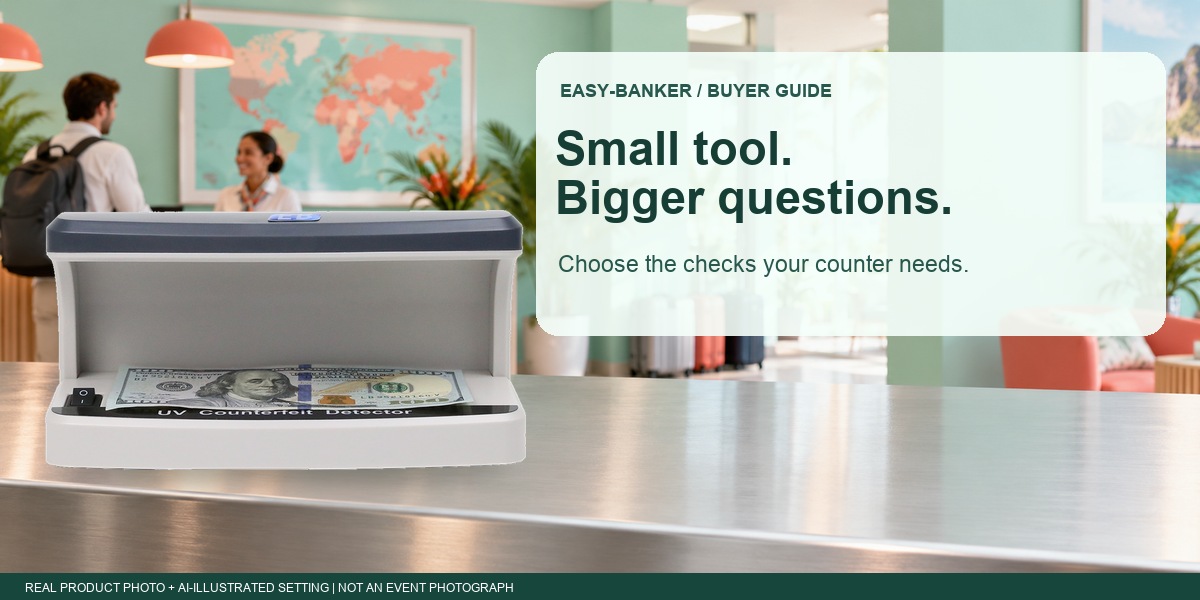
Walk into most retail stores and you will find the same anti-counterfeit tool at the register: a five-dollar detector pen. Yet banknote counterfeiting remains a live problem worldwide — and experienced cash handlers treat the pen as the weakest link in the chain, not the strongest. This guide breaks down what each detection technology actually verifies, where each one fails, and which combination fits your counter.
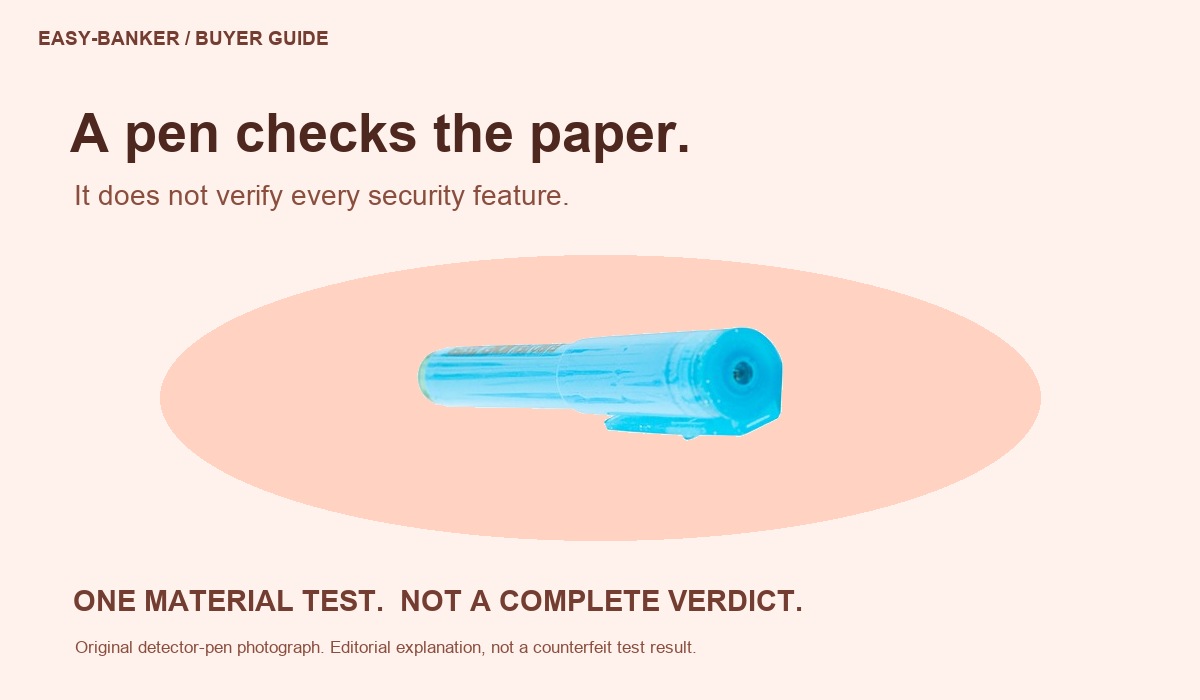
What a Counterfeit Detector Pen Actually Tests
Detector pens contain an iodine-based solution. Iodine reacts with starch — turning dark blue, black or brown — and ordinary wood-pulp printer paper is full of starch. Genuine banknote paper, typically a cotton-linen blend, contains no starch, so the mark stays pale yellow. The logic is sound against amateur fakes printed on office paper.
The weakness: the pen tests the paper, not the note. Counterfeiters who bleach a real low-denomination bill and overprint it pass the starch test instantly, because the substrate is genuine currency paper. The same blind spot exists for fakes printed on smuggled starch-free stock. That is why the U.S. Secret Service does not include detection pens in its public anti-counterfeit guidelines, and why a pen-only policy gives stores a false sense of security.
UV Light: Reading the Security Thread and Paper Fluorescence
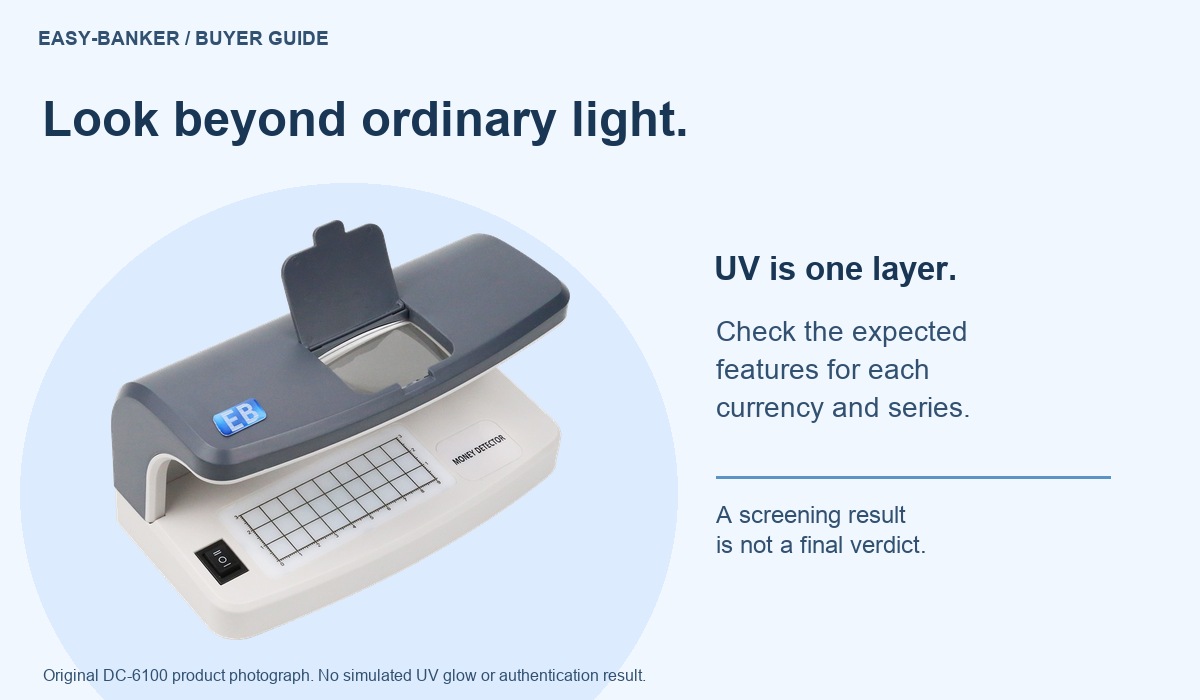
Ultraviolet lamps test a different property. Genuine banknote paper is manufactured to stay dull under UV, while most common bond and bleached papers glow bright blue-white because of optical brighteners. On U.S. notes of $5 and above, the embedded security thread fluoresces in a denomination-specific color (for example pink on the $100); on euro banknotes the thread and fibers light up in characteristic hues.
UV is fast, non-contact and works across many currencies, which is why pocket UV lamps such as the DC-5000 and desk models like the DC-6100 are common at exchange counters. Its limits: a counterfeiter can omit brighteners to defeat the paper test, and faded or dirty genuine notes sometimes fail. UV alone is a screening layer, not a verdict.
IR and MG: Machine-Readable Signature Checks
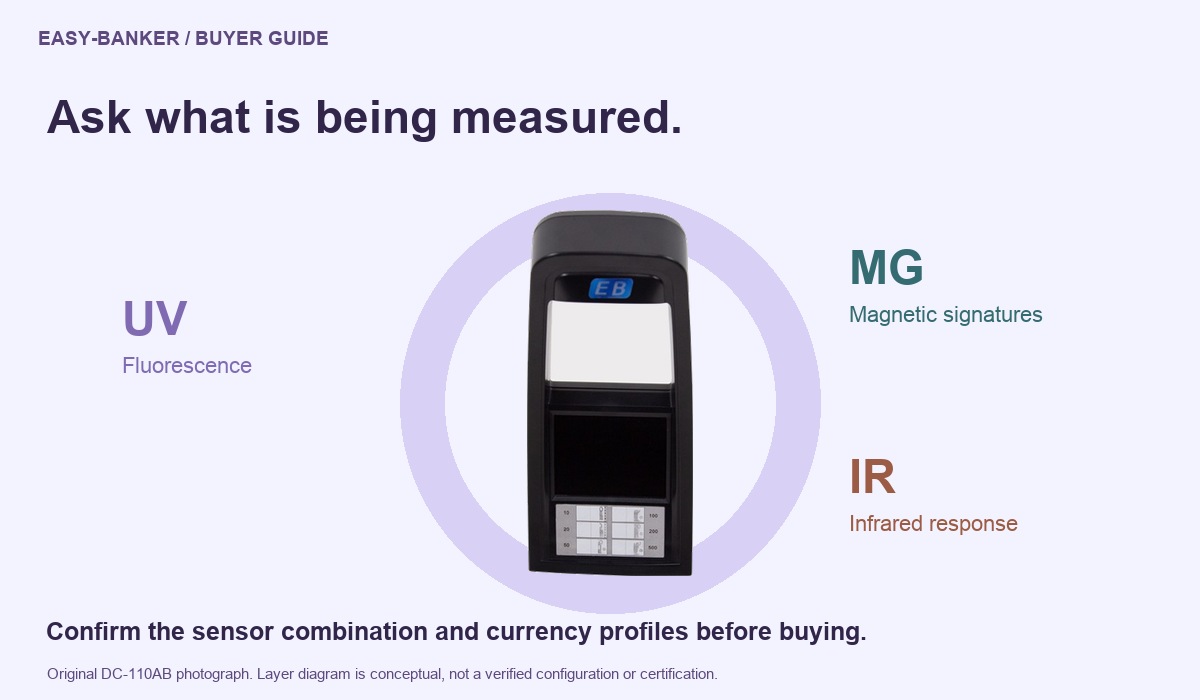
Infrared sensors measure how inks and paper absorb IR. Genuine intaglio inks have a distinctive IR signature that differs note-to-note in ways offset printing rarely reproduces. Magnetic (MG) sensors read the magnetic component of certain printed inks. Devices combining UV, MG and IR — such as the compact DC-110AB — check several signatures at once and reject a note when the combination does not match the expected profile for that denomination.
Multi-sensor handhelds catch several common fake categories — printer-paper fakes, bleached overprints, poor ink copies — that defeat any single test. For distributors, this is the tier where customer conversations should start for shops handling mixed currencies.
Automatic Counter-Validators: Speed Plus Detection
When volume matters, passing each note through an automated counter-validator is the practical standard. Machines count and authenticate in the same pass, flagging suspect notes for manual review. A value counter such as the LD-1100 adds denomination and currency-value totals on top of UV/MG checks, so a small bank branch or cash office gets a shift-total and a screening log in one operation.
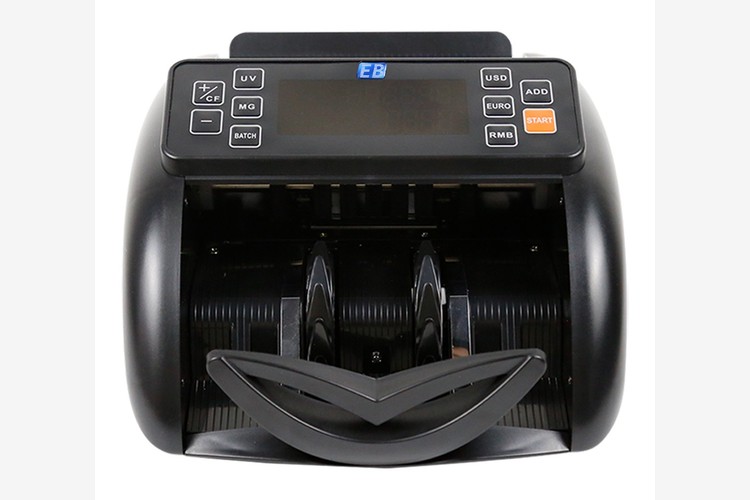
Automation solves the human-failure problem too: a tired cashier forgets the pen test; an auto-validator runs the same checklist on every note all day.
Building the Right Detection Stack
- Convenience store / single till: at minimum a UV lamp with security-thread chart; ideally a multi-sensor handheld. Keep the pen only as a last-resort cross-check.
- Busy retail / exchange counter: UV+MG+IR desktop detector, or a front-feeding counter-validator that does not leave notes in the cashier's hand.
- Bank branch / cash center: high-speed counter-validator with reject bin and software logging; add a sorter if mixed-quality notes are routine.
- Distributors: stock the ladder (pen → UV → multi-sensor → auto counter) and sell bundles, because end users rarely understand that one test layer is never enough.
No single device catches every fake — the ECB's own device-testing framework is built on two separate test decks for this reason. Layer independent technologies, and let higher volumes run through automation where the machine can out-consistency the hand.
FAQ
Do detector pens work on euro and pound notes? They were designed around cotton-linen currency paper; results vary by issue and series, and the ECB notes pens are not recognized as a standalone method for euro verification. Use UV/thread checks for non-USD currencies.
Can a bill pass the pen and still be fake? Yes — bleached-and-overprinted notes are genuine paper with a fake design, and pass starch tests. They are, however, usually caught by UV thread checks and denomination-reading machines.
Which detector do cash-in-transit companies use? Automated counter-validators with dual UV/MG/IR stacks and serial capture, not handhelds — throughput and audit logs drive the choice.
Need a detection tier for your product line? Contact Easy-Banker — factory-direct detectors, counter-validators and sorters with OEM/ODM support and multi-currency firmware.