The 2026-2027 Banknote Redesign Wave: ECB, Bank of England, Russia, Canada and What It Means for Cas


The 2026-2027 Banknote Redesign Wave: ECB, Bank of England, Russia, Canada and What It Means for Cash Equipment Distributors
A quiet but historically significant wave of currency redesigns is moving through the world’s major issuing authorities right now. For distributors of banknote counters, currency detectors and sorters, a new banknote series is never just news - it is a firmware question, a service opportunity and, in many markets, a replacement cycle. This article collects the verified public announcements from the issuing banks and industry trackers, and translates them into concrete preparation steps for cash-handling equipment suppliers.
1. The Euro: First Complete Redesign Since 2002
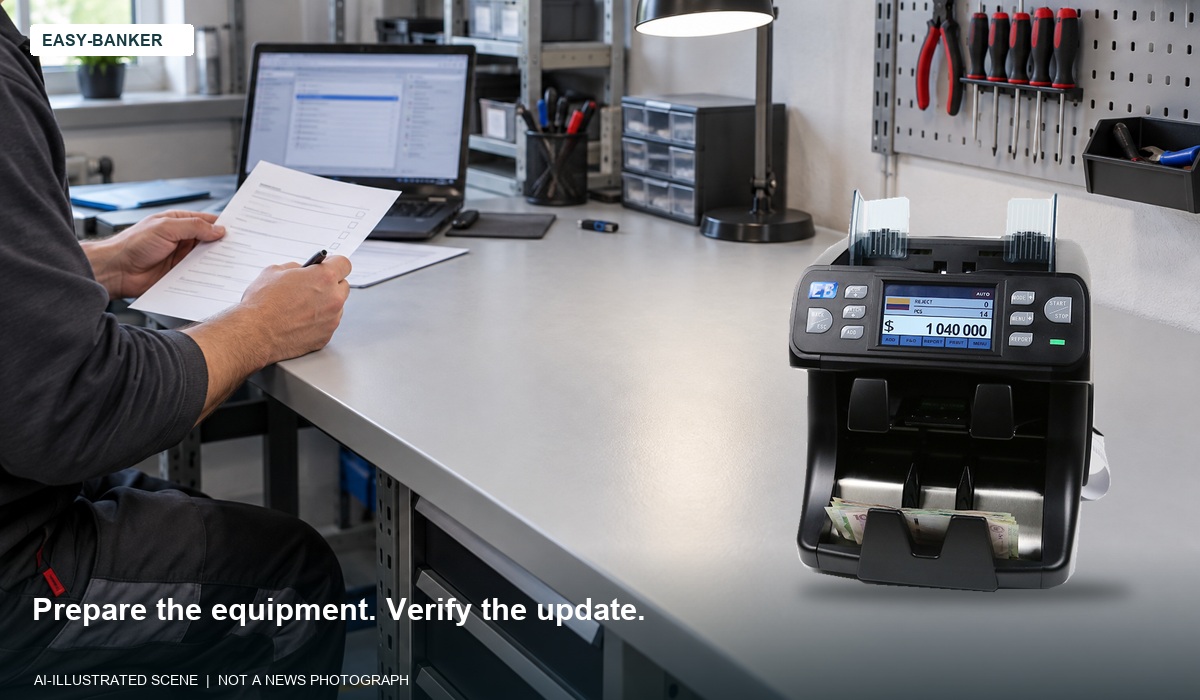
On 23 July 2026 the European Central Bank unveiled ten shortlisted design proposals for the next series of euro banknotes - the first complete redesign since the euro entered circulation in 2002 - and launched a public survey that ran until 21 September 2026 (source: ECB press release, 23 July 2026). The proposals are built around two themes, “European culture” and “Rivers and birds”. According to the ECB, the Governing Council is expected to take the final design decision around the end of 2026, after which the selected design “will then undergo further development and testing before going into production”, with notes entering circulation “in subsequent years”. The ECB explicitly frames the redesign as a way to “take advantage of advances in technology to stay ahead of counterfeiting”, with enhanced security features and improved accessibility, including for visually impaired users. Previous series notes will retain their value and circulate alongside the new ones.
For equipment suppliers, a multi-year euro transition means two things: detection templates and firmware for euro notes will need updates as each new denomination ships, and the long parallel-circulation period means counters and sorters must reliably authenticate both old and new series simultaneously - the classic mixed-denomination, multi-version sorting workload.
2. The United Kingdom: A Wildlife Series With Counterfeit Resilience as the Driver
The Bank of England confirmed in March 2026 that nature - specifically UK wildlife - will be the theme of its next banknote series, and on 3 June 2026 published a shortlist of animals for the £5, £10, £20 and £50 notes in a public consultation that ran until 3 July (source: Bank of England news releases, 11 March and 3 June 2026). Chief Cashier Victoria Cleland stated that “the key driver for introducing a new banknote series is always to increase counterfeit resilience”, and the Bank says the outcome of the wildlife consultation will be announced by the end of 2026, with the series itself a multi-year design, test and printing programme. The shortlist spans mammals (red fox, bottlenose dolphin, European hedgehog), birds (Atlantic puffin, barn owl, kingfisher) and insects/fish (Emperor dragonfly, Atlantic salmon).
The UK market consequence mirrors the euro area: sterling detection profiles will be reissued denomination by denomination, and machines circulating in retail and banking channels need to handle old and new series in parallel for years.
3. Already in Circulation: Russia’s 2026 Series and Upcoming Issues in Canada and the Caribbean
Some of the wave has already landed. The Bank of Russia put the modified 100-ruble banknote into circulation on 10 July 2026, dedicated to the Central Federal District, keeping the security features and front design of the 2022 version while changing the reverse to a stylised map - following the pattern of the modified 5,000-ruble (2023) and 1,000-ruble (2025) notes (source: Bank of Russia press release, 10 July 2026). Meanwhile, according to BanknoteNews (4 September 2026), the Bank of Canada has reported the new 20-dollar polymer note for introduction in late February 2027, and the Eastern Caribbean Central Bank announced in July 2026 plans for a new note family beginning in 2027. Ukraine released a 2,000-hryvnia commemorative note on 4 September 2026 (BanknoteNews).

4. What Distributors Should Actually Do Before New Series Arrive
The operational pattern behind every announcement above is identical: new security features first appear in the issuing bank’s published technical notes, then detection equipment must be calibrated against them, and the parallel-circulation period stresses multi-version handling. Practical preparation:
- Track firmware policy, not just headlines. Ask every equipment supplier how detection templates for the euro, GBP, RUB and CAD will be updated, and by which channel - USB, SD card, network or dealer service. A machine that cannot be updated in the field becomes obsolete the month a new series ships.
- Prioritise multi-version mixed-denomination machines. During a transition, a single cash drawer holds old and new series together. Counters and sorters with denomination plus version sorting (CIS-based imaging machines in particular) handle this natively; single-version firmware does not.
- Stock detection layers that age well. UV, MG, IR and CIS each react differently to new substrates - polymer notes in Canada and the Caribbean behave unlike cotton paper. A detection stack with several independent layers keeps rejection rates sane while templates are refreshed.
- Turn the transition into a service contract. New-series rollouts generate predictable re-calibration demand for 2-4 years. Distributors who offer update-and-verify service during the euro and sterling transitions convert one-off equipment sales into recurring relationships with banks, currency exchanges and cash-in-transit operators.
- Verify claims in writing. When a supplier says a machine is “ready for the new euro” before the ECB has even finalised the design, treat it as marketing. Real readiness means a documented update path, not a current-state promise.
5. Easy-Banker’s Position
Easy-Banker manufactures CIS and UV/MG/IR banknote counters, currency detectors, banknote sorters, coin machines and bundling equipment for distributors in the USA, Southeast Asia, South America, Africa, the Middle East and Europe. Our mixed-denomination counters and sorters ship with multi-currency firmware sets, and OEM/ODM programmes include custom currency firmware, logo printing and manual languages. When a new series enters circulation in your market, we supply the updated detection parameters for supported machines - contact our team with your target currencies and volumes for datasheets, MOQ terms and lead times.
Sources cited above: ECB press release “ECB reveals shortlisted designs for new banknotes and launches public survey” (23 July 2026); Bank of England news releases (11 March 2026; 3 June 2026); Bank of Russia press release (10 July 2026); BanknoteNews new-note reports (23 July and 4 September 2026).