EMEA Cash Cycle Seminar 2026: A Cape Town Preview for Cash Equipment Buyers
From 30 November to 2 December 2026, Cape Town hosts the EMEA Cash Cycle Seminar, the regional edition of the Cash Cycle Seminar series that has run since 1995 for stakeholders in commercial cash management. The venue is the Cape Town International Convention Centre, the organiser is Currency Research, and this year's theme is "Resilient, Inclusive, and Future-Ready: Shaping the EMEA Cash Ecosystem". We verified these details on 1 November 2026 against the organiser's event pages and the Cash Cycle Association's October countdown briefing; check the official site for the final programme, since workshop line-ups change up to the opening.
Easy-Banker is not exhibiting and has no speaking slot. This preview is written for the people who actually buy our machines in EMEA and Africa - bank note centres, cash management companies, CIT operators and the distributors serving them - because the published agenda is a map of the specifications those buyers will be arguing about in 2027.
Who will be in the room
The standing audience is central banks, commercial banks, cash management companies, cash-in-transit operators and technology providers, with an exhibition across the two plenary days. The Monday 30 November pre-day shows how granular it gets: a closed-door Central Bank Summit on "Stewarding Cash to 2030", led by the South African Reserve Bank and open only to central bank delegates; an ATMIA-co-led workshop on ATM economics; a working session on applying AI across the cash cycle; and a United States currency workshop hosted by the Federal Reserve Board's Currency Education Program (CEP).
Track one: authentication - and honest talk about over-rejection
The CEP workshop (Monday 13:45-15:30, free with pre-registration, recommended for staff who handle US dollar notes) covers authentication across all denominations and designs, current counterfeit trends, and - notably - common misconceptions that lead to unnecessary rejections of genuine banknotes. Every buyer of verification equipment should sit with that third item: machines tuned too aggressively reject fit, genuine notes; machines tuned too loosely pass counterfeits. Both cost money, and only one shows up in your counterfeit-loss report.
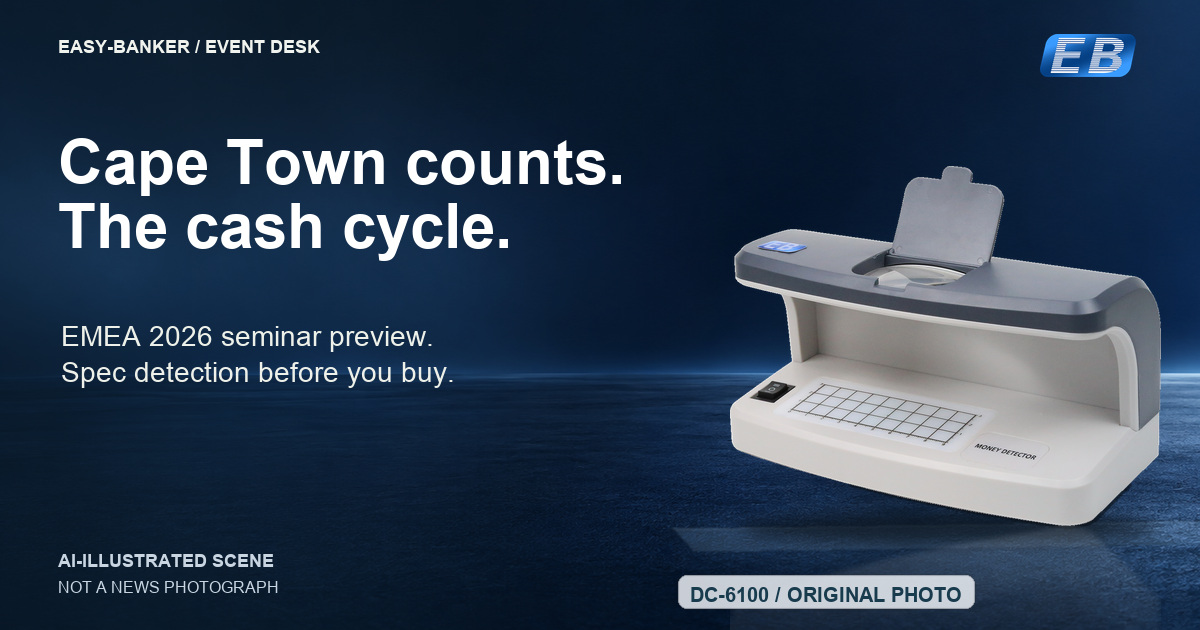
So ask which features a detector actually reads. The DC-6100 handheld detector is a visual-comparison tool, not a multi-sensor bank: its spec table lists a 365 nm UV lamp, a 5X magnifier for micro-printing, a ruler area for note-size checks, and verification of banknotes, credit cards, traveller's cheques, passports and IDs - while its magnetic-ink row is marked unavailable on this model. That honesty matters at the teller line: the DC-6100 runs about four hours on a 1200 mAh battery, charges from USB or AC 110/220V, measures 200 x 105 x 105 mm and weighs 0.55 kg.
Track two: ATM economics and the branch-automation squeeze
The ATMIA-co-led session "The Economics of Access: Rethinking the Role of the ATM in a Hybrid Payments Economy" (Monday 15:30-17:30, a USD 50 participation fee applies) frames the central commercial question of this industry: keeping physical cash infrastructure viable as payments go hybrid. Named contributors include ATM Solutions (part of Paycorp), NCR Atleos, Diebold Nixdorf and SBV, with roundtables on access in underserved communities, the true cost of cash ("Follow the Money (R100)") and a resilience-and-security stress test.
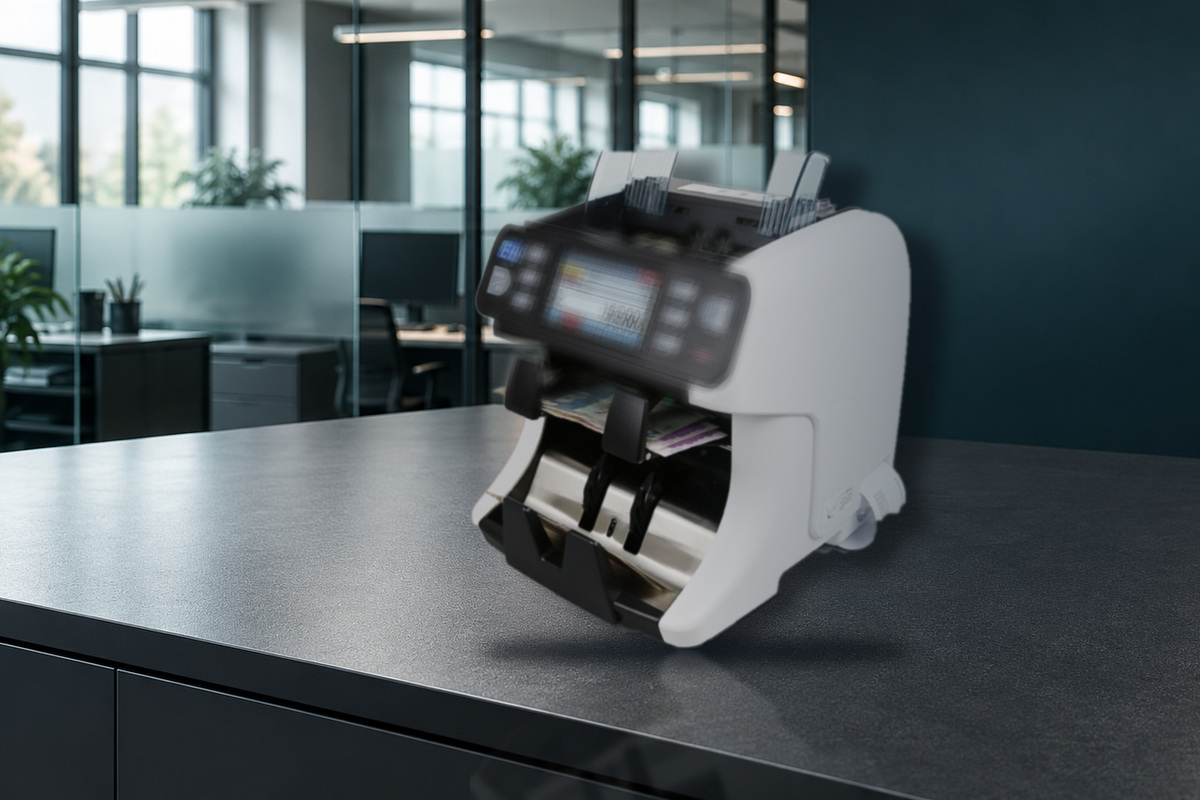
Equipment implications sit one layer downstream: every recirculated ATM note and every branch or merchant deposit is counted and checked somewhere. That is where a bank-grade sorter earns its keep in a cash centre serving an ATM fleet. The BS-2080W runs at 800, 1,000 or 1,200 notes per minute, authenticates and sorts by denomination, orientation and facing using optical, IR, UV and magnetic sensors, and grades notes FIT/UNFIT through a 200 dpi dual-CIS system (both-side reflectance plus visible/IR transmission) with mechanical thickness checking; documented detections cover tears, adhesive and tape, double notes and washed notes. Currencies listed on the page include USD, EUR, GBP, CNY and JPY, it connects over LAN, RS232 and USB with an optional built-in printer, and the desktop unit is 260 x 280 x 275 mm at 9 kg net. One caution we apply to ourselves: this model's pocket count is described inconsistently between our page title and URL, so confirm it from the specification table rather than either heading.
Track three: AI needs data before it needs models
The "Implementing AI in the Cash Cycle" working session targets central banks, commercial banks, CIT operators and cash-centre managers on forecasting, counterfeit detection, back-office automation, CIT routing and scaled note-sorting. The unglamorous precondition of all of it is machine-captured, per-note data - you cannot forecast inventory intelligently from tally counts alone. That is the argument of our recent technical piece, Reading the Fingerprint: How Banknote Serial-Number Capture Turns a Sorter into an Audit Tool, and why serial-number capture is worth checking as a spec line: the BS-2080W above captures note serial numbers for printing or storage on a memory card, and paired with fitness grading that is the raw dataset behind policy talks like the Central Bank Summit.
The coin side of the ledger
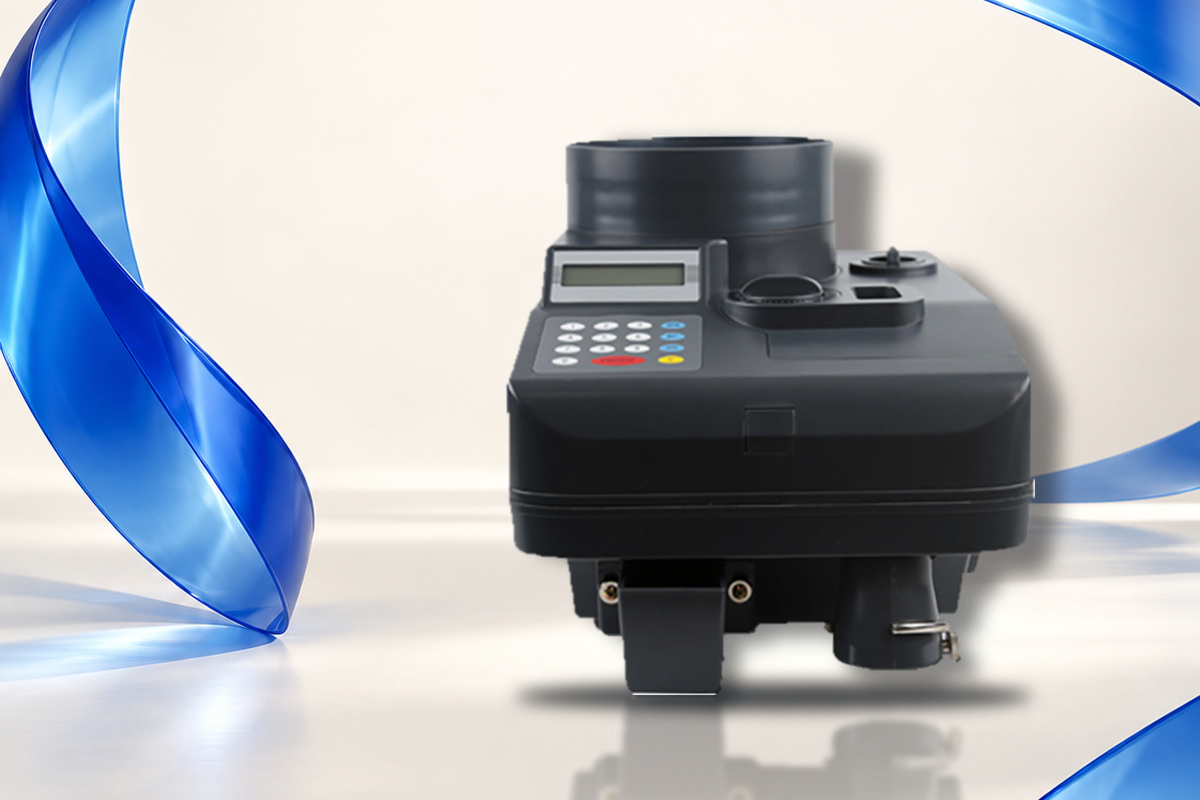
EMEA and African markets keep substantial coin in circulation, and cost-per-coin is the quiet line item in deposit specifications. At counter level, coin handling is durability and control: consistent counting, bag-stop discipline, safe access to the coin path. The CS-8500 manual coin counter takes an 11,000-coin hopper, handles diameters 15-35 mm and thicknesses 1.0-3.5 mm, offers programmable bag stops and a clear LED counter, and gives direct access to the coin path with a safety interlock. Power is AC 120V plus-minus 10% at 60 Hz or AC 220V plus-minus 10% at 50 Hz, drawing 61 W during operation; it runs one coin type per pass - mixed-coin sorting is a different machine class, stated plainly.
Carry-home themes for your 2027 buying list
Three procurement themes are worth tracking out of Cape Town. Rejection-threshold governance: document which sensor on which machine triggers which reject reason, and test candidates on your own worst-condition notes before signing. Data capture: prefer machines that record serial numbers, fitness grades and per-denomination counts over machines that only total. Access economics: as branches shrink, surviving cash touchpoints handle more notes per device, so per-note reliability and serviceability outrank headline counting speed.
Two boundaries, honestly stated. Easy-Banker machines are not on any SARB or Federal Reserve tested-list referenced by this programme, and we will not claim otherwise - buyers with compliance mandates should request the official list from their own central bank. And the organiser's schedule, fees and rooms can still change: see currencyresearch.com before booking travel. The Americas edition runs 16-19 November 2026 in Miami, and our HSP Asia agenda guide covers another 2026 cash-cycle floor. If a track above maps to an equipment gap in your operation, contact our B2B team with the machine type, your currencies and volumes - and we will tell you honestly which model fits, including when the answer is "not this one".