Inside a Central Bank Cash Equipment Buy: What Montenegro's CBCG Tender Signals
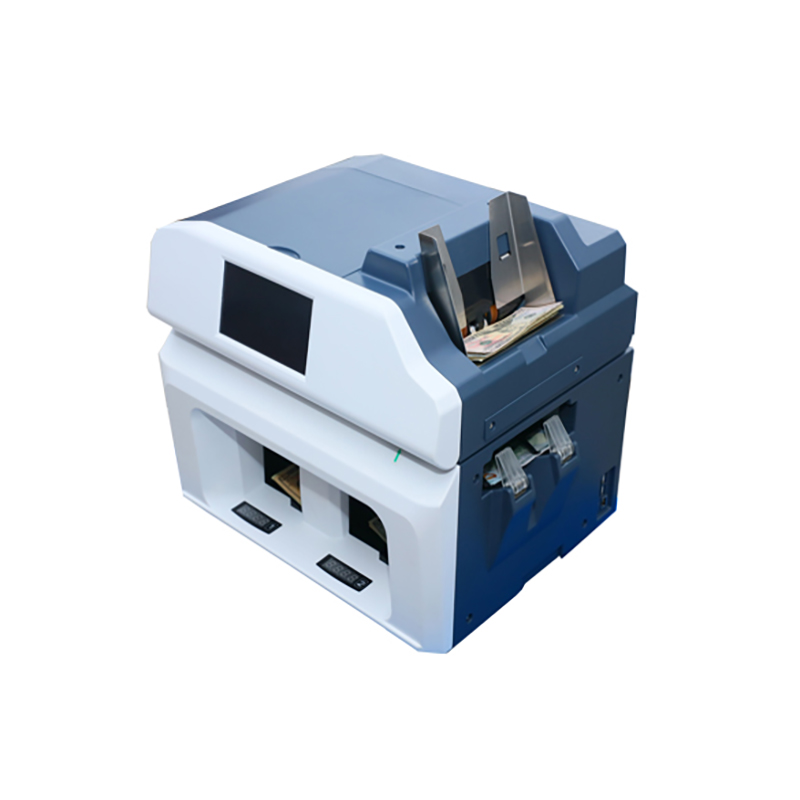
On 15 October 2026, at 09:00 Podgorica time, a public bid opening took place at Montenegro's Ministry of Finance. Nothing unusual about that — except what was inside the envelopes: a banknote sorting and banding machine, a desktop banknote sorter with serial-number capture, a floor-standing multi-pocket coin sorter with bagging, a desktop coin counter, a compact precision scale and a vault lift-and-packing table. The equipment lot is being bought for the vault of the Central Bank of Montenegro (CBCG), financed by the EU under Instrument for Pre-accession Assistance (IPA III), and every line of it reads like a shopping list for what cash rooms across Europe and the Balkans are about to replace.
This article unpacks the notice — published on the EU Funding & Tenders Portal on 24 August 2026 with tenders due on 8 October 2026 — and explains what a central-bank-grade equipment list like this tells distributors, CIT companies and cash-handling buyers heading into 2027. Key terms were cross-checked against the tender record as summarised by multiple procurement trackers.
What the Central Bank Actually Ordered
The contracting authority is Montenegro's Directorate for Finance, Contracting and Implementation of EU Assistance Funds (CFCU), procuring for CBCG's vault under CPV code 30132200 — banknote counting machines. The stated purpose is blunt: keep the vault operating, manage operational risk and business continuity, and meet the requirements for alignment with EU central banking standards on protecting the euro against counterfeiting.
Six items define the lot:
- Banknote sorting and banding machine — a floor/office machine, the workhorse that grades, counts and bands bundles for storage and interbank movement.
- Desktop banknote sorting machine — specified with serial-number capture and banding compatibility.
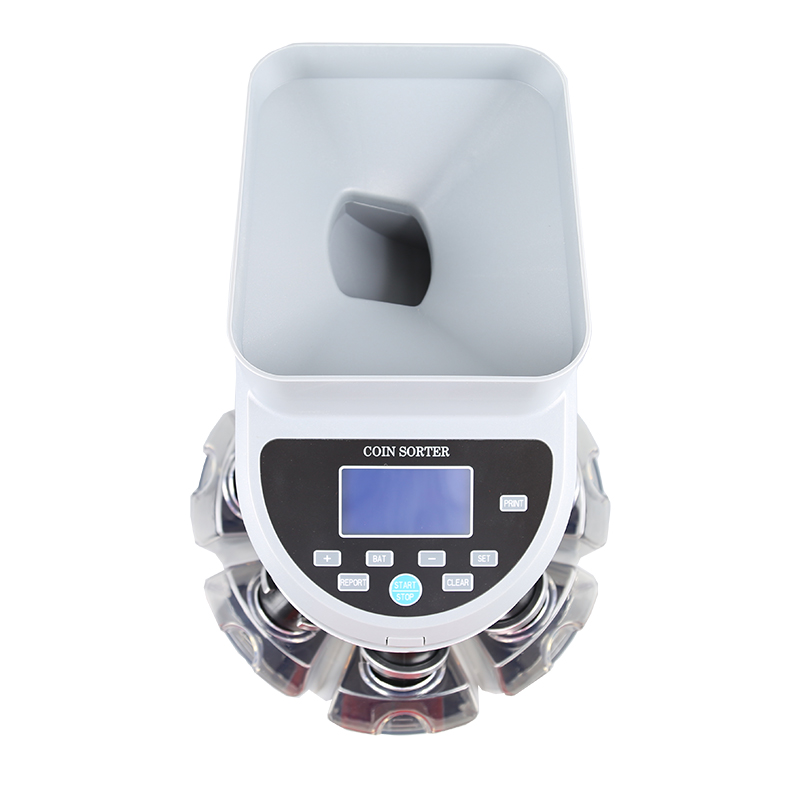
- Coin sorting machine — floor-standing, high-speed, multi-pocket, with bagging.
- Desktop coin counter — compact, hopper-fed.
- Compact scale for coins — precision platform scale for weigh-counting and roll checking.
- Lift, table and vacuum packer set — the physical handling side of a vault: lifting coin rolls, packing table, chamber vacuum sealer.
Delivery is DDP to Podgorica, with siting, installation and commissioning inside 180 days of contract start. Award goes to the lowest price among technically compliant offers.
Three Signals Hiding in the Specification Table
Signal one: serial-number capture is now table stakes. The desktop sorter is explicitly required to capture note serial numbers. Two years ago that feature lived in central-bank and CIT tenders only; today it appears in an EU-financed lot for a national vault of a small market. Any sorter sold into Europe in 2027 will be judged against that baseline.
Signal two: "alignment with EU standards" means detection specs travel. The money is conditioned on bringing CBCG's cash operations up to euro-protection norms. That pulls inspection-grade UV, magnetic-ink and image-based authentication into the minimum spec of whatever machines win — and it sets an expectation that commercial banks in the same market will copy over the next procurement cycle.
Signal three: this is a project, not a parcel. Installation, commissioning, training, 180-day delivery, a 10% performance guarantee and paper submission of a single non-electronic bid: EU-funded central-bank buys are won by suppliers who can document delivery capacity, not by catalogue price sheets. The eligibility bar makes that explicit — bidders need an average annual turnover of at least €400,000 over three years and at least two delivered cash-management supplies of €90,000 or more in the last four years, on top of a €2,600 tender guarantee.
Why the Eligibility Rules Reshape the Supply Chain
Here is the part most equipment makers miss: EU IPA tenders require prime bidders established in EU member states or eligible IPA III countries. A factory outside those jurisdictions rarely signs the contract itself — it stands behind an eligible local partner as the OEM and documentation supplier. The practical play for a distributor inside the EU or the Balkans is to lock in a manufacturer who can produce CE-marked machines, Annex-II-conformant technical files, English-language commissioning manuals and spare-parts logistics before the tender drops; the practical play for the manufacturer is to treat that partner as a channel, not a reseller.
Meanwhile, in India: a Deadline That Lands Today
The second equipment-demand signal of this week comes from the Reserve Bank of India. Under its circular of 31 July 2026 — reported by Indian financial press — every branch in a district along India's international borders must be equipped with note authentication and sorting machines, every banknote received there must be machine-examined for authenticity, and detected counterfeits must be impounded and never returned to the tenderer. The circular's human deadline is today, 31 October 2026: all cash-handling staff trained on security features and fake-note detection. After an April direction that extended UV lamps and authentication machines to branches and back offices nationwide, the hardware layer of Indian compliance is no longer optional — and thousands of branches are rebuilding their counter inventory at once.
How the CBCG List Maps to a Real Factory Line-up
Read item-by-item, the Podgorica list is a map of categories a cash-equipment OEM has to cover end to end. A sorter like our BS-621 banknote sorter answers the floor-machine line: 800/1,000 banknotes per minute with authentication, valuing, denomination and fitness sorting, IR-CIS and magnetic analysis, serial-number capture stored to SD card and printable, two output pockets plus reject, and RS232/USB/LAN interfaces for vault systems.
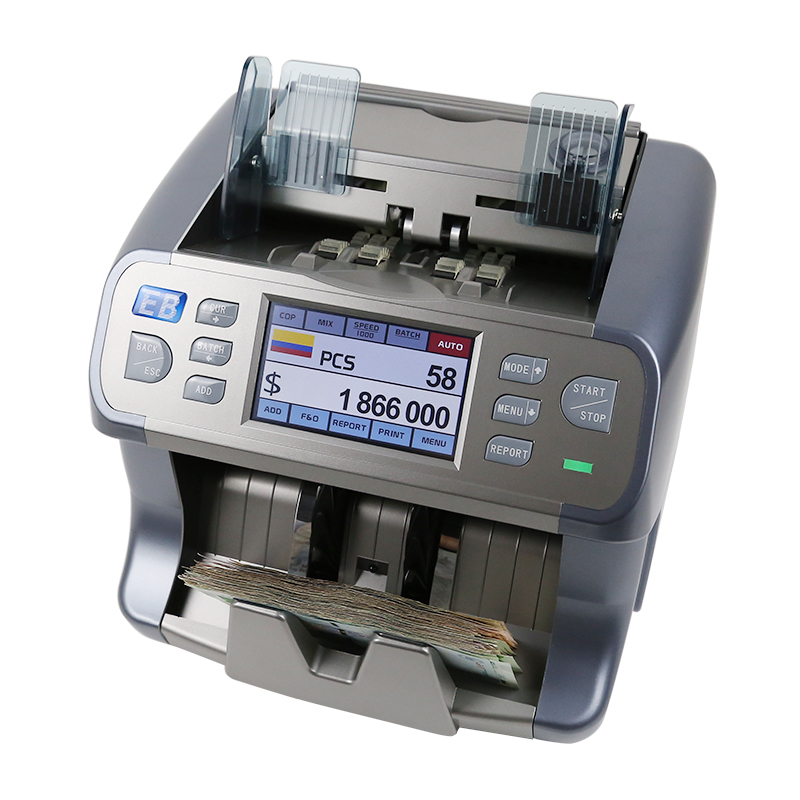
The desktop sorter with serial capture is the class of our LD-2700G: two CIS sensors, 800/1,000/1,200 notes per minute, 500-note hopper, 4.3-inch touch screen, mixed-value counting with denomination and version separation, UV plus magnetic detection on 100–240 V power — the version-separation point matters wherever old and new series circulate together.
On the coin side, the floor-standing multi-pocket requirement is the CS-9500 category: sorting at up to 1,200 coins per minute (16 mm), a 500–1,000 coin hopper, denomination-by-denomination drawer collection with batch and value display, 80 W power draw — compact enough for a vault corner, fast enough for a cash centre.
A Distributor Checklist for the Next 90 Days
- Watch the EU Funding & Tenders Portal for CPV 30132200 lots; central-bank, ministry-of-finance and IPA-funded buys are published months ahead — that is your lead time, not a surprise at deadline.
- Get serial-number capture into your mid-line sorters now; it is the requirement that separates compliant from non-compliant in every 2027 tender we have read.
- Bundle hardware with paperwork: technical files, commissioning plans, training decks. Lowest-price awards still require full technical compliance, and that is where unprepared bids die.
- If you serve India, treat the 31 July circular as a sales calendar — border branches first, training-linked upgrades after.
Easy-Banker manufactures banknote counters, sorting and banding machines, currency detectors and coin handling equipment with OEM/ODM support for tender channels and distribution partners. Talk to us about Annex-conformant specifications, sample documentation and lead times before your next public cash-equipment lot closes.