Paraguay's New Guarani Banknotes and the Solomon Islands $100: A Machine-Readability Brief for Cash
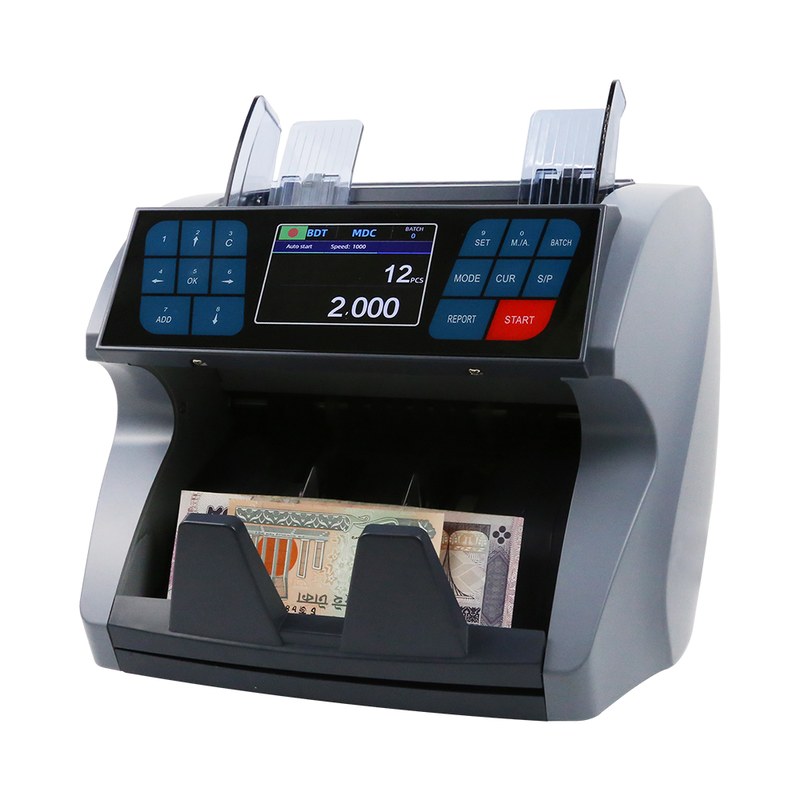
Central bank press releases rarely read like engineering notices, but for anyone who sells or services cash handling equipment, every new-series announcement is exactly that. October 2026 delivered two textbook examples: the Central Bank of Paraguay (BCP) unveiled a completely redesigned guarani family on 5 October, and the Central Bank of the Solomon Islands (CBSI) released an updated SI$100 note with an enhanced security thread. The preparation window between a design reveal and the first note at the counter is where distributors win or lose credibility with bank and CIT customers.
Paraguay: First Full Guarani Redesign in More Than Sixty Years
On 5 October 2026, at the BCP Institute in Asuncion, Paraguay presented new designs for all six circulating denominations - 2,000, 5,000, 10,000, 20,000, 50,000 and 100,000 guaranies. The date marked the currency's 83rd anniversary: the guarani was established on 5 October 1943 under Decree-Law No. 655. Paraguayan reporting (Asuncion Times) calls this the first comprehensive redesign in more than sixty years.
Three decisions matter to cash equipment. First, no redenomination: no zeros removed, no new denomination, existing notes remain valid and are withdrawn only through natural replacement. Second, the family reportedly mixes substrates - banknote specialists Iberoamericana Banknotes describe the 2,000, 5,000 and 10,000 as polymer and the three higher values as cotton paper. Third, geometry: all six notes share a uniform width, with length graduated by roughly seven millimetres per step. Design was awarded in 2023 to French security printer Oberthur Fiduciaire after an international tender that reportedly drew De La Rue, Crane, Giesecke+Devrient, Koenig & Bauer and Orell Fussli.
Local press expects gradual circulation from about the first quarter of 2027, but the BCP has not confirmed a firm release date and the printing contract is still pending - so plan for multi-year parallel circulation between an old series people know and a new series machines have never seen.
Why Uniform Width Is a Feature You Must Test
Width-based sensing is a cheap first filter on mid-range counters. On Easy-Banker's LD-1500 front-feeding counter, the width-different (DD) check takes the first note of a pile as reference and flags any note that differs. A family built at one constant width passes that check uniformly - so denomination separation falls to image recognition and firmware that knows the new series. Graded length helps stacking and reading, but only within a machine's counted-note window: the LD-1500 accepts 50 x 110 mm to 90 x 180 mm notes at 0.075-0.15 mm thickness, and the LD-1687 value counter accepts 110-180 x 50-90 mm at the same thickness band.
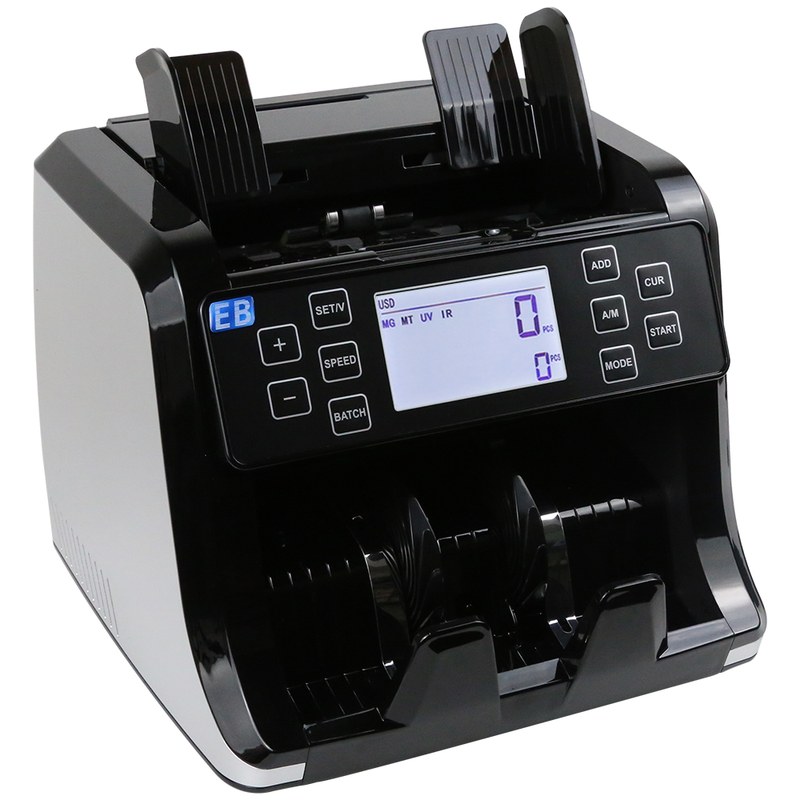
Mixed substrates raise the same question from the other side: polymer and cotton notes behave differently under ultraviolet, in magnetism and in thickness, so a fleet calibrated on the old cotton series needs re-checking before the first polymer low denominations arrive.
Solomon Islands: An Old Design With a Talkative New Thread
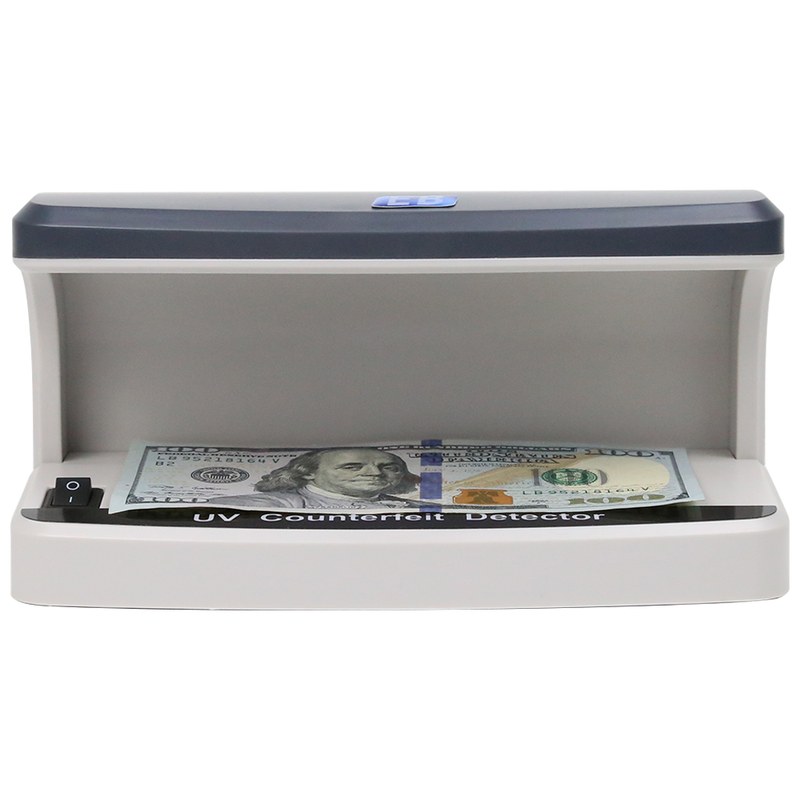
The Solomon Islands case shows the opposite approach. The Island Sun reports that CBSI's updated SI$100, released during October 2026, deliberately keeps the familiar design and adds an enhanced security thread: tilt the note and the thread shifts from green to red with a pulsing movement effect. Raised ink can be felt, holding the note to the light reveals the eagle watermark, and under ultraviolet light hidden elements glow in two distinct colours. CBSI advises the check, feel and look method; the updated note circulates alongside the existing SI$100 through commercial banks.
A two-colour UV response is exactly what a bench lamp exists for. The DC-5000 USB-rechargeable UV lamp (365 nm, 200 x 105 x 105 mm, 0.55 kg, about four hours per 1,200 mAh charge) gives counter staff the same inspection environment CBSI described. On the automated side, BS-2090-class sorters read reflected and transmitted imaging plus magnetic and UV channels - where machine profiles must learn to treat two visually similar series as one currency but two versions.
The Bigger Pattern: 2026-2027 Is a Redesign Cycle
These stories sit inside a wave this column has tracked all month. The ECB expects its governing council to settle the future euro design by end-2026, keeping the 5-200 euro denominations and, in its own words, likely keeping sizes and dominant colours broadly the same to limit the cost of adapting handling machines (verified 21 and 26 October, ecb.europa.eu). The Bank of England confirmed its four next-series animals on 8 October while pledging familiar dimensions (verified 26 and 28 October, bankofengland.co.uk). India is running a two-billion-note polymer trial of the 10 and 20 rupee denominations ahead of a 30 June 2027 deadline that retires non-compliant sorters (verified 15 and 27 October). Paraguay and Solomon Islands make the trend concrete for markets nobody predicted.
A Six-Step Readiness Checklist for Distributors
When a central bank in your market announces a new series: (1) collect the official circulation bulletin - dimensions, substrate, colours, thread and fluorescent features; (2) compare those numbers with each model's counted-note size and thickness range in the specification tables, not marketing sheets; (3) ask your supplier in writing whether firmware supports the new version, and the update lead time; (4) run pre-release notes through representative machines before launch; (5) train staff on the central bank's own authentication method, the way CBSI framed check, feel and look; and (6) plan for parallel-circulation years, when mixed-version counting and serial capture become daily work - the LD-1687 pairs mixed value counting with denomination and version sorting, serial-number scanning, USB/RS232 export and selectable speeds of 800-1,500 notes per minute from its 300-note hopper.
Honest Limits
Easy-Banker does not claim any listed machine is certified for the new guarani series or the updated Solomon Islands note - both are too recent for validated machine-readability profiles, and neither central bank has published one as of writing. Our specification tables state the physical envelope: sizes, thickness ranges, sensor channels. Version support is firmware work; buyers in affected markets should request pre-launch testing with circulated notes. Our polymer wave analysis and detector buying guide cover the substrate background in depth, and our team will tell you, model by model, what we can and cannot yet confirm.
Sources
Asuncion Times and Central Banking (BCP unveiling, 5-6 October 2026; denominations, dimensions, tender history, 2027 expectation); Iberoamericana Banknotes (substrate allocation, 7 mm graduated length, no confirmed release date); The Island Sun, Ned Gagahe (CBSI updated SI$100 thread, watermark, UV response, check-feel-look), fetched 31 October 2026; ecb.europa.eu, bankofengland.co.uk and RBI coverage as verified on the dates noted. Machine specifications from live Easy-Banker product pages, 31 October 2026.